
30 January 2020, The Tablet
Marx defends German synodal procedure


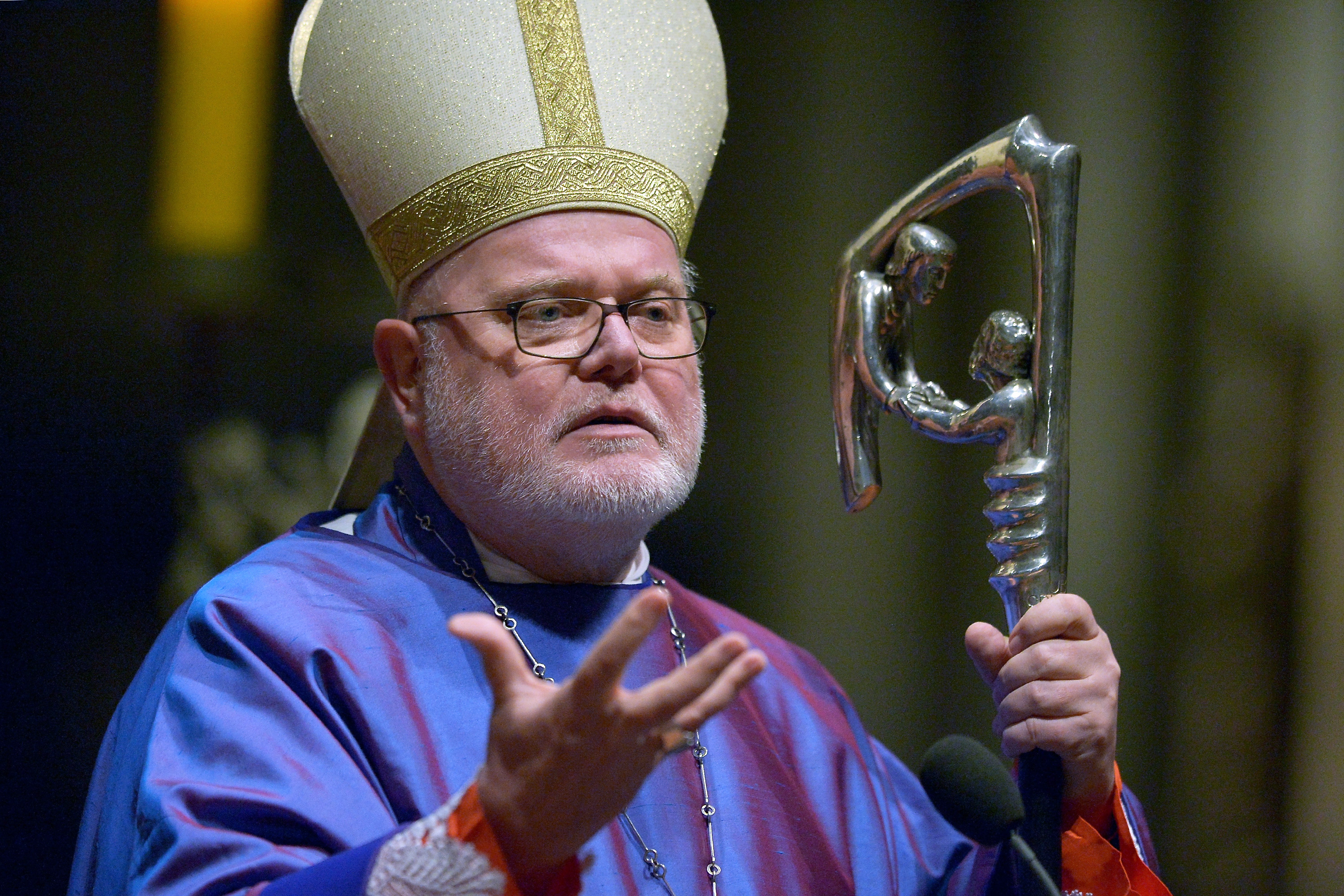
Cardinal Reinhard Marx, President of the German Bishops' Conference
Photo: PA Images
Photo: PA Images
German
bishops’ conference president Cardinal Reinhard Marx has rejected
accusations that the German Church is attempting to break away from
Rome.
He also warned against too high expectations of the German Church’s synodal procedure.
Speaking ten days before it was due to start, he said: “We do not want to invent the Church anew."
He was speaking in an interview published
in all the German diocesan papers. He personally was particularly upset
and annoyed by accusations that the German Church was trying to break
away from the Pope, as the Pope was the bedrock of unity, which must not
be shaken. In the final instance the Pope or a Church Council had the
last say on disputed issues, he recalled.
At the end of the two-year synodal
procedure that was launched on the first Sunday of Advent, he hoped that
there would be “greater unanimity and motivation in the German Church
but also greater clarity on how we want to go ahead”, Marx said.
Women’s role in the Church was being discussed in many European countries and not only in Germany today, he recalled.
He did not think that the last word on
women’s ordination had been spoken, despite Pope St John Paul II’s
instruction that all discussion was closed on the matter.
Marx also recommended that the synodal procedure use “impulses” from other Christian Churches such as the Orthodox Church.
Notes of caution were voiced by two of the leading bishops in the conference.
Cardinal Rainer Maria Woelki of Cologne
recalled that every diocesan bishop could decide freely whether and how
he would put resolutions reached in the synodal procedure into practice
in his diocese. “I feel only responsible to my conscience and my faith,"
he underlined in an article in the February edition of the German
theological monthly Herder Korrespondenz.
Bishop Rudolf Voderholzer of Regensburg questioned the emphasis on lay participation in the recent debates on church reform. “This
has been the tendency ever since the Second Vatican Council", he said
on 26 January. And yet the greatest challenge was how to deal with the
decline of church practice – above all Mass attendance on Sundays. He
could not believe that reforms of the priestly and episcopal ministries
and a different view of marriage would lead to a Church that was more
alive, or to a greater love for Jesus, he said.
French Bishop Didier Berthet, the
official liason officer between the German and French bishops’
conferences, who is an observer at the synodal procedure, said the
procedure participants were posing important questions that could also
stimulate French Catholics. After the abuse scandals, French Catholics
were also demanding a “less clerical and less authoritarian Church”, he
said.


No comments:
Post a Comment