POPE LEO XIV IS THE LEADER OF THE FREE WORLD |
Eighty-two years after his father landed at Normandy, the American pope drew 800,000 people to the Champs-Élysées and asked Europe to hold together. Washington left the job open, and Leo took it. |

Welcome to the CORPUS Blog. CORPUS is a faith community affirming and rooted in a revitalized church including an inclusive priestly ministry. Please visit our web site: www.corpus.org Our Blog will be a portal to news, articles and resources enabling you to keep up-to-date in the Catholic Reform process.
POPE LEO XIV IS THE LEADER OF THE FREE WORLD |
Eighty-two years after his father landed at Normandy, the American pope drew 800,000 people to the Champs-Élysées and asked Europe to hold together. Washington left the job open, and Leo took it. |

The Vatican today released a detailed program for the week-long meeting (Oct. 7-14) of the presidents of the world’s 115 Catholic bishops’ conferences and the heads of the 21 Eastern churches, convened by Pope Leo XIV, 10 years after the publication of Pope Francis’ post-synodal exhortation on the family, “Amoris Laetitia” (“The Joy of Love”).
Announcing the meeting on March 19, the American-born pope asked the bishops to discern with him the steps needed “in order to proclaim the Gospel to families today, in light of Amoris Laetitia and taking into account what is currently being done in the local churches.”

EXTON, Pennsylvania (RNS) — In March 2024, Francis Palmquist bent over his right calf and carefully tattooed the tear rolling down Mary’s cheek as depicted in the famous image. It was six years after he left Catholic priesthood and the ultra-traditionalist Society of St. Pius X.
“Happy Mary doesn’t resonate with me, but Mary in front of the cross feeling so much sorrow — a sword going through her heart — that’s where I relate,” Palmquist said. “Our Lady of Sorrows” was the first piece he tattooed on himself in the realism style, which has quickly become his signature.

Near the beginning of September, Jacob Coxon, who had worked in artificial intelligence research at both OpenAI and Anthropic, resigned from his position with a public declaration that the “frontier” A.I. labs were not acting responsibly. Indeed, he wrote, “the people building AI earnestly believe that it could kill us all by the end of the decade.”
The normal response from companies receiving a broadside like that from a departing employee would be denials of his claims and explanations of why he was overreacting or had misunderstood the situation.
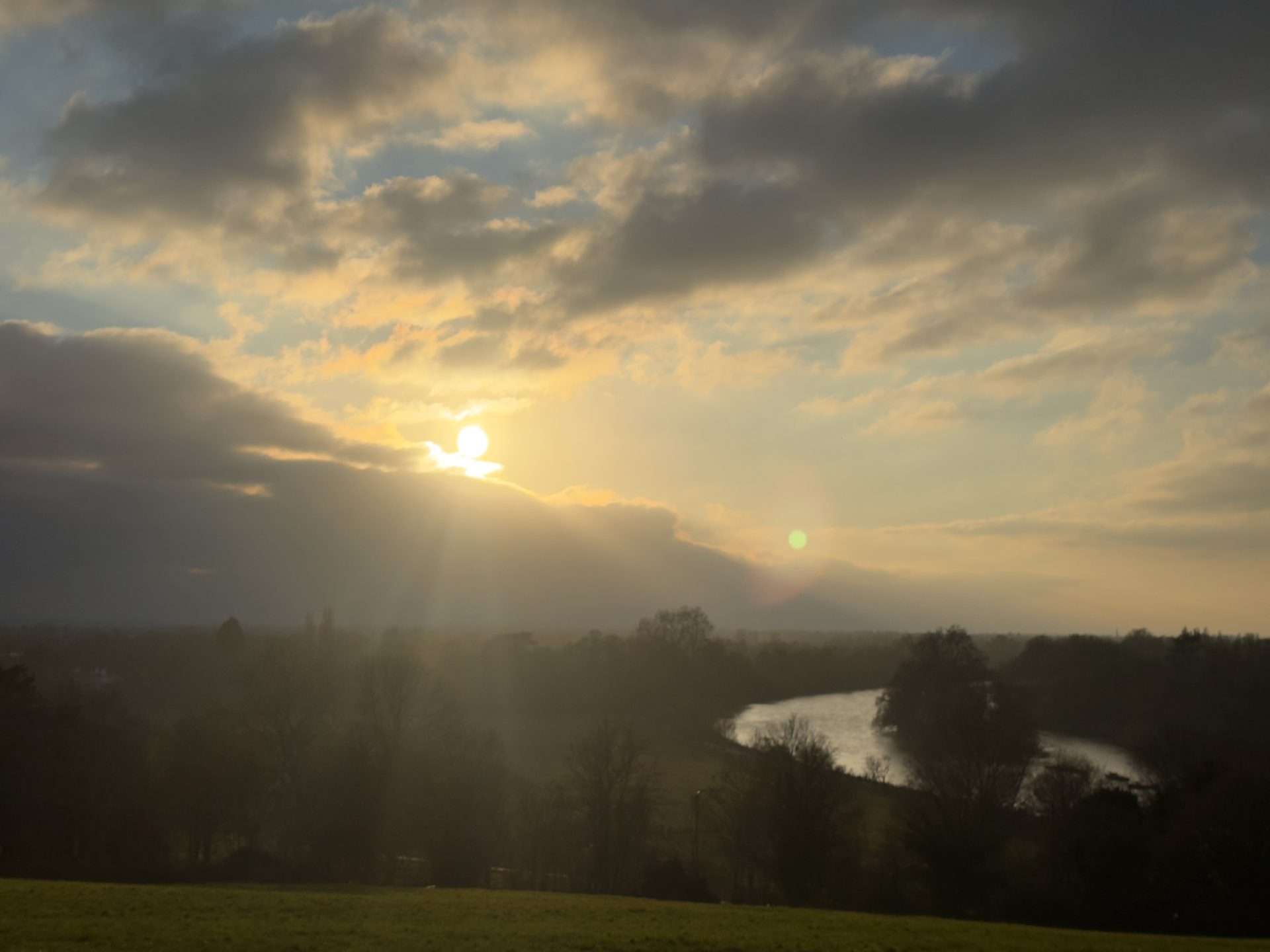
Could the 14th century ‘The Cloud of Unkowning’ have answers for the 21st century?
Photo by Ruth Gledhill
We live in the age of the self-help guide, the seven habits, the top ten tips… We need a programme, an app, the key performance indicators that tell us how we’re doing. Are we making progress? Let’s monitor and evaluate, do better. We often bring the same approach to prayer. Where’s the programme, where can I sign up, how much does it cost? The Cloud of Unknowing, a spiritual classic from the fourteenth century, written in Middle English, is like an antibody to this spiritual virus.
It was written at a time when a rampant biological virus, the Black Death, was reducing the population of Europe by up to a half, according to some estimates. It was a time of morbidity and a turning to the interior, a renewed interest in mysticism, including the bizarre and the occult. The plague was often seen as God’s vengeance on a sinful humanity, as we see in Langland’s allegorical poem Piers Plowman, but The Cloud, written by an anonymous mature contemplative, has no sense of this. “God’s mercy is who he is,” the author tells us.