
‘The Cloud of Unknowing’ – could this be a spirituality for the twenty-first century?
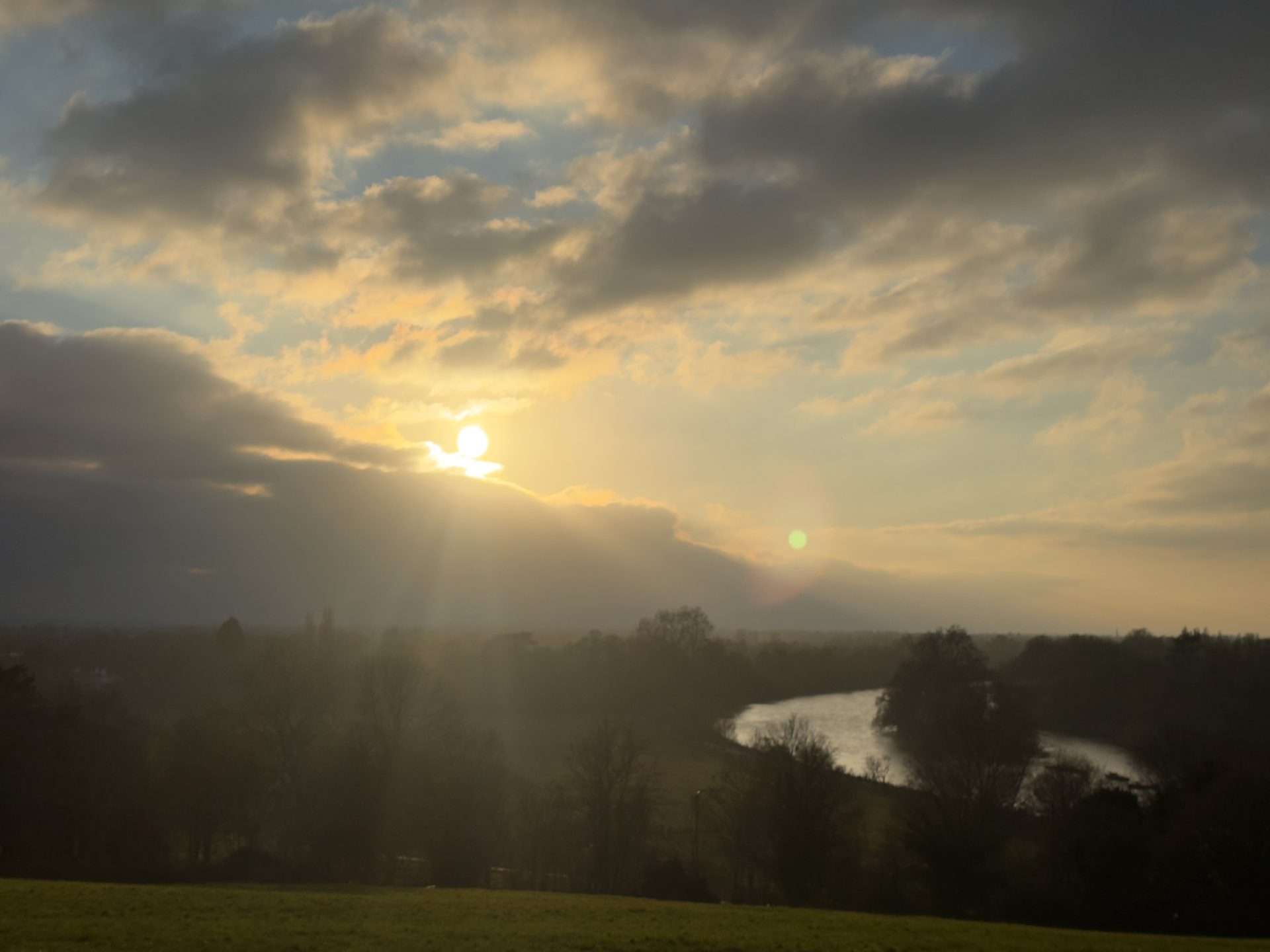
Could the 14th century ‘The Cloud of Unkowning’ have answers for the 21st century?
Photo by Ruth Gledhill
We live in the age of the self-help guide, the seven habits, the top ten tips… We need a programme, an app, the key performance indicators that tell us how we’re doing. Are we making progress? Let’s monitor and evaluate, do better. We often bring the same approach to prayer. Where’s the programme, where can I sign up, how much does it cost? The Cloud of Unknowing, a spiritual classic from the fourteenth century, written in Middle English, is like an antibody to this spiritual virus.
It was written at a time when a rampant biological virus, the Black Death, was reducing the population of Europe by up to a half, according to some estimates. It was a time of morbidity and a turning to the interior, a renewed interest in mysticism, including the bizarre and the occult. The plague was often seen as God’s vengeance on a sinful humanity, as we see in Langland’s allegorical poem Piers Plowman, but The Cloud, written by an anonymous mature contemplative, has no sense of this. “God’s mercy is who he is,” the author tells us.
In the thought-world of The Cloud, the book’s central metaphor for the place of silent, unknowing humility where we encounter the God who waits for us, contemplation is the state of graced, grateful awareness of God’s ineffable presence. For most, it doesn’t last for long, if at all. Contemplative prayer is like the vehicle to get us there. But he doesn’t give us those ten steps that we’re so used to, we need to piece the practice together from the book’s 75 short chapter, written originally as spiritual guidance for an unnamed 24-year-old.
This is personal prayer, not liturgical prayer; it requires solitude, silence and stillness. Thoughts and cares need to be set aside during the time of prayer and to help us do that and express our longing for God in the cloud, we simply repeat a one-syllable word, like God or love. He doesn’t give any recommendations for the length of time spent in prayer, but he does say that the moderation we should apply to eating, drinking and sleeping, should not apply to contemplation. Throw caution to the wind. Indulge, he says. I think that comes from the “pray without ceasing” injunction in St Paul (Thess 5:17), which was so important for the Desert Fathers and subsequent mystics. But he also advises that this practice requires tranquillity and a healthy body, so we must learn what rest is.
It’s not for everybody. He’s quick to say that if this type of praying doesn’t suit your temperament, abandon it and take another, with the help of wise counsel. This is helpful advice for our age and what we know now about neurodiversity. There will be people, for all sorts of reasons, who just will not be able sit in silence repeating a one-syllable word for any length of time. That is the strength of a faith community, to show people the options in the prayer life, and support them in practice.
When the author considers the active and the contemplative modes of life, he sees the contemplative as the better option, drawing inspiration from the gospel story of Martha and Mary. The contemplative Mary, sitting at the Lord’s feet, provoked the irritation of the busy, practical Martha. Jesus seems to side with Mary when Martha asks Jesus to admonish her: it is Mary who has the “better part” (Lk 10: 42).
Does this mean that worldly work is somehow relegated in importance and the state to aspire to is detached contemplation? No. This does not mean turning your back on the world. The work of contemplative prayer, the author tells his protégé, “will change your heart. It will make you so kind and dynamic in loving that when you stop doing it and mingle with the world again, coming down from contemplation to converse with or pray for your neighbour, you’ll discover that you love any stranger as much as a relative.” For the contemplative, there are no strangers. How could there be for those in whom God’s grace has taken up residence?
This speaks directly to our age, when so much hatred is focused on the stranger, the outsider, the refugee, the asylum seeker, the person of colour. We are seeing levels of scapegoating and racism in our society today that would have seemed incredible barely a few years ago. The spirituality of The Cloud is not detached from this, but sends us back into the thick of it, with a vision of universal fraternity.
The challenges we face in the twenty-first century are not all unique in human history, if we believe in a human condition through the ages with essentially the same pull towards selfishness and grasping what we should not grasp, but they are unparalleled in terms of scale, the runaway technology involved, and the existential threat to the species from global warming. So, can a fourteenth century monk speak to our moment with a spirituality strong enough to help?
Carmen Acevedo Butcher, in the introduction to her translation, the one I’d recommend for anyone reading the book for the first time, says, “We hunger for the ancient wisdom found in The Cloud of Unknowing because it builds bridges and works for social justice. It teaches us how to love, grow up, be fully human…. More and more of us are practising this ancient form of prayer and finding peace in a world of war, extreme political divide, epidemics, terrorism, technology, overcrowding, noise, inequality, and a Church in need of humility.”
Our world of hyper stimulation, runaway AI, greed, vulgarity, division and violence, which at times looks like a war of all against all, needs the quiet wisdom of The Cloud to point the way to being fully human, to encounter, to presence, to solidarity, to living in harmony with our brothers and sisters, with creation itself: the pathway to the peace of God which is beyond all understanding.
Raymond Friel is the CEO of Caritas Social Action Network. He has published a number of books on Catholic education, leadership and spirituality, including Formation of the Heart: the Why and How of Being a Catholic Today, available from Redemptorist Publications.


No comments:
Post a Comment