
German bishops commit to global Synod process despite delay to reforms
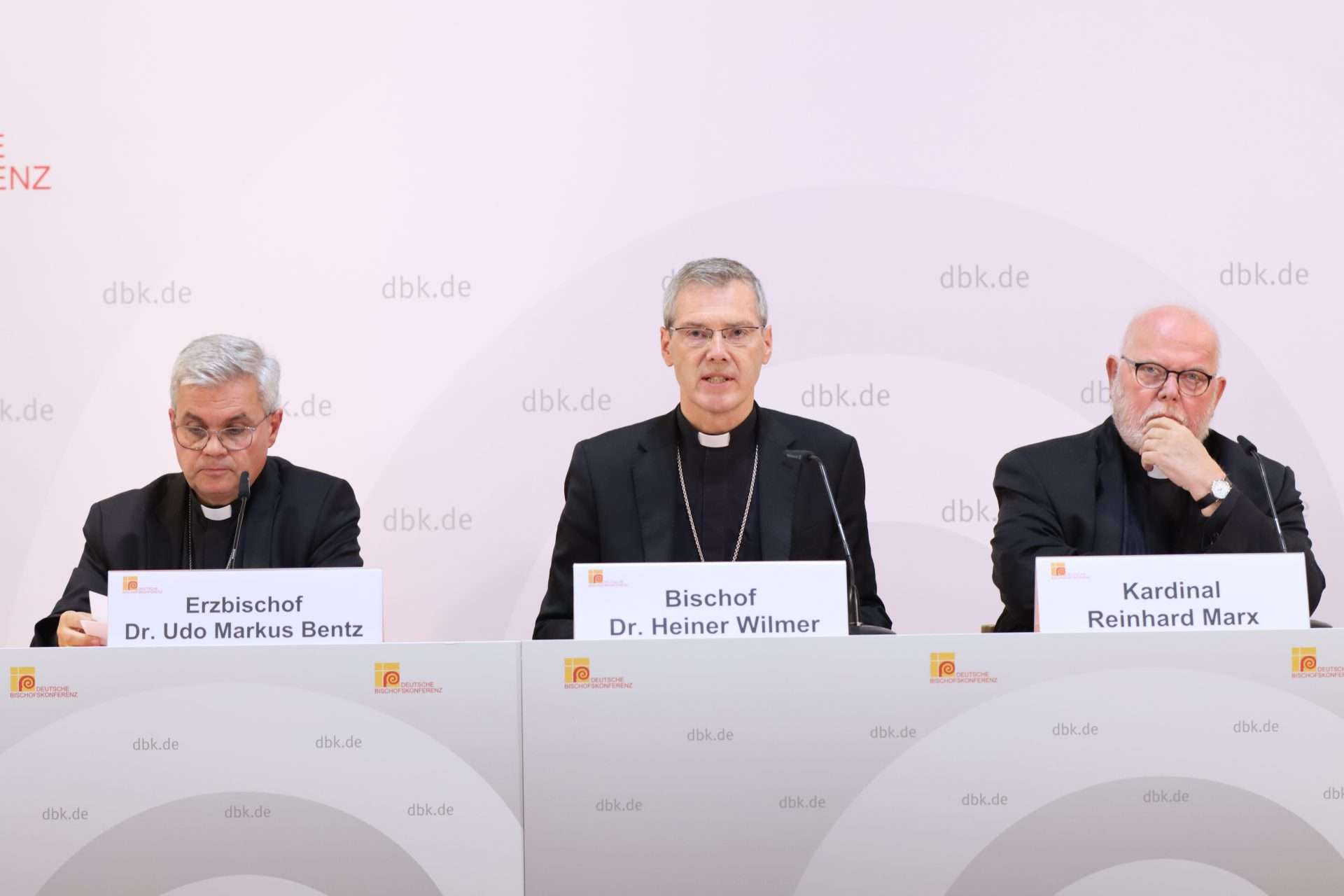
Bishop Heiner Wilmer of Münster said he was confident of an answer from Rome regarding the Synodal Conference by the end of 2026 or early next year.
Deutsche Bischofskonferenz / Marko Orlovic
The reform movement We Are Church urged the implementation of decisions already made by bishops and lay representatives, warning that otherwise a synodal church would lack credibility.
The German Church will continue with the implementation process for the global Synod on Synodality while it awaits approval for its own Synodal Conference, the bishops’ conference confirmed.
During the autumn plenary of the German Bishops’ Conference (DBK), held in Fulda from 28 September to 1 October, discussions covered the global synodal conference and the conference’s plans ahead of the Ecclesial Assembly in Rome in 2028.
The DBK said it had appointed a national synodal team, comprising of the ordained and lay leaders of the plenary of the Synodal Way and representatives of diocesan synodal teams and “persons with profound synodal experience”. Following diocesan synodal assembles, a national church conference is planned for autumn 2027.
This conference is distinct from the Synodal Conference of bishops and lay representatives which was meant to start its work in autumn 2026 but has been postponed indefinitely awaiting approval of its statutes from Rome. Asked about the delay, the DBK president Bishop Heiner Wilmer of Münster said he was confident of an answer by the end of 2026 or early next year.
In a statement following the plenary, the reform movement We Are Church urged greater accountability of individual diocesan bishops or the implementation of decisions already made by bishops and lay representatives, warning that otherwise a synodal church would lack credibility.
“Synodality must not remain a fig leaf, but most make real co-responsibility and shared decision-making power possible,” the group said. Ahead of the plenary, several reform groups had issued a warning: “The patience of church people is exhausted. It is not enough to invoke synodality and at the same time put concrete reforms on the back burner.”
On 3 October, Pope Leo addressed the community of the German-speaking Pontifical Teutonic College, marking 150 years since its foundation.
He referred to its location at Santa Maria in Campo Santo, close to the tomb St Peter, reflecting “a faithful adherence to the Roman Pontiff”. He said that unity is an essential prerogative for the credibility of Christians: “Pray for this gift that the college community may be a place where this unity can be concretely practiced and become visible.”
In his final statement from the DBK plenary, Bishop Wilmer also spoke of the need for the Church to engage in conversation with those who had voted for the far-right Alternative für Deutschland (AfD) in recent elections.
Churches should create spaces where it is possible to talk without fear, but the Church should then point to the Gospel and Catholic social teaching, he said, warning that the possible involvement of the AfD in government represents a “paradigm shift” in the history of modern Germany.
The DBK expressed solidarity with the Bishop of Magdeburg Gerhard Feige, who has faced criticism for his interventions against the AfD. “It is not acceptable for a diocese in Germany to be left behind,” said Wilmer. “We need to show solidarity.”


No comments:
Post a Comment