
A Cure for Clerical Loneliness: 8 Diocesan Priests Find Brotherhood Under One Roof
‘It has been wonderful to live in community,’ says Father Joshua Votruba, adding that ‘the brotherhood’ has been a tremendous support.
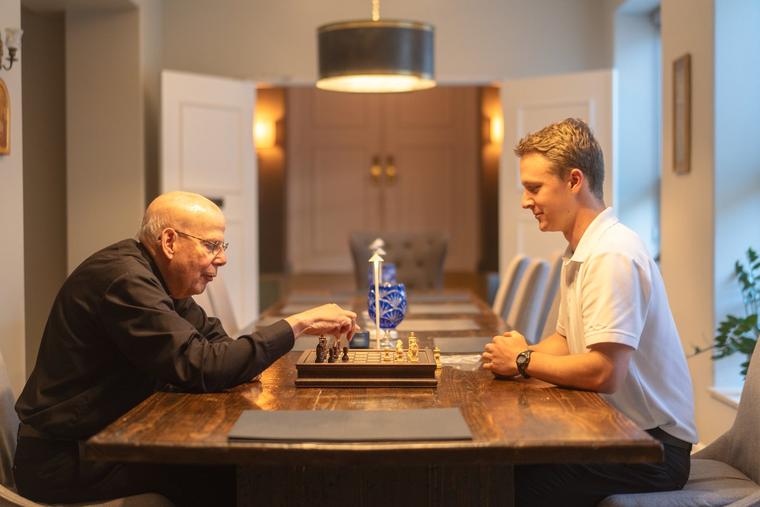
At the rectory at Holy Family Cathedral in downtown Tulsa, Oklahoma, eight active diocesan priests share a home, pitch in to help with chores, and frequently get together to watch a ball game together at the end of the day.
It’s an arrangement that is so uncommon, it may be the largest community of diocesan priests in the United States.
For these Tulsa priests, who range in age from early 30s to a priest in his late 70s, living together is preferable to living alone, as many diocesan priests do.
Father Brian O’Brien, the rector of the cathedral, told the Register that living in community may not be for everyone, but it suits him.
In his previous assignment, at a parish in Stillwater, Oklahoma, he lived in a newly built six-bedroom rectory designed to house all of the priests from the area, a demonstration, he said, of Bishop David Konderla’s commitment to prioritizing the well-being of priests.
“There are a lot of statistics on how guys are feeling isolated. Some guys thrive living by themselves, but I don’t want to live by myself if I can avoid it,” Father O’Brien, who is 50 years old and was ordained in 2007, said.
The 2025 “National Study of Catholic Priests,” conducted by The Catholic Project at The Catholic University of America, backs that up. It found that 40% of priests ordained after 2000 reported feeling lonely and isolated.
The way the cathedral’s rectory came to be home to a community of priests was something of an accident.
The four-story, nine-bedroom house attached to the 112-year-old Gothic cathedral was originally built as a home for pioneering priests, who in the 1920s needed a place to live while they were establishing parishes in Tulsa and its surrounding suburbs. The large rectory had outlived its purpose and fallen into disrepair when Father Gary Kastl, who is now vicar general of the diocese, became the rector of the cathedral in 2019. At that point, there were only two or three priests living in the rectory at a time.
After some much needed updates and repairs, made possible by the generosity of donors, Father Kastl said, the rectory suddenly became a more attractive place to live.
“As we began making the house a bit more comfortable and livable, several guys reached out and asked if they could move in and be in community,” Father Kastl explained.
At first, Father Kastl admits, he wasn’t convinced it would be a good idea. For one thing, he was personally “very comfortable living alone.” He also didn’t relish the idea of the additional responsibility that would fall on his shoulders.
“I will say when I first moved into the cathedral and guys started wanting to move in, I was like, ‘No way. I don’t want to be the superior of a religious house.’”
His mindset changed later, when he saw the benefits of living in community. For many laypeople, each day offers opportunities for daily sacrifice for their family members. Diocesan priests living alone are in danger of missing out on the school of virtue that living together provides, he explained.
“One of the things I think that’s healthy about communal living for diocesan priests is that we can sometimes forget the character formation that comes when you’re having to yield to the needs of others in your personal space,” he said.
“It’s simple things of like when the trash is full. Do I look at it and walk away? Or do I actually let that inconvenience [of stopping] what I’m doing and take out the trash?” Father Kastl said. “Or when I find the dishes in the dishwasher are clean, do I actually stop and empty it, or do I leave it for the next guy?”
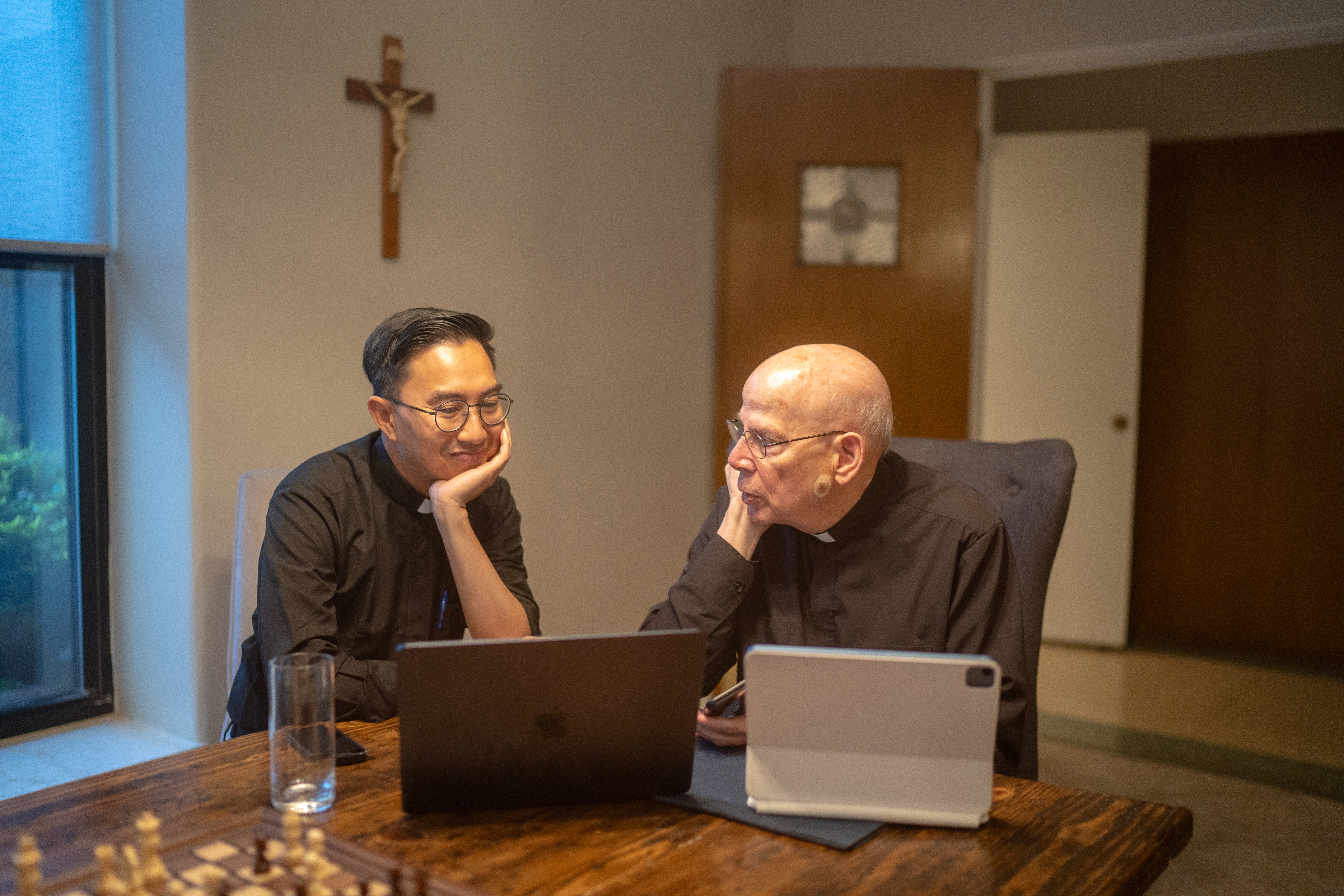
The eight priests who live in the rectory include the rector and parochial vicar of the cathedral, a retired priest, a priest working full time in hospital ministry, a high-school chaplain, the diocese’s vocations director, and the pastor at the University of Tulsa’s Newman Center. Their varied schedules keep them so busy they have designated Tuesday as the one day of the week where all the priests get together for evening prayer, a chance to catch up and dinner.
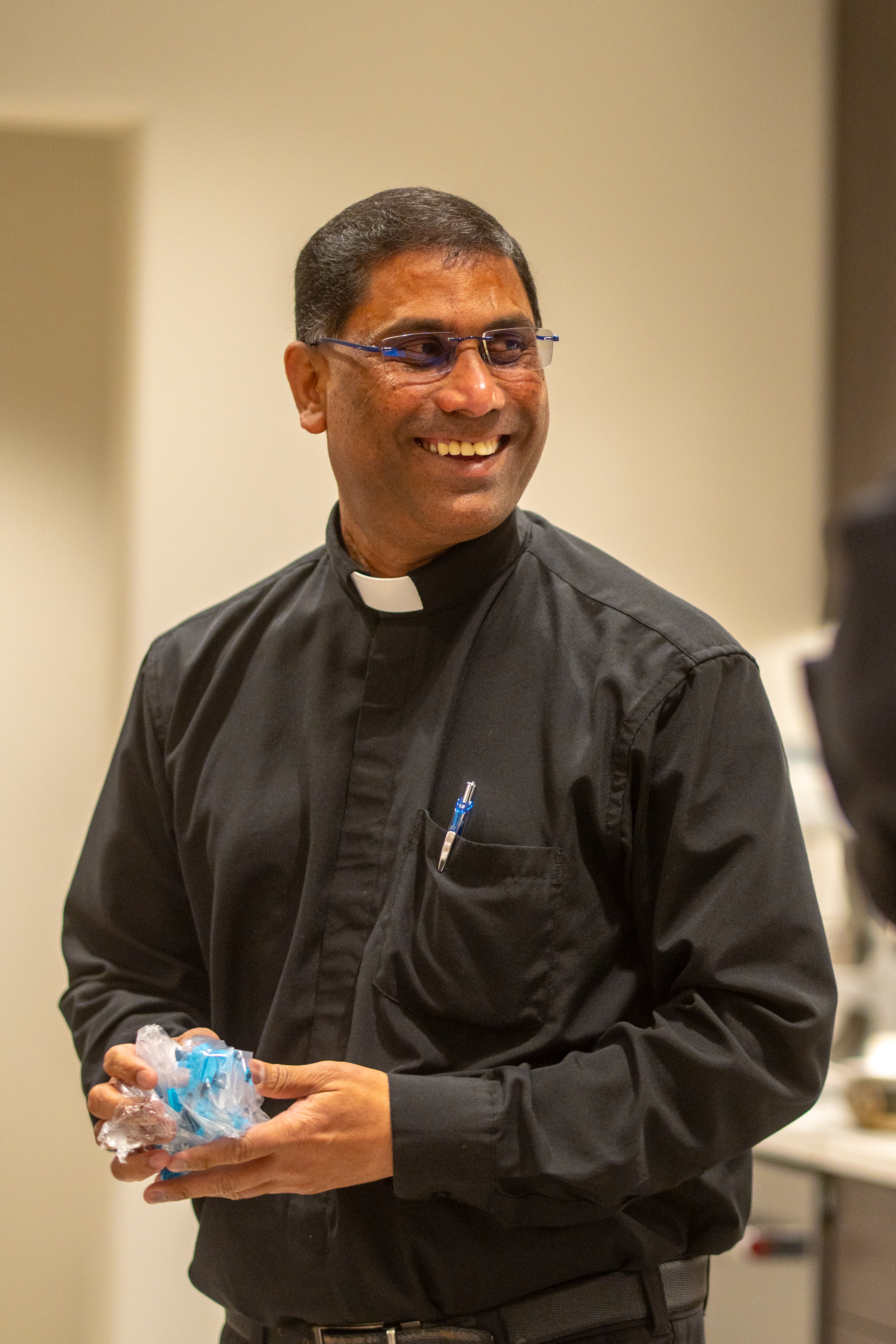
Still, the priests bump into one another each day in the rectory’s kitchen and hang out around the firepit in the rectory’s courtyard or in Father O’Brien’s sitting room, which, he said, has become a de facto community room.
“There’s a television in there, so it’s become a place where guys come watch a game or a big political event in the evenings. My room’s sort of the hub where that happens,” he said.
Father Joshua Votruba, the parochial vicar of the cathedral, who at age 31 is the youngest priest living in the community, told the Register that he can’t imagine living alone, in part because he entered seminary right out of college.
“I went from living with my family to living in community with other guys discerning priesthood to then being ordained as a priest and living in the rectory with seven other priests,” said Father Votruba, who was recently appointed chaplain of Tulsa’s Bishop Kelley High School.
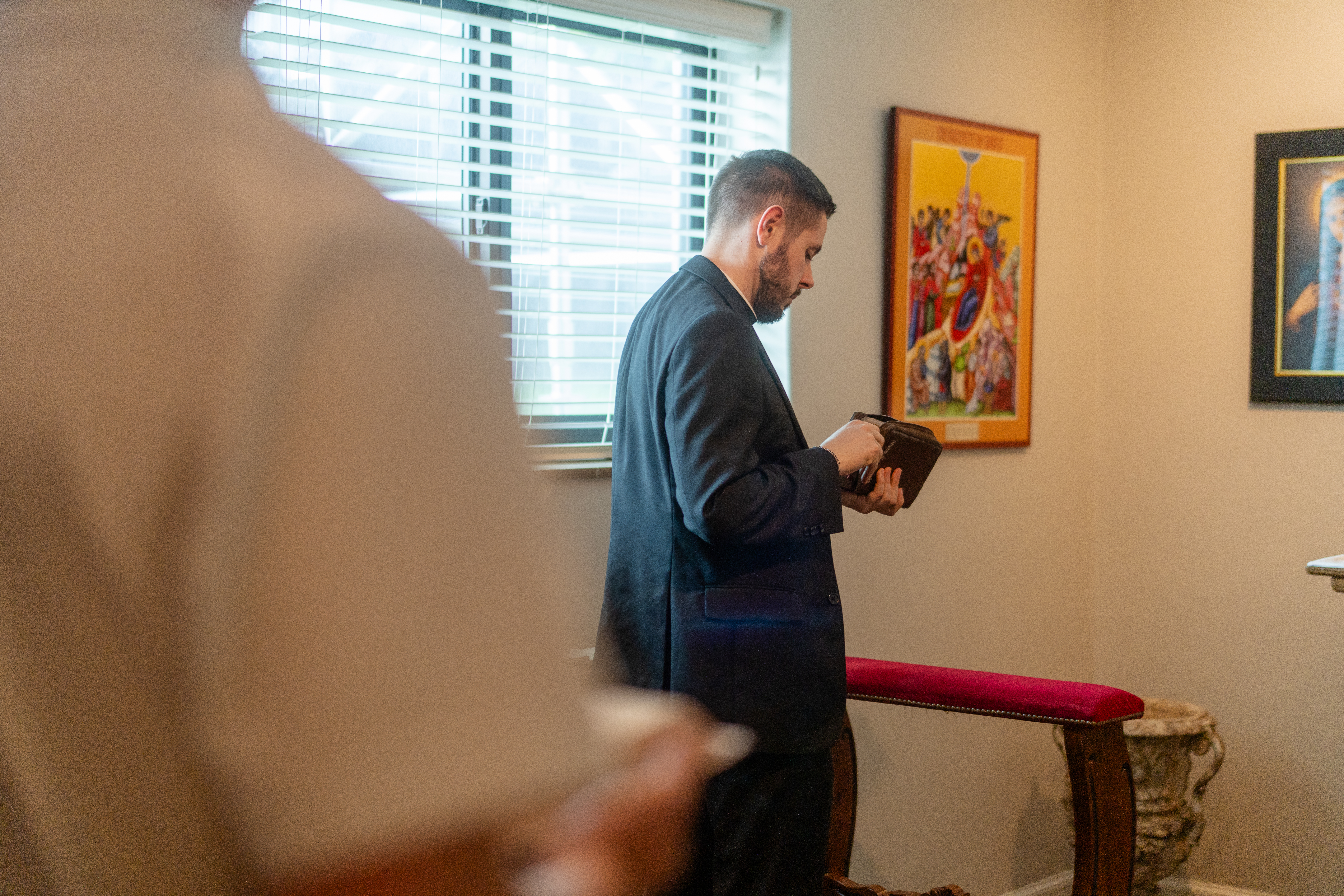
“It has been wonderful to live in community, whether at seminary or in priesthood, because it serves as a great reminder that I am not alone on an island with the challenges that I go through,” Father Votruba said, adding that “the brotherhood” he’s found in living in community has been a tremendous support.
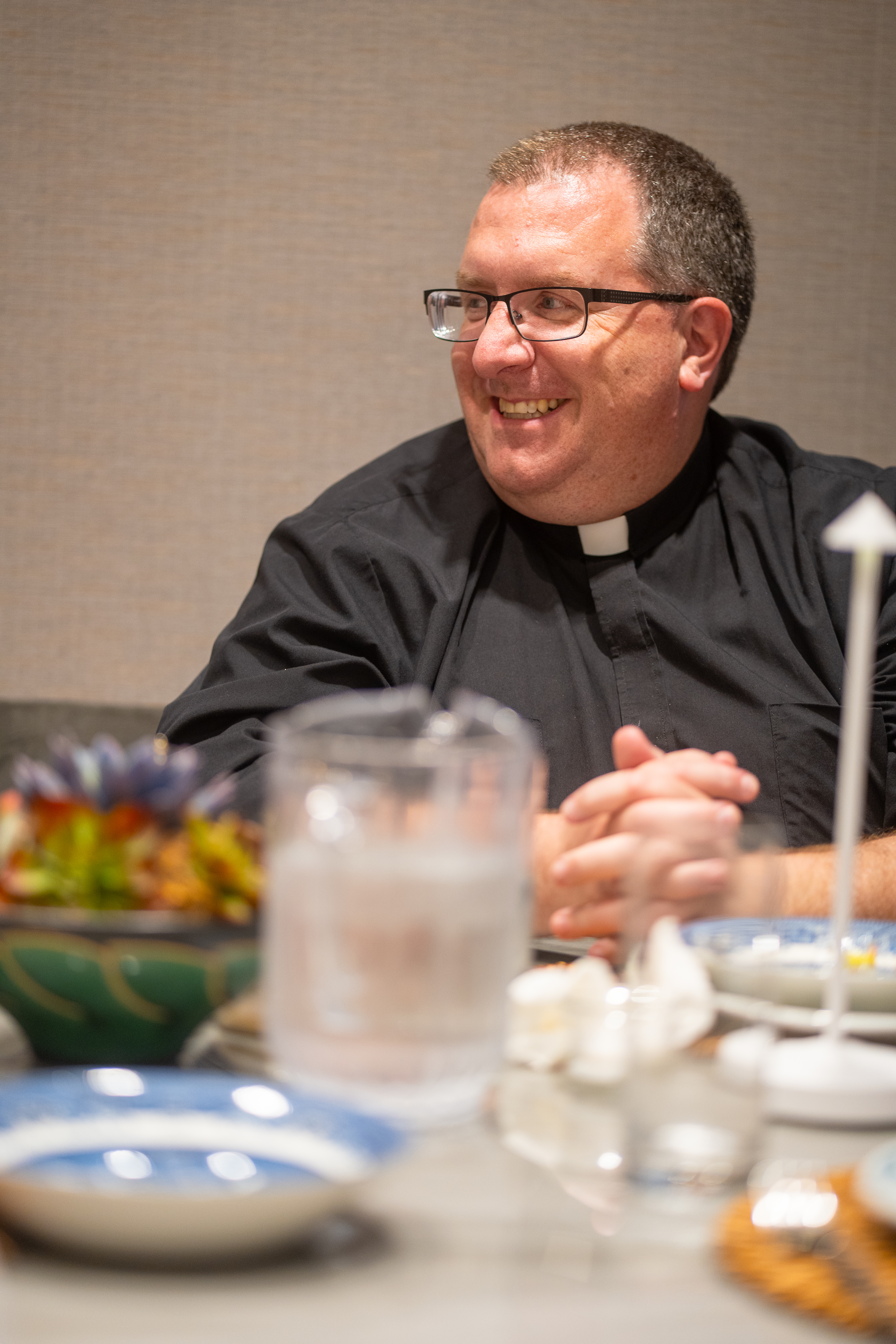
That brotherhood, not surprisingly, is often expressed in good-natured fun.
“We like to prank each other,” Father Kastl said. “Living in a house of guys, if you don’t prank each other, something’s wrong.”
The priests, he said, have gotten “pretty creative” in their efforts to scare each other during Advent, when a “really ugly Santa Claus” doll with bendable limbs has a way of turning up in the most surprising places.
It can also be competitive. Msgr. Patrick Gaalaas, the retired priest living in the cathedral’s rectory, is known as the best chess player in the house.
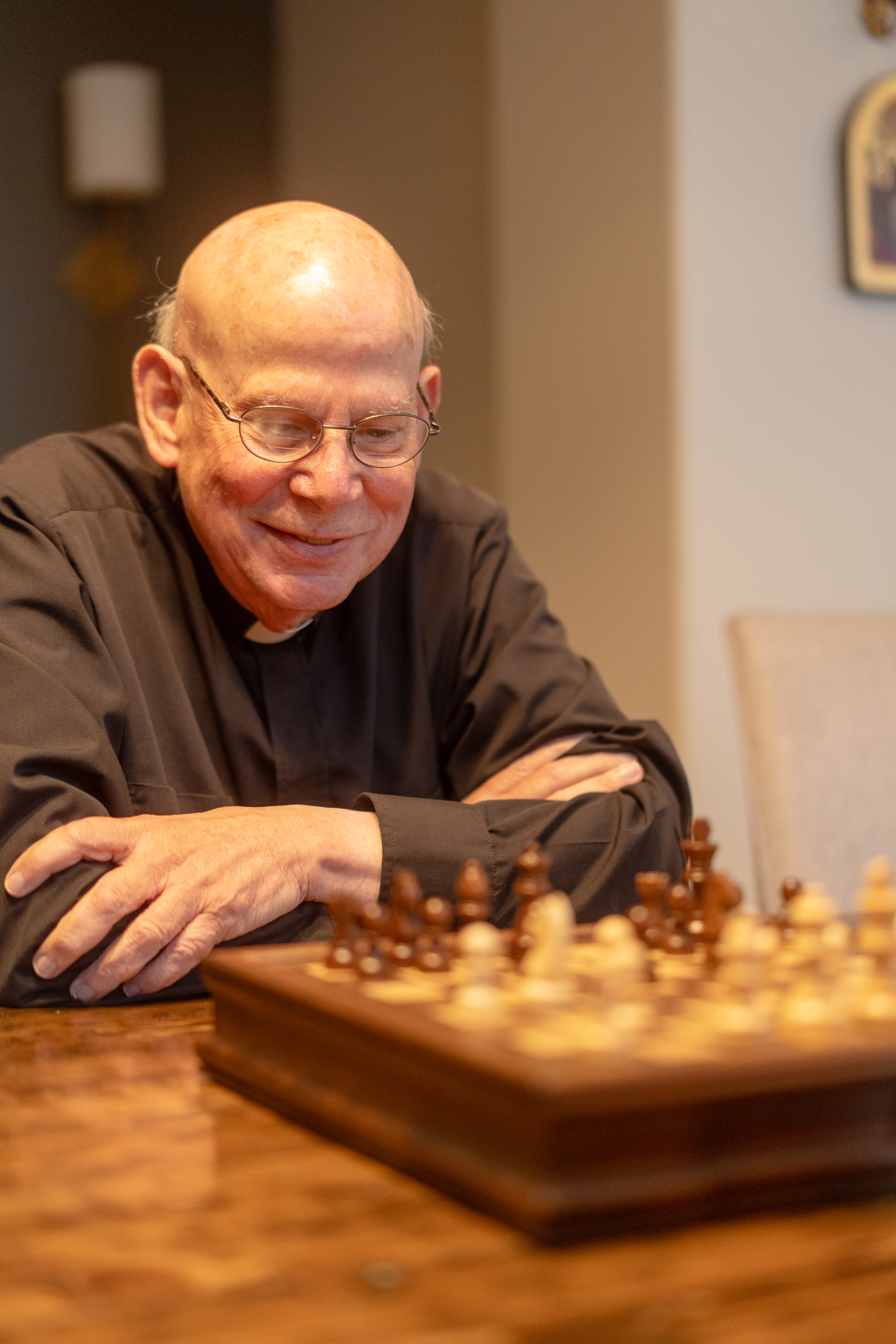
“He’ll try to get guys to come play chess with him,” Father O’Brien said. “He always wins. This summer, we’ll have a seminarian who will be in that ninth room, our guest room. I’m absolutely positive, if he doesn’t know already, he’ll teach him how to play chess. That’ll be a big part of his summer.”
Could living in community be a solution to the feelings of loneliness and isolation parish priests sometimes experience?
“To me, it’s smart,” Father O’Brien said. “The advantage of priests living in community, to me, outweighs the benefits of a priest living [in the rectory attached to the parish] where he works.”
“I think the work that we do can be very exhausting. It can be very isolating. I think there are things that only other priests understand. You know, when I say, ‘Man, I just heard two hours of confessions,’ I think most people would say, ‘Wow, that must have been awesome.’ And other priests know that’s actually really hard.”
In the Diocese of Tulsa, where there are 65 active priests, he said, he suspects half of the active priests live by themselves. Whether this ad-hoc experiment will change that remains to be seen, although having priests live in community would align with Bishop Konderla’s prioritization of the well-being of priests. In his 2024 pastoral letter, he laid out plans to offer priests spiritual direction, retreats, support groups and sabbaticals. Each June he holds a three-day convocation for priests in the diocese at a resort.
Father Kastl, who was at first reluctant to give up his independence to live in community with other priests, now sees the arrangement as an antidote to the stressors put on priests.
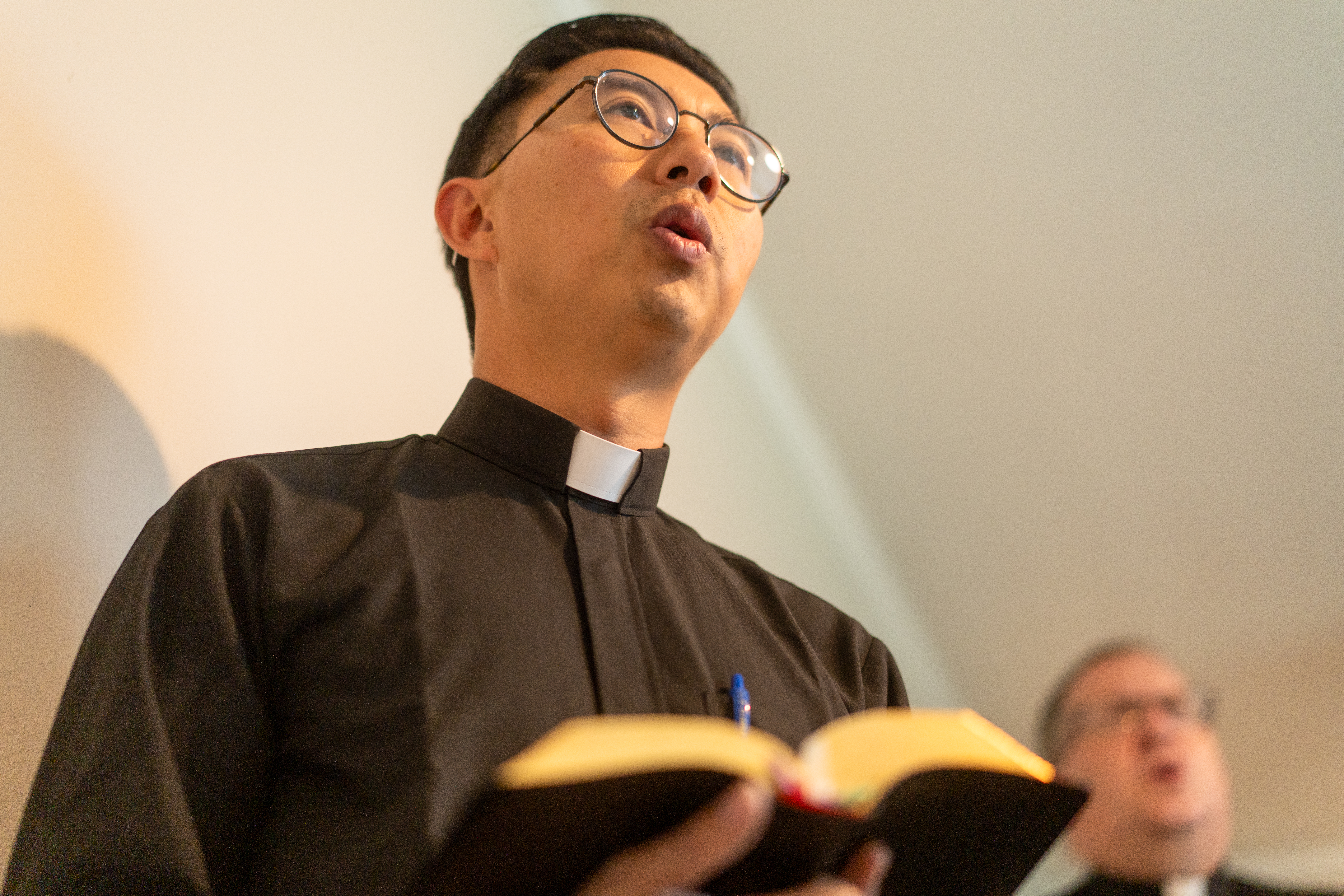
“It just goes to show that priests probably do want or need community, whether they know it or not,” he said. “I think we can be used to living by ourselves and forget the benefits of what community can bring for mental and spiritual health.”


No comments:
Post a Comment