
Why this US Scholar moved to Ireland
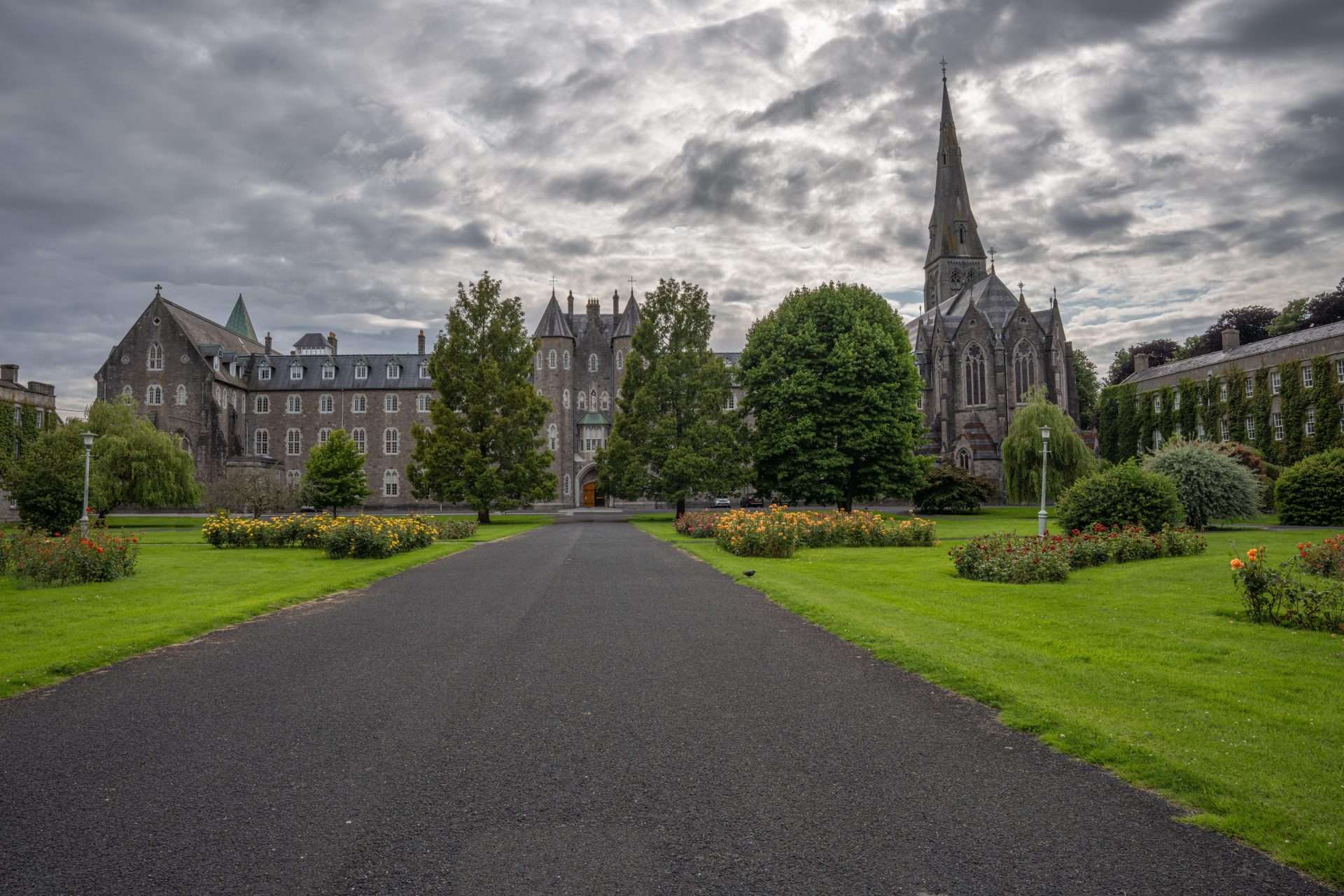
Maynooth in Co Kildare, Ireland
In recent months, several prominent American scholars, including three Yale professors whose research expertise is authoritarianism and fascism, have accepted positions in Canada
While I appreciate the shout-out in the “Word from the Cloisters” (‘Professors in flight,’ 21 June) about Professor Massimo Faggioli’s upcoming move from Villanova University to the Loyola Institute at Trinity College Dublin, the reasons for my move go beyond “flight” from the troubling developments in US politics and higher education.
Of course, in recent months, several prominent American scholars, including three Yale professors whose research expertise is authoritarianism and fascism, have accepted positions in Canada. The Trump administration’s interference with higher education, including pressure that recently led to the resignation of the president of the University of Virginia, is causing many of my colleagues to worry about their careers. Indeed, since Trump’s inauguration in January, queries have increasingly filled my e-mail inbox from academic friends in the US about the possibility of moving to Ireland, the UK, and elsewhere in Europe. Faggioli, too, contacted me.
To be sure, concerns such as these were on my mind over three years ago when I accepted the offer to move from St. Louis University in Missouri to St. Patrick’s College in Maynooth. I had a bad feeling that Trump was likely to be elected. But even had he lost, the MAGA movement and its efforts to dismantle education, healthcare, the arts and other areas essential for the common good won’t go away overnight. The unravelling underway and the rift between blue and red citizens will take decades to repair.
Still, US higher education struggled prior to all this – especially the humanities, especially theology. Even Catholic colleges and universities have been reducing or eliminating theology departments, programmes and faculty positions. Earlier this year, St. Norbert College, a Catholic, liberal arts institution in De Pere, Wisconsin, announced plans to cut 13 majors, including history, chemistry, French and theology. In 2019, Wheeling Jesuit University in West Virginia similarly did away with undergraduate programmes and faculty positions in theology and a score of other academic subjects. As moral theologian Jason King, who is the incoming president of the College Theology Society, observed of our colleagues during its annual convention last month at the University of Dayton in Ohio, “The undercurrent was a growing worry that everything, including the College Theology Society itself, was heading toward collapse.”
Such worries, to be sure, weighed heavily in my decision to leave the US. However, I must share other reasons, including both those that attracted us to Ireland and those that pushed us from the US. I say “us”, moreover, because my spouse and I made the decision together. I should also note that this decision was not easy, and that our three years here have not been without challenges. Still, we left more “lucrative” jobs (she was an ICU-neuro nurse at a major trauma-1 hospital) because, on balance, our quality of life is better in the Emerald Isle.
I first visited the Republic and Northern Ireland in 2000, when my colleague and friend, Revd Gordon Shea, and I brought undergraduates from Simpson College, where I taught at the time, to study for three weeks the Troubles and the peace process. Not only did we meet with Revd Iain Paisley (I have a story about that for another time) in Belfast, we also visited Seán Brady who at the time was Archbishop of Armagh and Roman Catholic Primate of All Ireland. I remember half-jokingly telling him then that I would be interested in moving to Ireland if an opportunity ever arose.
The next year, my wife accompanied me for a holiday in Counties Kerry and Cork, and she too fell in love with Eire and its beauty. Plus, she is the one with the Irish ancestry. Three years later, we returned, accompanied by our dear friends Allyne and Peg Smith, exploring the coasts and the countryside for three weeks before he (also an ethicist) and I presented papers at an academic conference at Trinity. Every few years afterwards, my family and I visited Ireland for vacations, as well as when I gave invited lectures, taught classes and served as an external examiner in Maynooth and Dublin. During one visit several years ago, I surprised my wife with a service in which we renewed our marriage vows in the college chapel in Maynooth.
We loved similar trips to Great Britain over these years. So, for over two decades I kept my eyes open for the possibility of moving. In fact, I was a finalist for a position in Oxford as well as one at Trinity before finally receiving an offer from St. Patrick’s, where I respected the work of some of my predecessors in moral theology, including Enda McDonagh, Hugh Connolly and Patrick Hannon.
Although our combined income is half what it was in St. Louis, and although we rent rather than own a home (the housing crisis is dire, especially in the Dublin region), we feel like we can breathe easier in Maynooth. Our younger daughter, who is in secondary school, says she is safer and freer in Ireland. Unlike her older sister, whose school had a mass shooter (“School shootings”, 4 January), she does not need to fear as much the possibility of getting shot – in the US firearms are the leading cause of death for children and teenagers.
Finally, my favorite thing about being a theologian is teaching, especially undergraduates. At St. Patrick’s, where I also teach seminarians and postgraduate students, there are signs of hope. The undergraduate programme, which I coordinate, has more students studying theology as one of their major subjects than at most Catholic universities in the US, including Boston College, Marquette University, Ave Maria University, and St. Louis University. The only two that I found with more undergraduate majors in theology are the University of Notre Dame and Franciscan University in Steubenville. Significantly, regardless of where they fall on the conservative-to-liberal spectrum, and regardless of whether they are Catholic, agnostic, or Muslim, there seems to be a growing interest in studying theology here. Plus, many of them are working-class, first-generation university students and that is my background, too. A university education, including the study of theology, might change their lives, as it did mine.
I do not consider myself among “the best theological talent”, as implied in The Tablet. As my teacher Stanley Hauerwas responded, when Time magazine called him “America’s best theologian” in 2001, “’Best’ is not a theological category”. But I plan to do my best to teach my students, to learn from them, too, and to be a part of their journey.
Tobias Winright is Professor of Moral Theology at St.Patrick’s Pontifical University, Maynooth, and he is Associate Member, Las Casas Institute for Social Justice, Blackfriars Hall, Oxford University.


No comments:
Post a Comment