
Make Religion Great Again
America’s God has been ailing of late. According to the Pew Research Center—whose statistics on belief are a cardiogram of religion in the United States—the number of Americans claiming religious affiliation has declined steadily over the past two decades. The percentage of those who identify as Christian has dropped more than sixteen points since 2007 (from 78 to 62 percent), while in the same period the religiously unaffiliated or “nones” have risen thirteen points (from 16 to 29 percent). Among those eighteen to twenty-nine years old, 45 percent consider themselves Christians, followed closely by the 44 percent who would describe themselves as “nones.” Although some observers have recently claimed that these trends now seem to have decelerated, if the statistics are accurate, religious membership is at its lowest since the middle of the nineteenth century.
But the numbers aren’t the only sign of religion’s erosion in America, as secularism is more prominent than ever in popular as well as highbrow culture. While the older “new atheism” (i.e., the variety with literary agents) disappeared after making headlines and bestseller lists in the mid-2000s, YouTube abounds with another generation of apologists for unbelief, some of them of a higher intellectual caliber than their freethinking forebears. Meanwhile, film, theater, and television feature figures and stories that openly disparage religion and religious people. As higher education, from the Ivies to state universities, becomes more and more a vocational school for tech and finance capital, the moral coordinates of undergraduates are increasingly avarice and instrumentality. (On an anecdotal level, even though I teach at a Catholic university, I now encounter more openly irreligious students than I ever have before.)
The waning of religion is particularly harrowing to conservatives, for whom God is the heavenly guarantor of capitalist property, family, and nation. Capitalism was hallowed on these shores under Puritan and Evangelical auspices—a “prosperity gospel” has always been an indelible feature of American Protestantism—so God’s senescence would deprive capital of at least one form of enchantment. As the patriarch in the empyrean, God braces the fragile phallic authority of mortal husbands and fathers, now challenged and partly demolished by feminism and deindustrialization. And America has been what Chesterton called the “nation with the soul of a church,” a land whose people believe they possess the sanction of the Almighty. God cannot be allowed to renege on his promises of wealth, fecundity, and glory; if God is dying, we have to find some way to rescue him from oblivion. “We have to save religion in this country,” as then-candidate Donald J. Trump said to a group of pastors in Georgia last fall.
For the American right, Trump’s reelection last November was manna from a darkening heaven. “Look what God has done,” Rev. Franklin Graham marveled in his remarks at the inauguration in January. Trump’s presidency is a case study in the ironies of political theodicy. Though dishonest, adulterous, uncivil, and vindictive, he receives the mandate of heaven to pursue the nation’s new manifest destiny: the eradication of “diversity, equity, and inclusion” in the name of merit; the demolition of the “administrative” (read: welfare and civil-rights) state; the resurrection of domestic manufacturing; the dispossession of nonwhite immigrants; the territorial acquisition of Canada, Greenland, and the Panama Canal; the erasure of “improper ideology” from all accounts of the nation’s history. And reviving America’s God is the catalyst for making America great again. “We’re bringing religion back to our country, and it’s a big deal,” the president said when he signed an executive order on May 1 establishing a “commission on religious liberty” (read: the liberty of conservative Christians to tell everyone else what to think and do). Trump is making religion great again.
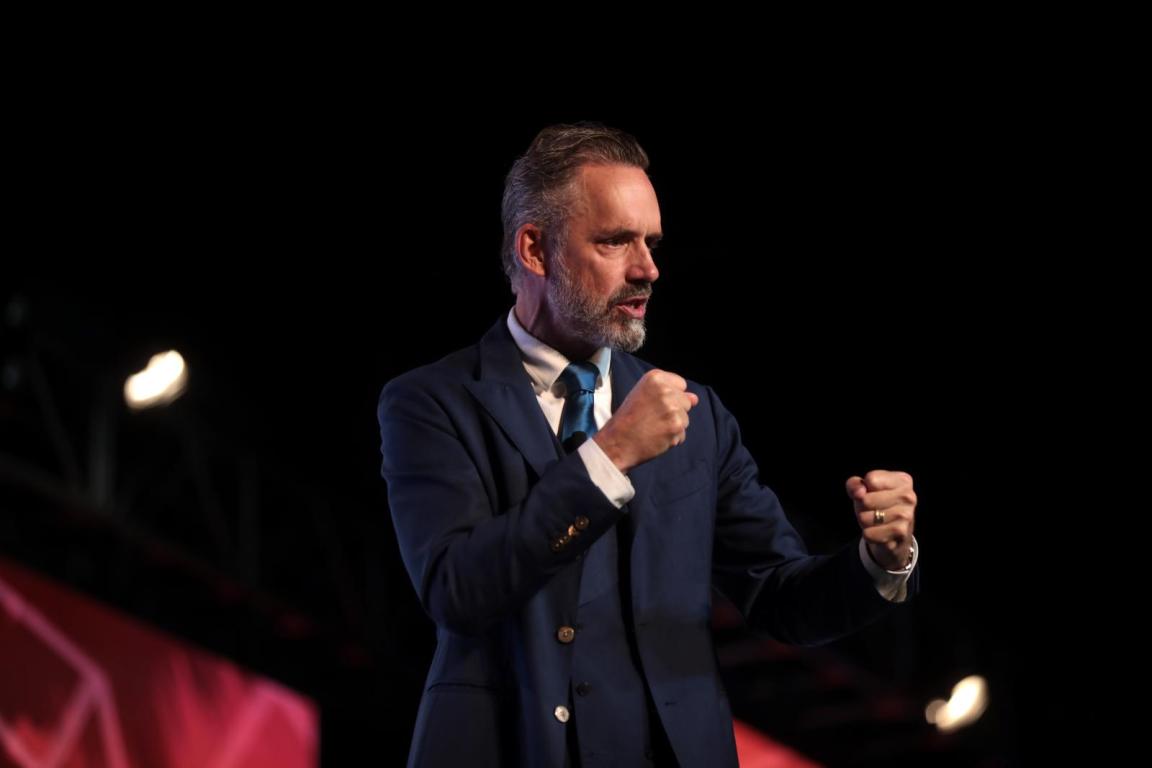
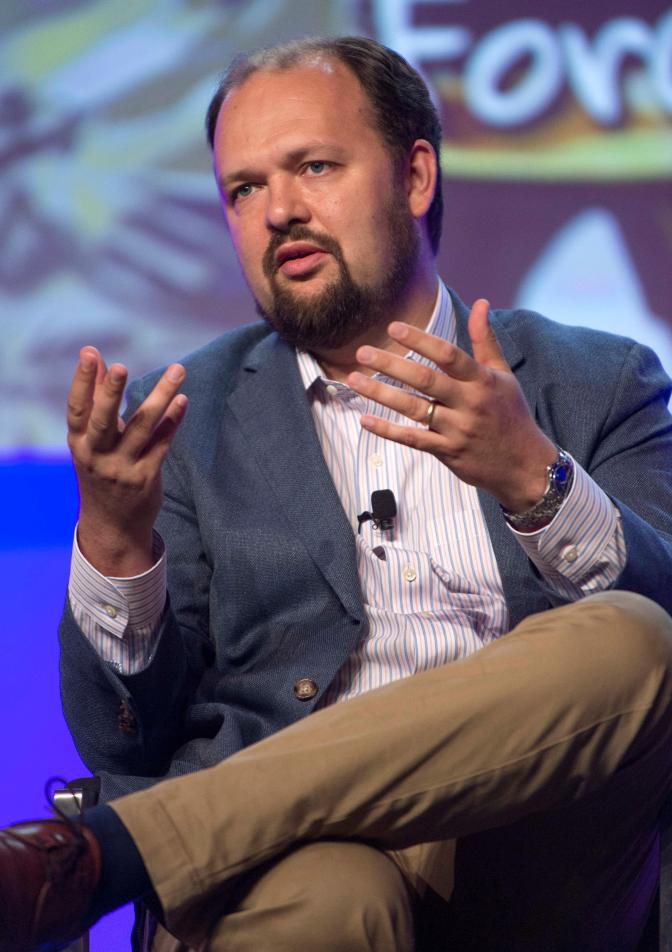
For all their differences, both Jordan Peterson and Ross Douthat represent this right-wing spiritual restoration. A Canadian psychologist and self-styled philosopher and cultural critic, Peterson is a renowned internet personality, fulminating against “political correctness,” “cultural Marxism,” “wokeism,” and the emasculation of men by feminism. Coming after Maps of Meaning (1999), a prolix and meandering volume, and two self-help books aimed primarily at men, We Who Wrestle with God is Peterson’s first extended foray into religion. One of The New York Times’s stable of conservative columnists, Douthat has been a prolific and vehement critic of American religious culture. Believe should be read as the irenic complement to Bad Religion (2012), his history-cum-critique of post-1945 American religious culture, in which “the locust years” of the 1960s marked the advent of decadence. Lately, he’s appointed himself a mediator between the Main Street and Silicon Valley wings of the MAGA coalition, interviewing Trumpian luminaries such as hillbilly elegist, vice president, and fellow Catholic convert J. D. Vance, and “tech bros” such as the venture capitalist–turned–social visionary Marc Andreessen.
Representatives of what might be called the MAGA cultural elite, Peterson and Douthat represent a broader conservative ideological project: the moral and spiritual rehabilitation of the ruling and professional classes. Like Patrick Deneen and other figures on the “post-liberal” right, they stand athwart what they see as the nihilism of the techno-plutocracy and call for the restoration of religion to the center of the cultural establishment. But unlike Deneen and his “aristo-populist” strategy—forging an alliance of conservative mandarins and godly commoners against liberalism—they seek to infuse meritocratic elites with a neo-traditionalist piety. Reflecting what the historian Jeffrey Herf once dubbed “reactionary modernism,” they attempt to embrace the fruits of economic and technological modernity while rejecting its social turbulence and holding at bay its secular rationalism. The reactionary modernist reconfiguration of religious belief is a fascinating experiment in conservative cultural politics, but it doesn’t offer a persuasive remedy for the decline of religious practice.
Peterson and Douthat stand in the intersection of three circles of our cultural moment. The first is a trans-Atlantic coterie of right-wing journalists, academics, podcasters, and commentators: Ben Shapiro, Sam Harris, Douglas Murray, and Charlie Kirk, among others. Their stock-in-trade is “owning the libs” by arguing with (i.e., acerbically dismissing) feminists, Muslims, transgender people, and other purveyors of “wokeism.” The titles of their YouTube videos suggest a delirium of polemical carnage: they “destroy,” “demolish,” or “annihilate” some hapless undergraduate or audience member. (Sometimes, they savage each other, as when Harris “literally dismantles” Peterson.) While they shill for neoliberal capitalism and American imperial hegemony, they present themselves as outlaws and renegades from a “liberal” or “woke” establishment ensconced in elite universities, legacy media, the entertainment industry, and federal bureaucracies.
The second group is a motley lineage of sages, stretching back almost a century, who have drawn on mythology, Asian religions, and esoteric forms of spirituality. Culminating in the lucrative New Age industry, this tradition of fraudulent profundity includes Joseph Campbell, the American scholar whose The Power of Myth was a publishing and television hit in the late 1980s; Alan Watts, the English spiritual popularizer who (mis)introduced Boomers to Buddhism and Hinduism; George Gurdjieff, the Armenian mystic whose “Fourth Way” is a hodgepodge of psychology and occultism; and Kahlil Gibran, the Lebanese-born American guru whose book The Prophet has beguiled millions of readers with a melodic prose that embellishes its utter vacuousness. The most intellectually capacious of these masters was Carl Jung, the Judas of psychoanalysis who betrayed the bodily, libidinal foundation of Freud’s model of the mind for the “archetypes” of (male) animus and (female) anima and a “collective unconscious” from which, he believed, the world’s mythologies and religions emerged. For Jung, the truth of Christianity, for instance, derived not from any quotidian concern for veracity (did Jesus really rise from the dead?) but from its therapeutic efficacy in serving and ordering individual desires. The “depth” of these writers is merely platitude or incoherence conveyed with a veneer of poetic flourish. They elevate the private, customized epiphanies of “spirituality” over the communal and (usually) more ethically and intellectually rigorous demands of religion.
The third circle is a broad array of figures alarmed by masculinity and its discontents in the contemporary West, a crisis provoked by feminism’s acquisition of greater agency and pleasure for women and by the disappearance of industrial jobs that once afforded a material basis for male parenthood, self-respect, and validation. The sociologist Richard Reeves represents the mainstream liberal response to this gender trouble—recommending more attention to boys in primary and secondary schools and greater encouragement of men to enter formerly “feminine” professions such as teaching and nursing. Meanwhile, a more subterranean and malevolent “manosphere” of online influencers and “thought leaders” sublimates male anger and confusion into a variety of channels: dietary and exercise programs, evocations of “classical” civilization (complete with Greek statuary imagery), injunctions to assert dominance over women and weaker men. Its icons include Andrew Tate, “Bronze Age Pervert” (a Yale PhD with a “Bronze Age Mindset”), Mike Cernovich (with a “Gorilla Mindset”), and the publisher Jonathan Keeperman (another of Douthat’s interviewees), whose theory of “the Longhouse” attributes social decay to the increasing power of women. Although Bronze Age Pervert in particular displays an unmistakable homoeroticism, the broader manosphere provides a poisonous cocktail of misogyny and homophobia that, its heroes hope, will embolden their followers to reclaim their rightful place as masters of admiring and subordinate women.
Both self-styled dissenters from the progressive consensus of the elites, Peterson and Douthat established careers as critics of liberalism, secularism, and feminism. After working as a professor of psychology at Harvard and Toronto, Peterson came to wider prominence in the 2010s for his attacks on progressive gender orthodoxies and his stern admonitions to what he considers a beleaguered generation of young men, who have been hectored and defamed by effeminizing bien-pensant liberals and feminists. Drawing on Jungian psychology, he affirms traditional gender roles and, in 12 Rules for Life (2018)—a book suffused with the Victorian self-help ethos of Samuel Smiles—lauds male aggressiveness in striving for a hierarchical position, which is, in his view, the essence of human existence. Peterson is often ridiculed, and for good reason. He talks over and mansplains to female interviewers. He is intensely, even morbidly serious about himself and his work. Watching over a dozen of his videos, I don’t think I ever saw him smile or joke or display a smidgen of self-awareness. This pedantic, humorless demeanor suggests an immense but delicate ego that’s easily provoked. (He once replied to a critical portrait by Pankaj Mishra in The New York Review of Books by calling him a “sanctimonious prick.”) Fueled largely by a desire among young men for moral direction, Peterson’s rapid ascension into the firmament of public intellectual life is evidence of how debased our cultural standards have become.
Douthat has also made a career of skewering the elites among whom he swans. After graduating from Harvard, where he edited the conservative Harvard Salient, he bit his alma mater’s hand with Privilege (2005), an indictment, by turns elegiac and resentful, of the Crimson for its liberal snobbery. (Reminding us of one’s Ivy League pedigree while simultaneously lambasting it has been a conservative form of virtue signaling since William F. Buckley Jr.’s God and Man at Yale.) A champion of conservative Catholicism, Douthat regularly rebuked the late Pope Francis (referred to in Believe as the unnamed “current supreme pontiff”) and more liberal Catholics whom he considers heretics. (Indeed, Douthat thinks that we’re “a nation of heretics,” as he put it in Bad Religion.) In his Times column and The Decadent Society (2020), Douthat has assayed what he views as the moral degeneration of the American meritocracy, especially its tolerance of slovenly manners, sexual permissiveness, and low birth rates.
In their new books, Peterson and Douthat address educated readers who are, in the latter’s words, “unhappy with their unbelief.” Peterson’s We Who Wrestle with God, which presents itself as a meditation on the Torah, is a turgid and exasperating mess of a book—an Augean stable through which I slogged so that you, dear reader, won’t have to. (He tells us that he’s writing a sequel on the New Testament, so we’ve been warned.) In keeping with his internet persona, Peterson writes long passages that are simply but laughably unreadable. “To say it again” appears more than once, a sign that even Peterson suspects he hasn’t said it well the first time. Poor word choices inundate the text (he confuses “mitigate” with “militate”) along with pointless sentences. He starts one chapter with “We know nothing about Jonah when we’re introduced to him,” which is, well, obvious. As William James once wrote of John Dewey, Peterson’s prose is damnable, if not God-damnable.
From this vast farrago I could discern two overarching themes: the masculine/Great Father versus the feminine/Great Mother, and the Hero/Dragonslayer. For Peterson, ontology is gendered; cosplaying Jung and Campbell, Peterson posits that the masculine represents “order, day, light, actuality, and permanence,” while the feminine stands for “chaos, night, darkness, possibility, and change.” Epitomized in “the Great Mother,” the female, he writes, is the formless “primordial chaos” that must be subdued and subjected to law, decreed by “the Great Father” who is “the a priori structure of value.” Though Peterson notes that Adam and Eve share a “fundamental equality,” he promotes an unambiguous gender politics of dominance and subordination. Just as order must master chaos, men must take the lead with women; male supremacy is not historical but rather ontological in nature. Like shibboleths about gender “complementarity,” patriarchy is, for Peterson, shrouded in claims of benevolence: men are playboys or power brokers, he muses, until they become “masters of the responsibility that appears with woman and child.” How does one become a man? Become a “master of responsibility”—that is, a “responsible master”—over a woman and children.
Feminism, in Peterson’s account, disrupts the order of nature, unleashing the pandemonium that lurks within the feminine principle. It’s clear that Peterson is terrified not only by feminism but by women. It’s bad enough that they’re manifestations and agents of chaos and darkness; things get worse when they let loose vices like empathy into the world. Women (or “Eve”) are, he writes, “more sensitive to the things that will endanger or hurt people and cause them distress.” Indeed, “Eve is predisposed by nature and God to speak for the oppressed, ignored, and marginalized, bringing their concerns to Adam’s attention.” Lest you think that empathy is a virtue, Peterson warns that women’s “emotional sensitivity” to suffering and injustice is also a “temptation to sin,” a “deceitful pride and arrogance” that makes such feelings a moral foundation. Men (or “Adam”) must armor themselves against such haughty blandishments, and cultivate a stony, unflinching indifference to the cries of the poor and the weak. For Peterson as for Elon Musk, empathy is a weakness.
Enfeebling masculine order, empathy would geld the Hero/Dragonslayer, Peterson’s ideal for men. Exaltation of the warrior ethos stems from Peterson’s gendered ontology: if masculinity consists in imposing order on feminized chaos, then incessant conflict and conquest become essential to male identity. Victorious confrontation with “the dragon” (life’s difficulties, I guess) procures for men “the riches that never cease”: wealth and pliant women. The successful Slayer seizes hold of “the gold hoarded by the dragon” and “the grateful—and now-willing virgins freed from the dragon’s lair and proudly and rightly impressed by their rescuer.” Wrapped in knightly chainmail, these are the fantasies of the manosphere, where success in hierarchical competition is rewarded with sexual plenitude.
If the dragonslayer mythos purports to galvanize male achievement, it also reveals the ontology of violence central to Peterson’s worldview. There’s an insidious underside to Peterson’s genealogy of morals: just as “order” requires a primordial violence in order to establish its primacy, his ethic of valor and heroism needs the existence and endurance of evil. Peterson espouses a profoundly pagan account of cosmic violence, in which tumult, conflict, and dominion are structurally integral features of the universe. While much of Peterson’s appeal to conservative Christians lies in his hostility to “wokeness,” it also resides in his ontological consecration of the will to power—disguised, as the need to coerce so often is, in the rhetoric of protection and “liberty.”
But Peterson’s fans may be disappointed, as he hints at numerous points that he doesn’t really believe in God. In interviews, he finesses the inevitable question, “Do you believe in God?” (or, “Do you believe in the resurrection of Christ?”) with sophomoric polemical ruses: “What do you mean by do? What do you mean by believe?” Peterson knows damn well what he’s being asked, but he’s too dishonest to say what he really thinks—that God and the Resurrection are useful fables. In the pages of We Who Wrestle with God, he’s no less duplicitous, but he also inadvertently reveals his hand. What if, he muses, “a ‘necessary fiction’ is true precisely in proportion to its necessity?” “What if?” is always a question being made to do the work of an argument. And in what does this “necessity” consist? “A truth that does not serve life,” he tells us, “is a truth only by an ultimately counterproductive standard.” Whatever Peterson means by “serving life,” this is a squarely pragmatist criterion of truth, signaling a fundamentally utilitarian approach to religion and theology.
For all his tiresome paternalist posturing, Peterson reflects a thoroughly therapeutic conception of religious conviction. He echoes Paul Tillich when he writes that “God is what we encounter when we are moved to the depths”; it is “what must be placed properly atop both the psychological and social hierarchy”; it is the supreme symbol of our engagement in “upward-aiming dialogue...that provisions and stabilizes the psyche and the community.” In short, God is whatever works to keep you and society going. It’s what enables men to slay dragons and women to fall rapturously into their arms. Indeed, as Peterson concludes on the penultimate page of his book, the divine is real “insofar as its pursuit makes pain bearable, keeps anxiety at bay, and inspires the hope that springs eternal in the human breast...it is as real as the further reaches of the human imagination.” In the end, Peterson is a psychologist, not a prophet, of religious renewal. God isn’t real; he’s a “necessary fiction,” an ontological and spiritual stimulant.
Peterson represents something unusual in the intellectual lineage of modernity: an unironic embrace of religion’s putatively fictional character. Like earlier unbelieving conservatives—George Santayana, for instance, a self-described “atheistic Catholic”—Peterson wants the social and psychological effects of religious belief without having to actually believe. He gives the game away when he asserts early on that “the most productive, freest, most stable and peaceful societies the world has ever known are predicated” on the Bible. This is perfect reactionary modernist religion, in which conservatives get to keep what they like of modernity under the guise of tradition, the violence of patriarchy and capitalism decked out in Judeo-Christian raiment. Men who slay dragons in the marketplace can hope to accumulate and reproduce abundantly.
While Douthat clearly doesn’t believe that God is a “necessary fiction,” his reasons for advocating belief are, in the end, similarly pragmatic. Refusing to concede to unbelievers that religion is based on irrational faith, he insists that belief of some kind is in fact “not an option but an obligation” for any intelligent person. Whatever we’ve learned about nature or history over the past three centuries, religion, he claims, remains “an entirely reasonable perspective on the nature of reality and the destiny of humankind.” Atheism requires us to ignore things about the world that we can plainly see—its order, its beauty, its very existence—and these features “bespeak some kind of design, some supernatural intentionality.”
In lucid and engaging prose, Douthat anchors his case for religious belief in two claims: that science cannot explain certain phenomena (such as the mind) and that the persistence of religious experience in modernity proves that Max Weber’s “disenchantment of the world” is “a false paradigm.” Noting the significant empirical and logical problems with naturalistic accounts of consciousness, Douthat concludes that the mind remains “an enigma, a mysterious substance unto itself.” Deflating David Hume’s confident expectation that with the advance of “sense and learning,” ever fewer people would experience miracles, divine visitations, and other occurrences of the numinous, Douthat cites many bizarre tales—appearances of angels, saints, the dead, and the Virgin Mary, UFOs, near-death experiences—all of which, he argues, offer “proof of the resilience of spiritual experience under secular conditions.”
Douthat undercuts his case at several points. He concedes that belief in the reality of spiritual experiences “doesn’t compel belief in how these experiences are packaged or interpreted,” and that belief in a spiritual reality “doesn’t vindicate any particular religious system.” He grants that culture plays a powerful role in “shaping the interpretation of religious experience”—even, one could add, to the point of interpreting an experience as religious rather than as, say, an aesthetic epiphany. He avers that the soul “may not be exactly as ancient religions imagined it.” While he voices skepticism about the achievements of modern biblical scholarship (a voluminous literature with which neither he nor Peterson appears to be very familiar), he affirms “the basic historicity” of the gospels and admits their “memoiristic” character.
It’s also hard to credit some of Douthat’s more tendentious arguments. Dismissing the recently resurrected case for universal salvation, he insists that in “a redeemed and transfigured universe, some souls are cut off from God forever” and that universalists are busy “reinterpreting” New Testament passages. But if some souls are lost, then the universe hasn’t been redeemed or transfigured, just some parts of it; and the interpretation of certain biblical passages is precisely what’s at issue—and has been, in fact, since the earliest days of Christianity.
Still, while I don’t think Douthat’s case is very compelling, I remain broadly sympathetic. If you’re an unbeliever, I doubt that anything in this book will move you; if, like me, you already believe, you won’t need this book to convince you. But as an account of a certain kind of belief—I suspect that Douthat is, like myself, more religious than spiritual—Believe is a worthy vindication. Over the course of my own life in faith (baptized and raised Catholic, devout as a boy, apostate for a while, then back, as a “liberal,” in the fold), I’ve moved toward a qualified, leery openness toward the kind of experiences Douthat recounts. I don’t stop myself as much as I used to when I pray to St. Anthony to help me find my keys, and I didn’t roll my eyes (much) when a friend recently told me that her long-dead aunt had appeared on her porch. And I, too, find in Jesus what Douthat terms “a special kind of urgency”—a radical call to a radical love that resides in the marrow of the cosmos.
Yet, as with Peterson, there’s a pragmatic dimension to Douthat’s argument that undermines it as a case for belief. He says that he eschews utility as a reason for faith; unlike Peterson, he objects to thinking of religions as “psychologically helpful whatever their truth content,” and he criticizes Ayaan Hirsi Ali for her “instrumentalist” account of conversion, one in which “the West” figures more prominently than Christ. Yet he calls it “a reasonable bet” that “the more popular, enduring, and successful world religions are more likely than others to be true.” Douthat’s “successful” sounds a lot like Peterson’s “productive.” Given his evident sympathy for broligarch visionaries like Andreessen, I can’t help wondering how a “successful” religion might align with the theology of a Vance or a Peter Thiel, two other disgruntled meritocrats who’ve fused Christianity with techno-capitalism.
Published in the early months of the second Trump term, Believe can’t be read apart from Douthat’s self-appointed role as arbitrator between parts of the MAGA confederacy. In a July 2024 New York Times column, Douthat envisioned a “tech-trad alliance” in which a “right-leaning counter-elite”—spearheaded by Thiel, Musk, and other “anti-woke” tech bros from Silicon Valley—unites with religious “neo-traditionalists” in a postliberal cultural politics that will rescue America and the West from a “slough of despond.” Characterized by “a shared faith in cosmic order,” human destiny, and a link between “cultural and intellectual fertility and literal fertility,” this reactionary modernist vanguard would flourish, Douthat speculated, only if “traditional religious belief makes a comeback...within the American educated classes.” (More sociologically acute than Deneen, Douthat sees that a traditionalist religiosity would have to penetrate the professional and technical intelligentsia of any “aristopopulism.”) At the point of the spear is Vance, whose desire to be a “tribune of the common man” could well dovetail with a prophetic role as “the forerunner of a religious elite waiting to be born.” Douthat’s hope could not be clearer: a morally rejuvenated meritocracy—faithful, forward-looking, and fecund—leading a civilizational renaissance of consecrated technological progress.
Of course, this hegemonic bloc exists nowhere outside Douthat’s imagination. Save for Thiel’s bizarro theologizing, no one among the tech bros shows the slightest interest in a “tech-trad alliance”; Silicon Valley’s brand of religiosity is better exemplified by transhumanism. And Vance is an unlikely candidate to lead anything, let alone a renaissance. A surly and arrogant caddy for Trump, he’s shown no populist or theological credibility: his Senate record exhibited little concern for workers (he favors company unions rather than, well, real unions) and his remarks about the ordo amoris—arguing that Christianity encourages us to favor family, friends, and neighbors over outsiders—were flippant and ill-informed. His venomous quip about “childless cat ladies” was worthy of Peterson, and it was only the most vile and fatuous in a long string of misogynist remarks. A textbook arriviste, Vance is no man of the people; he’s a fervent and reliable lackey for the emerging techno-feudal patriciate.
Which is why he is also the Catholic avatar of reactionary modernist religious faith, and why Christians of all denominations should not make such religion great again. Christianity is not about slaying dragons or pulling oneself up by one’s bootstraps; it’s a faithful witness to the primordial peace and love at the core of creation. And if that means radical empathy for even the most wretched of our fellow creatures, then so much the worse for sentimentalists of authoritarianism like Jordan Peterson. We have no business allying with the high-tech exploiters of Silicon Valley, whose only real faith is in their technological expertise and accumulative prowess. Any religion that seeks to preserve itself through such ruses will not be made great again, for the simple reason that it was never great to begin with. Some gods turn out to be idols, carved from our fear or greed or lust for power. Religion has practical implications, of course, and it always compromises to some degree with the ways of the world. But truth for its own sake, beauty for its own sake, goodness for its own sake, no matter where they take us—that’s where religion’s greatness lies.
We Who Wrestle with God
Perceptions of the Divine
Jordan B. Peterson
Portfolio
$35 | 576 pp.
Believe
Why Everyone Should Be Religious
Ross Douthat
Zondervan
$29.99 | 240 pp.


No comments:
Post a Comment