
Leveraging Belief
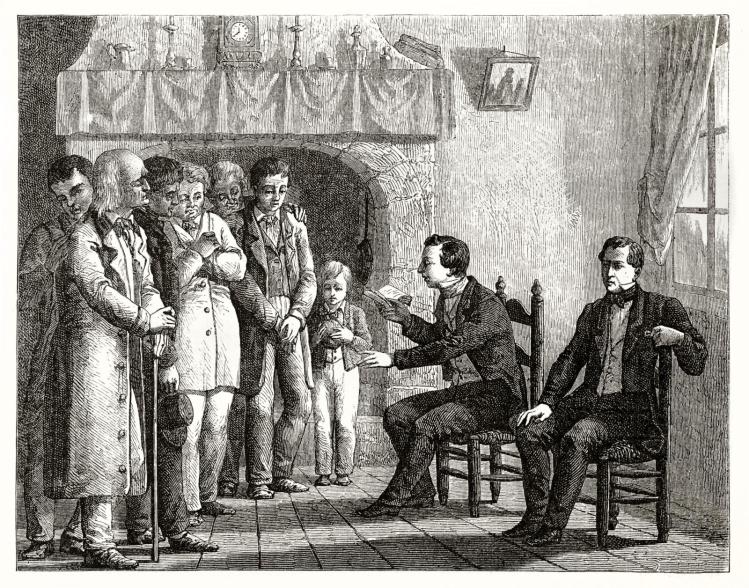
In the canon of American innovation, Joseph Smith stands alongside Edison, Bell, and the Wright brothers—not for technology, but for theology. Where others gave us electricity and flight, Smith gave us a new religion: expansive, revelatory, and determined to build its own sacred infrastructure on the shifting frontier of nineteenth-century America. That this religion, Mormonism, emerged not only intact but globally influential speaks to a fact too easily overlooked in accounts of American pluralism: some visions, however implausible they seem at first, endure not despite opposition but because of it. Smith’s blend of ecstatic prophecy and institutional ambition inaugurated not just a church, but a civic theology—one that claimed territory, authority, and citizenship, and ultimately collided with the democratic ideals of the new republic.
John G. Turner’s Joseph Smith: The Rise and Fall of an American Prophet is less a reassessment than a reckoning. Drawing on newly accessible Joseph Smith papers, Turner offers a biography of narrative strength and clarity. He presents Smith not as a fraud or mystic, but as what Turner calls “a relentless religious innovator” whose revelations always reflected, and often reshaped, the anxieties of his time. Smith comes across as audacious because he was: claiming visions, revising Scripture, marrying dozens of women (most already married), and founding a city-state whose theological ambitions were matched only by its political provocations. Turner’s achievement is to show how such audacity—spiritual, institutional, and rhetorical—proved both magnetic and combustible.
Born in 1805 to an economically precarious family in upstate New York, Joseph Smith came of age in what historians call the “Burned-Over District”—a region aflame with revivalist passion and spiritual experimentation. His parents, especially his mother Lucy, nurtured Joseph’s expectation of divine communication, and he internalized the vernacular mysticism of his surroundings: visions, signs, spirits, and sudden salvation. Turner captures this cultural atmosphere vividly, showing how Smith’s earliest religious experiences—beginning with his now famous “First Vision” at age fourteen—reflected an American culture in which revelation was not an aberration but an expectation.
The story is well-known but rarely told with such narrative precision. Distraught over sectarian conflict and desperate for assurance of salvation, young Joseph turned to prayer in a grove of trees. What followed was theophany: a vision of God the Father and Jesus Christ instructing him to join none of the existing churches, for all were corrupt. It was an audacious claim for a teenager with no formal theological training. But Smith’s genius, as Turner shows, lay not in invention ex nihilo but in recombination: folk magic, biblical typology, Protestant piety, and American exceptionalism all found new life in his revelations. Smith’s mystical tools—seer stones, dowsing rods, golden plates—may now seem arcane, but to his early followers, they testified to a porous world, alive with divine communication and sacred possibility.
Turner does not ignore the implausibilities—or the opportunism—of Smith’s early claims. He is clear, for instance, that there is no historical evidence for the existence of the golden plates from which the Book of Mormon was purportedly translated. But his focus is on the deeper drama: not whether Smith was lying, but how he built a community around his visions, held it together through crisis, and adapted his theology to the needs of a growing, often beleaguered church. He taught others how to receive visions and affirmed their dreams and ecstasies—until their revelations threatened his own. Then he drew the line.
One of Turner’s most compelling contributions is to show how Smith’s revelations became a mechanism for managing authority. From the outset, he encouraged spiritual gifts—visions, tongues, ecstatic prophecy—but when these experiences became too plural or too competitive, he asserted the singularity of his own divine mandate. Revelation, for Smith, was not only a mode of communion with God but a tool of governance. Turner describes this paradox with care: Smith fostered a fervent spiritual democracy while insisting on prophetic centralization. It was a high-wire act of institutional charisma, and for a time, it worked.
To call Smith a religious entrepreneur is not merely to describe his inventiveness, though Turner provides ample examples of that: seer stones and golden plates, the Book of Mormon and the revised Bible, the introduction of baptisms for the dead, secret priesthood orders, dietary codes, temple ceremonies, and a cosmology of eternal progression. Smith built a theological system by layering revelation atop revelation, often modifying past declarations or superseding them entirely. Turner helps us see Smith’s evolving strategy for institutional survival.
Smith’s authority lay not just in his spiritual audacity but in his capacity to respond—sometimes brazenly—to the shifting demands of his growing movement. When challenged, he revealed more. When authority wavered, he added offices. When discontent brewed, he blamed “transgression” among the Saints. Each crisis became, in Smith’s hands, a catalyst for further revelation.
But to grasp the full significance of Smith’s career, Turner insists, we must also reckon with his political imagination. Smith did not merely found a church; he built a city, raised a militia, opened a bank, owned a store, managed landholdings, and ultimately ran for president. He issued prophecies, presided over sacraments, enacted civic ordinances, and imposed martial law. In Nauvoo, Illinois, Smith’s prophetic and political roles fused completely. He claimed to speak not just for God but for a people. The result was a theocratic populism—democratic in its appeal to the disempowered, absolutist in its expectation of obedience. For Smith, divine authority sanctioned not only private morality but public order.
Turner shows how Smith’s pursuit of land and legal autonomy was not just practical but religious. Property became a shield against persecution and a theater for divine manifestation. The Saints needed space—not metaphorical space, but actual acreage—in which to build the Kingdom of God. Yet the more independence they claimed, the more threatening they appeared to outsiders. A community that votes as a bloc, trades with itself, answers to its own prophet, and gathers converts from across the Atlantic: such a community quickly becomes, in the eyes of its neighbors, a state within a state. Mormon settlements promised a sacred order. They also provoked a political crisis.
In this, Turner’s biography becomes more than an account of religious origins. It is a study in the perennial tension between religious solidarity and liberal democracy, between collective identity and civic inclusion. Smith’s story reveals how pluralism can fray when minority communities seek not mere toleration but power, and how the line between prophecy and provocation becomes dangerously thin when divine legitimacy is claimed in matters of governance. The logic of American religious freedom—that belief is private, voluntary, harmless—is strained to the breaking point by a prophet who insists that the voice of God carries civil authority and legal immunity.
This is why Smith’s life resists tidy categorization. He was not simply a con man or a spiritual genius, a visionary or a demagogue. He was all of those, depending on where one stood. What emerges most powerfully from Turner’s account is how thoroughly Smith collapsed the boundary between revelation and administration, between spirit and state. His revelations commanded votes, land deeds, and loyalty oaths. His followers signed affidavits and made covenants. And when dissenters printed criticisms, he shut down their press. At his death in 1844—murdered in jail by a mob—Smith was no longer just the founder of a church. He was the head of a functioning polity. It is this convergence of the sacred and the civic that makes his story not only dramatic but politically unsettling.
By the time Joseph Smith pronounced that the whole of America was Zion, he had ceased to distinguish between church and state, prophecy and policy. What began in visions ended in courts and gunfire. In the current moment, when the country is again debating the boundaries of religious liberty, Smith’s story reminds us that the challenge is not only how to protect belief, but how to understand power when belief is its source.
Toward the final pages of Turner’s book, one theme rises into unmistakable clarity: the extent to which Smith fused religious and political leadership into a single vocation where conviction and control were inseparable. He was, in turn, prophet, banker, mayor, militia commander, and presidential candidate. He governed temples and cities, conducted marriages and military drills, issued scripture and signed municipal ordinances. What began as ecstatic communion with the divine became a full-blown civic theology, in which revelations ordered land purchases, justified armed defense, and promised divine protection for a persecuted people. Elevating divine immediacy above codified law, a late revelation proclaimed, “Ye are my constitution, and I am your God.”
Turner gives attention to the contradictions: Smith’s plural marriages, often cloaked in secrecy and pressure; his readiness to silence dissent; his unwillingness to distinguish between sacred authority and personal control. But Turner also shows that Smith was responding to an existential dilemma. With courts offering no protection, mobs threatening destruction, and civil authorities wavering or complicit, Smith believed that only a parallel order—God’s kingdom on earth—could preserve his people. The resulting structure was not just spiritual but political: a city of refuge governed by revelation, held together by loyalty and sustained through continual expansion. In Nauvoo, the Mormon experiment in self-rule confronted the limits of American tolerance.
Turner’s achievement lies not only in recovering a singular life, but in illuminating a recurring dilemma: power becomes unavoidable once belief enters the political sphere. But when spiritual conviction claims civic authority, how should a democracy respond?
Joseph Smith
The Rise and Fall of an American Prophet
John G. Turner
Yale University Press
$35 | 464 pp.


No comments:
Post a Comment