
Cardinal Salazar was delivering the final presentation of the first day of the meeting on the protection of minors
The Tablet
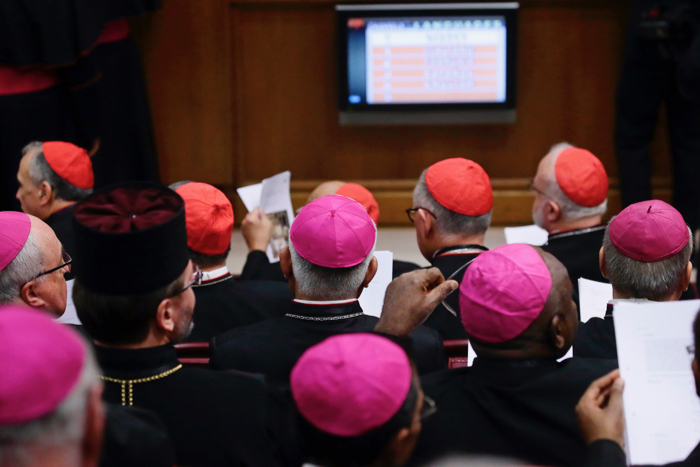
Prelates attend
the opening session of the meeting on the protection of minors in the
church at the Vatican Feb. 21, 2019.
Photo: CNS photo/Evandro Inetti, pool
Photo: CNS photo/Evandro Inetti, pool
Addressing Pope Francis and nearly 190 representatives of the world's bishops and religious orders Feb. 21, Colombian Cardinal Ruben Salazar Gomez of Bogota, president of the council known as CELAM, said that bishops must recognise that "serious errors" in the exercise of authority have "increased the severity of the crisis".
- "A brief analysis of what has happened shows us that it is not only a matter of sexual deviations or pathologies in the abusers, but that there is a deeper root too," said Cardinal Salazar. "This is the distortion of the meaning of ministry, which converts it into a means to impose force, to violate the conscience and the bodies of the weakest. This has a name: clericalism."
The cardinal said that when faced with cases of abuse, a clerical mentality within the church has led bishops to act like salaried workers who "upon seeing the wolf coming, flee and leave the flock unprotected".
"And we flee in many ways," he explained, by "trying to deny the dimension of the denunciations presented to us; not listening to the victims; ignoring the damage caused to the victims of abuse; transferring the accused to other places where they continue to abuse; or trying to reach monetary settlements to buy silence."
Bishops, he added, must also stop minimising the crisis by asserting that "abuses occur on a larger scale in other institutions," because the existence of abuse outside the church "can never justify the occurrence of abuses in the church".
"There is no possible justification for not denouncing, not unmasking, not courageously and forcefully confronting any abuse that presents itself within our church," Cardinal Salazar said.
Bishops also have a responsibility to guide priests and consecrated men and women their diocese toward holiness and establish a close relationship with them, beginning during the time of their formation.
Today, he said, "it is clear to us that any negligence on our part can lead to canonical penalties, including removal from ministry, and civil penalties that can even lead to imprisonment for concealment or complicity."
Finally, Cardinal Salazar told the bishops that they have a responsibility to be close to the people of God and a duty to listen to them, especially those who have suffered abuse.
"One of the first sins committed at the beginning of the crisis was precisely not having listened with open hearts to those who charged that they had been abused by clerics," he said.
Among the most egregious ways that some bishops have acted toward victims was by "minimising the pain and damage" of the abuse by thinking that the only motive for survivors to report abuse was "to seek financial compensation".
"'The only thing they are looking for is money' was the recurrent phrase," the cardinal said. "There is no doubt that accusations are sometimes orchestrated. There is also no doubt that on many occasions attempts have been made to reduce the redress to the victims in terms of monetary compensation without taking into account the true scope of that reparation."


No comments:
Post a Comment