
One year into Leo’s pontificate, the first American pope has hardly kept quiet about his priorities. Leo’s firm stance against war, authoritarianism, and economic injustice was on vivid display during his pastoral visit to Africa, and his defense of migrants is sure to be made even sharper on his upcoming symbolic trip to the island of Lampedusa on July 4. It’s surprising, though, that another of Leo’s priorities seems to garner relatively scant attention: his renewed focus on the Second Vatican Council, which Leo stressed in his first papal address to the cardinals and strikingly called the “the guiding star of the Church’s journey today” as he launched a catechetical series of Wednesday audiences on the Council.
In these talks, which are still ongoing, Leo has adopted a systematic approach, devoting several weeks to each conciliar constitution. This tells us something significant, not only about his views on Church reform and renewal, but also about how he intends to lead the Church as it confronts a deepening crisis of democracy throughout the world. At a moment when American democracy faces some of its gravest challenges yet, Leo is reminding us that American Catholics, especially at the Council, saw their country’s democratic project not only as something worth preserving, but indeed as a key source for ecclesial renewal.
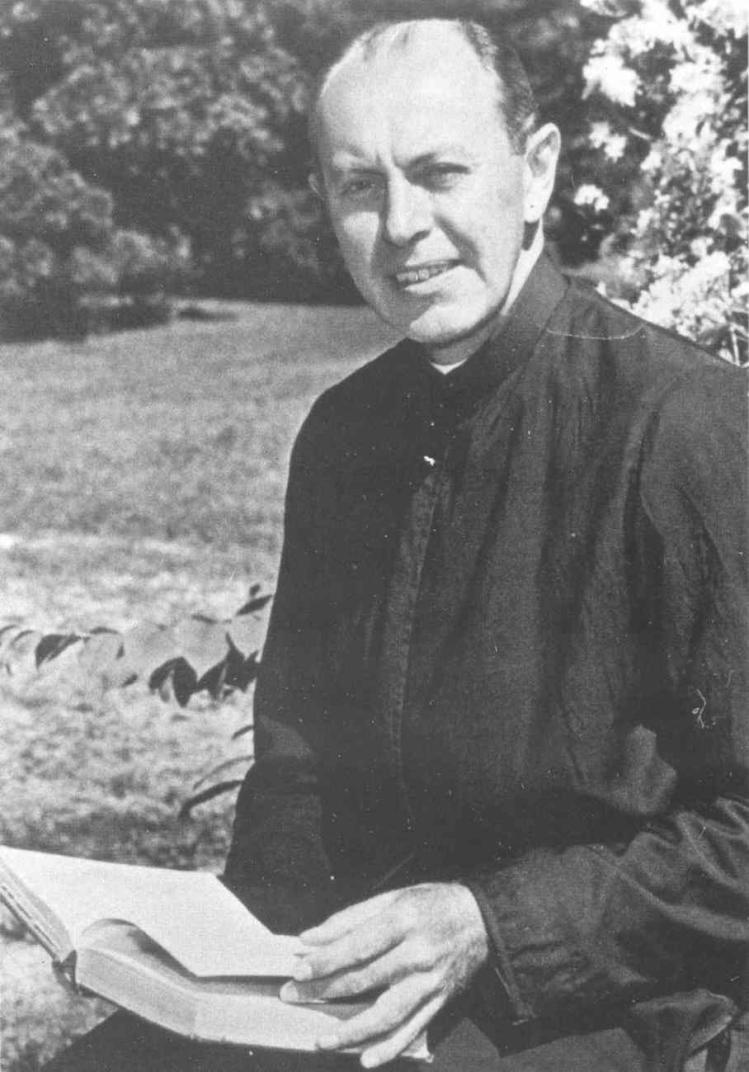
Perhaps no other conciliar document reveals a more significant American contribution to Vatican II than Dignitatis humanae, the Council’s Declaration on Religious Liberty. Its key architect was none other than John Courtney Murray, the American Jesuit and academic who devoted his career to finding a synthesis between Catholicism and democracy, a public intellectual who’d become a household name by the time of his death in 1967. For the Church, Dignitatis humanae represented a radical change: a little more than a century after Pius IX’s infamous Syllabus of Errors (1864), which unilaterally condemned, among other things, liberalism and freedom of religion, Dignitatis humanae issued a full-throated defense of religious free exercise:
This Vatican Council declares that the human person has a right to religious freedom. This freedom means that all men are to be immune from coercion on the part of individuals or of social groups and of any human power, in such wise that no one is to be forced to act in a manner contrary to his own beliefs, whether privately or publicly, whether alone or in association with others, within due limits.
The council further declares that the right to religious freedom has its foundation in the very dignity of the human person as this dignity is known through the revealed word of God and by reason itself. This right of the human person to religious freedom is to be recognized in the constitutional law whereby society is governed and thus it is to become a civil right.
At the time of its passage, Dignitatis humanae was seen as an American triumph. It wasn’t just that Murray and his allies had successfully persuaded the bishops to adopt the document. Murray’s constitutional-juridical framework and his powerful defense of liberal democracy—the “Americanism” formerly denounced by late nineteenth-century Vatican intellectuals as dangerous and undesirable—was now the official stance of the Church regarding its relations with modern secular democracies.
Ideas that had been articulated and adopted in late eighteenth-century Philadelphia had finally found their way to Rome. Writing in America in 1965, Murray himself boasted that the Council’s declaration was a clear affirmation of American constitutional principles: “The doctrine of religious freedom as an immunity from coercive restraints was…first effectively proclaimed in the First Amendment to the Constitution of the United States,” he wrote. “It was considered to be an integral element of the doctrine of limited constitutional government.” All these years later, “the Declaration affirmed religious freedom [and] the affirmation was doctrinal.”
Murray’s American triumph was, in a real sense, also a linguistic one. During the Council, there had been considerable disagreements even among the “reformist” camp over how exactly to approach a document on religious liberty. In the same America article, Murray noted that Dignitatis humanae reflected a particularly Anglophone approach, over and against alternative schemas which treated freedom of conscience as a primarily theological rather than juridical matter. Though perhaps a biased reporter, Murray explains that his prioritization of a concrete commitment to “immunity from coercive restraints” was a controversial approach: “Many French-speaking theologians and bishops considered their view to be richer and more profound. They were therefore displeased by the third draft Declaration, which relinquished their line of argument in favor of a line more common among English- and Italian-speaking theorists,” Murray explained.
Writing on this drafting dispute, the late conciliar historian Joseph Komonchak reports Dominique Gonnet’s explanation of the debate: “Should the Church first prove that religious liberty is coherent with its own language? Or should it speak in the language of the time and then show in what respects it is coherent with its own tradition?” Gonnet asks. While Komonchak characterizes the final text as a compromise in this respect, the successive drafts show growing attention to juridical questions and contemporary contexts. This was evidently controversial. As Komonchak writes, the bishop of Bruges sent Murray a letter lamenting that he was “always disappointed [déçu] by the very juridical way in which you treat the question [of religious freedom.]”
And yet the “juridical” tone adopted by Dignitatis humanae embodies the conciliar spirit in its own way. Its style and method both display the frank openness of a Church learning to speak intelligibly beyond the Vatican walls. The declaration does not begin with biblical exegesis, but instead with practical political language: recognizing “the demand…that constitutional limits should be set to the powers of government, in order that there may be no encroachment on the rightful freedom of the person and of associations” (DH 1). It’s fitting, then, that Americans played such a pivotal role in the drafting process: Catholics in the United States had already been learning to speak cogently in a pluralistic culture for more than a century.
For the once-condemned Murray, Dignitatis Humanae was the triumph of a lifetime—and an affirmation of his whole theological project. Back in a time when theologians could land on the cover of Time, Reinhold Niebuhr put it well: “What makes Murray significant is that he thinks in terms of Catholic theology and the American tradition at the same time. He rejoices in being in the American tradition.”
American Catholics may find that outlook especially challenging to inhabit today. I know I do. Today’s divided Church, after all, feels far more sclerotic, and continues to suffer by tying itself to the mast of a political project bent on undermining the democratic culture in which American Catholics have long taken pride. Nevertheless, another distinctly American catholicity is possible: the type that produced an American pope who came of age in the hopeful period of possibility following the Council and is actively highlighting the legacy of Vatican II as a path forward today.
Writing on the success of Dignitatis humanae, John Courtney Murray mused that “the Church is in the unfortunate position of coming late, with the great guns of her authority, to a war that has already been won, however many rear-guard skirmishes remain to be fought.” Sixty years later, it is hard to know if today’s burst of antidemocratic sentiment is just a “rear-guard skirmish” or something altogether more dangerous.
Either way, today’s malaise within both the American Church and the American state is neither inevitable nor eternal. Instead of scheming, bellyaching and presuming to lecture the pope on theology, American Catholics—especially those in public life—would do well to claim the conciliar legacy Leo is working hard to implement. The future of the Church, and of the American republic, depends on it.
We welcome your comments about this article. Please send your response to letters@commonwealmagazine.org.


No comments:
Post a Comment