
This unflappable American
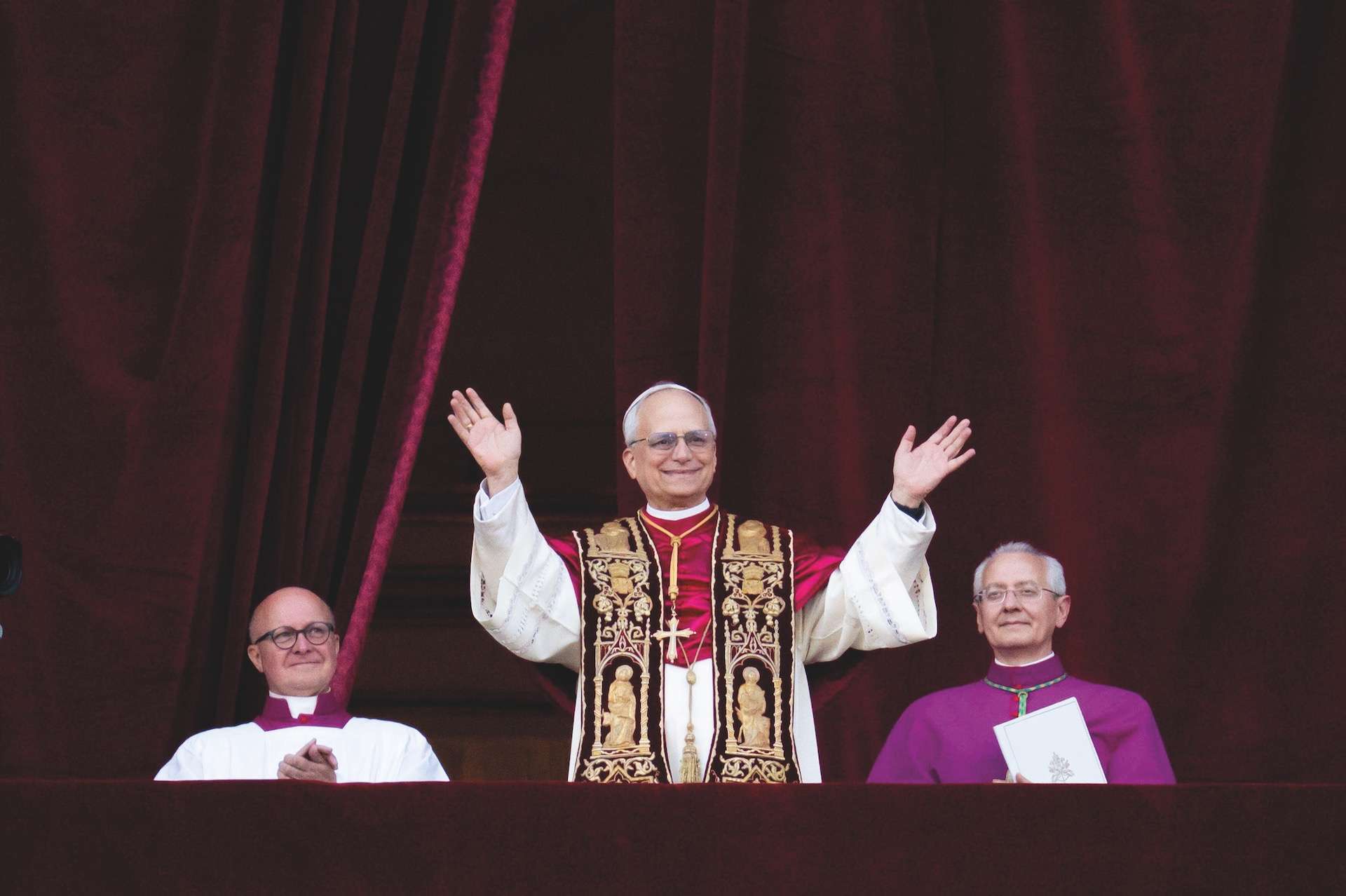
Cardinal Robert Prevost greets the faithful on 8 May last year as just-elected Pope Leo XIV
Alamy/TTL Images, M Valicchia
Since his election a year ago Pope Leo has made dialogue, unity and communion his priority
There was a palpable joy on the floor of the Paul VI Audience Hall.
Saturday 26 October 2024 had been taken up with voting, paragraph by
paragraph, on the document that was the culmination of an extraordinary
three-year “synodal process” of listening and discernment that had
journeyed through parish, diocesan, national, continental and finally
global levels.
As the clock ticked on past dinner time, just before the singing of the Te Deum,
Pope Francis made the striking move to declare the Final Document his
own, entrusting it back “to the holy faithful People of God”. Since the
Second Vatican Council, every Synod of Bishops had been followed by a
post-synodal apostolic exhortation. Not this time. Francis decided that
what had come from the whole Church would be given directly back to the
whole Church, and be part of the Church’s ordinary magisterium.
As synod delegates from all continents rushed up to Francis for a
final selfie, and the designated spokespersons hurried off for one last
press briefing, it was perhaps too soon to wonder whether this would be
remembered as a fleeting episode or as the decisive moment in the
unfolding towards a more synodal Church.
Over the months immediately after the end of the Synod, Francis’
health continued to decline. It was from his hospital bed in his suite
at the Gemelli, in mid-March of last year, that he approved the plans
for a three-year implementation phase “so that synodality is
increasingly understood and lived as an essential dimension of the
ordinary life of local Churches and the entire Church”.
A month later, early on Easter Monday morning, Francis’ sudden death
left the See of Peter vacant. Francis had proposed synodality as a
prophetic vision of the Church in our times. While synods were not new,
it was thanks to Francis that the neologism “synodality” had made its
way into ecclesial vocabulary the world over. The question loomed: would
synodality become a mere figment of a bygone papacy?
Just days before the Synod came to a close, Cardinal Robert Francis
Prevost had shared his own thoughts on synodality. At a Vatican press
conference, Prevost had recounted the “blessing” of having been involved
in the synodal process, first as a diocesan bishop in Chiclayo, Peru,
and then as Prefect of the Dicastery for Bishops. He characterised the
Synod as an “invitation to conversion, to a recognition of the
importance of being a Church that listens, dialogues, and promotes a new
experience in what it means to walk together, to seek the presence of
the Lord in our lives, and to see how we can be a Church that truly
reflects what Jesus Christ wanted for his people and for the world”.
As head of the Vatican department that oversees episcopal
appointments, Prevost outlined the need for bishops to exercise their
ministry in a synodal style: “The bishop has to be with the people,
listening, getting to know their reality, and opening his eyes to the
suffering of so many people, of so many communities, and giving
everything to be with them.” Synodality is not simply a managerial
tactic but a profound call for Church leaders to listen deeply and to
walk closely with people in what they’re going through.
This was no abstract vision promoted by a Vatican bureaucrat. As
Bishop of Chiclayo, this was the style of ministry that the man who was
soon to be elected Pope had lived out on a daily basis. Rooted in his
decades of experience as a missionary, Padre Roberto had become known
for his humility and simplicity, making frequent visits to far-flung
rural communities. His way of being close to those entrusted to his care
was grounded in the way that the bishops of Latin America had received
the Second Vatican Council: as a clarion call that Francis summed up as
being “a Church that is poor and for the poor”.
What does it mean that a bishop with a synodal disposition is now the
Pope? Setting a calm and measured tone, Leo demonstrates a willingness
and capacity to dialogue with polarising figures and to take a synodal
approach even with those who are resistant to synodality. In keeping
with his motto – “In the One, we are one” – unity and communion seem to
be Leo’s priority. His unflappable handling of the attacks on him from
figures in the Trump administration demonstrates his determination to
insist on dialogue and to rise above polarisation, even when others seem
bent on the contrary.
But Leo’s synodal style goes well beyond his admirable personality
traits. Years of experience as prior general of the Augustinian Order,
as a diocesan bishop, and as a Vatican prefect provided him with a
well-honed capacity for collegiality. This is evident in his desire for
regular consistories to confer with the College of Cardinals – the first
edition held in January focused precisely on synodality, and the sequel
next month will explore evangelisation. Building on Francis’ practice,
Leo has developed the interdicasterial meetings to promote coordination
in the Roman Curia, and convoked a gathering of all the presidents of
bishops’ conferences this October to discuss the topic of families.
Prior to his election, Leo had been actively engaged in two of the
study groups that had been established by Pope Francis to examine some
of the specific issues that had emerged from the synodal process,
namely: Group 6 on relations between bishops, consecrated life and
ecclesial movements; and Group 7 on the figure and ministry of the
bishop.
Under Leo’s leadership, could we imagine a more synodal approach to
the way bishops are appointed – and even evaluated – over the course of
their ministry, as the Final Document suggests? As prefect, Prevost
called for a greater involvement of lay people and Religious in the
appointment of bishops. Many possibilities exist for integrating
meaningful listening and dialogue into the process.
In his determination to inspire a synodal renewal of the Church,
Francis knew he had no time to waste. If Francis’ genius was to dare to
open processes, then Leo’s is to play the long game and lead by example.
In the face of divisive rhetoric, shows of power and instant influence,
Leo communicates unity, exemplifies service and operates patiently. His
background and prior experience make him particularly well suited to
working through the internal resistance to synodality – which Francis
was often frustrated by – and allowing it to settle into the Church’s
institutional mechanisms. Insofar as the sustainability of synodality
depends on how it translates into norms and structures, Leo’s unique
skill set – including his doctorate in canon law – may succeed in
gradually embedding a synodal way of being and doing at all levels of
the Church’s life. Synodality is a matter of style and tone as much as
of new structures, but structural reform will be vital if the springtime
of synodality is to take root and germinate.
In the final days of the Synod on Synodality, then-Cardinal Prevost
declared: “The bishop is not supposed to be a little prince sitting in
his kingdom but is rather called authentically to be humble, to be close
to the people he serves, to walk with them, to suffer with them and to
look for ways that he can better live the Gospel message in the midst of
his people.” These words ring true not just for ministers of the
Church, but for leaders across the globe, at a time when servant
leadership is increasingly rare. Indeed, the prophetic power of
synodality has the potential to renew not only the Church but also the
world, insofar as each one of us is willing to embody it moving forward.
Julian Paparella is a lecturer in theology and serves as the Director of Intellectual Formation at the Venerable English College.


No comments:
Post a Comment