
Synod study group rejects ‘artificial separation between genders and roles’
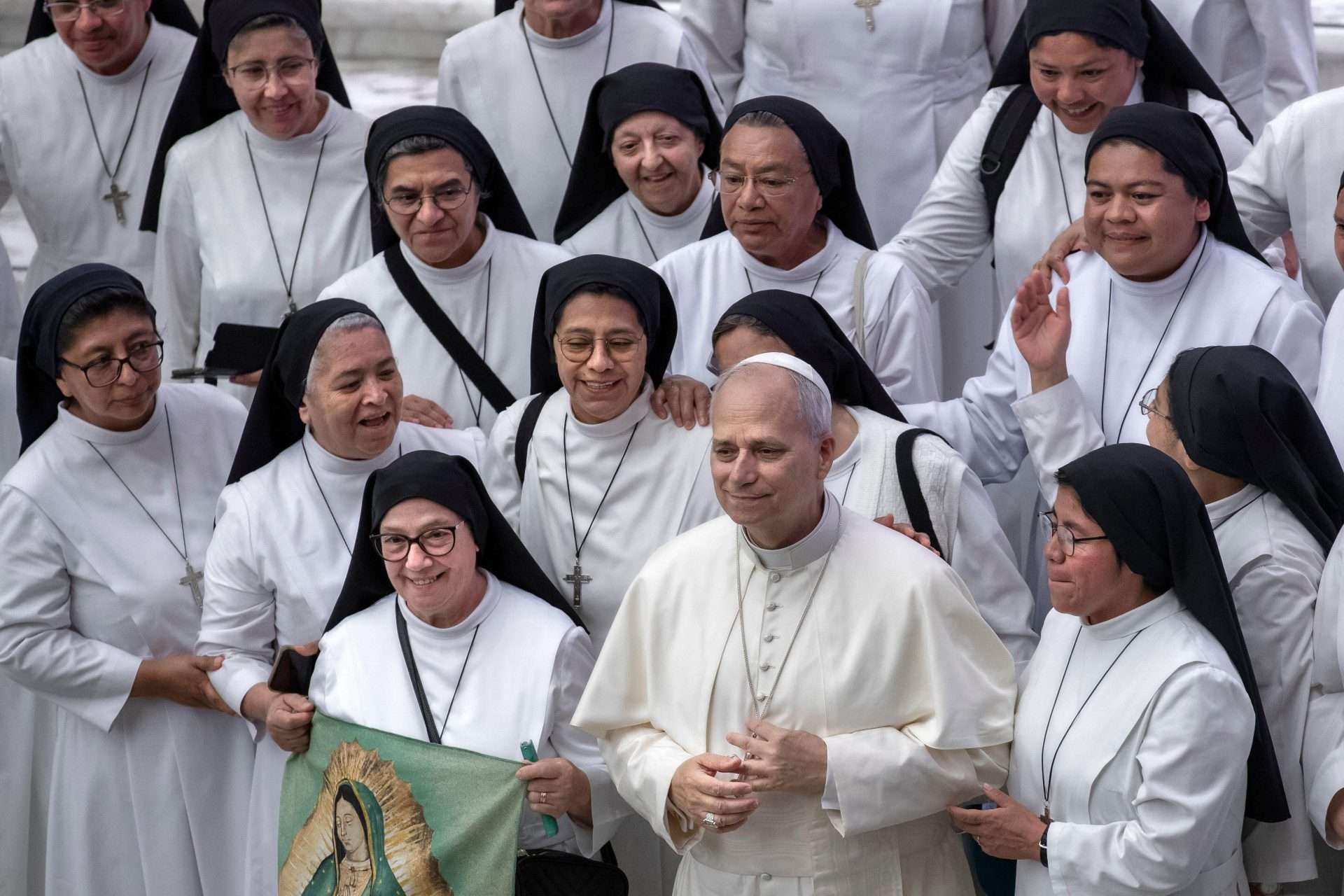
The Synod expressed gratitude for the invaluable contribution of women’s service to the Church across the world.
Maria Grazia Picciarella/Alamy
‘It is necessary to overcome an artificial separation between genders and roles, considering the shared dignity of all creatures made in the image and likeness of God.’
A study group established during the Synod on Synodality denounced “machismo clericalism” and said that “much remains to be done” to enable women to embrace their vocations, both within and beyond formal ministries and institutional positions.
The mere fact of being a woman, it reiterated, does not in itself prevent women from assuming roles of leadership in the Church.
Study group five, tasked with examining women’s participation in the life and leadership of the Church, released its final report on 10 March.
The study groups were formed at Pope Francis’ request in February 2024 on themes discussed in October 2023 during the first Rome session of the Synod on Synodality, moving the discussion of some of the most controversial topics from the more than 200 Synod participants to small expert panels.
The study group examined and celebrated examples of women’s leadership in the history of the Church, ranging from Mary Magdalene’s announcement of the Resurrection to Hildegard of Bingen’s influence as advisor and polymath and Dorothy Day’s contribution to the Church’s social mission.
The report acknowledged “the ever-stronger call, on the part of many women who are very actively engaged in pastoral activity or who are experts in theology and canon law, to review the currently existing forms of ecclesial leadership to make them more accessible to women”.
It warned that “there is a risk that failure to listen to and address the present discomfort of many women could compromise the Church’s fidelity to her mission”.
It quoted John XXIII’s statement in Pacem et Terris that it is a “sign of the times” that “women are gaining an increasing awareness of their natural dignity” and Paul VI’s affirmation in Message to Women that “the hour is coming, in fact has come, when the vocation of woman is being achieved in its fullness”.
“As a Church, we are called to discern the presence of God in the concrete and ordinary course of history,” the report said. “Within this great history, one can find moments when God has acted and many faces through which he has worked, as well as moments in which God has been rejected.”
In particular, the report specified the question of women’s access to the sacrament of Holy Orders, while recognising that the issue had been found to be not yet “mature”. A study commission voted against admitting women to the diaconate in December 2025.
“While significant advances have been made, it must nevertheless be acknowledged candidly and confidently that much work remains,” the report said.
Other forms of leadership referenced include the possibility of establishing new ministries for women, allowing women to give the homily at Mass, and entrusting the governance of particular diocesan offices to suitably qualified women.
The report also said that remaining solely within the framework of formally instituted ministries when it comes to women’s participation in the leadership of the Church “confines and impoverishes us”, and celebrated examples of women throughout the history of the Church who have exercised authority, not tied to Holy Orders, in the service of its mission.
“Ministries are certainly a great good, but they do not resolve the need to promote the possible fruitfulness of all women for the life of the Church,” it continued. “Charisms have a more widespread presence, enabling those who possess them to reach places that the usual structures cannot access.”
The Synod expressed gratitude for the “invaluable contribution” of women’s service to the Church across the world: “from the communities of the Amazon to the cities of Central Europe; from the poorest peripheries of the Philippines to diocesan curiae in America and Australia; from villages in Africa to the mountain regions of Latin America”.
Any list of the roles they carry out with “generous commitment” would be necessarily incomplete, the report emphasised: catechists and leaders of communities, mothers of families, consecrated religious and seculars, delegates in diocesan curiae, officials and superiors in the Roman Curia, teachers, theologians, directors and volunteers in Caritas organisations, those who offer an “indispensable service of caring for the smallest and most forgotten” parishes and churches, and “faces of understanding and closeness in countless situations of need”.
The Synod noted that Pope Francis appointed women to positions of particular importance for the mission of the Roman Curia and that Pope Leo XIV is continuing along this same line with his first appointments, enabling “decision-making processes to be enriched with diverse perspectives” and “to create an environment in which all may feel they have equal opportunities to realise their vocation”.
It denounced “a certain pattern of thought and behaviour” in the “contemporary ecclesial mentality” around “management of power” that creates distrust and distance among women, which it termed “clericalism” and “machismo”.
It defined clericalism as the tendency to transfer the authority and unique role that properly belong to the priest in the celebration of the Eucharist into all other areas of community life, leading to an authoritarian and self-referential style of leadership.
“The idea that the active participation of women in the life and governance of the Church constitutes a ‘concession’ granted by hierarchical authority must be overcome,” the report said, “to move beyond a logic that is merely related to function or substitution, instead recognising that women possess a right in this regard insofar as they are baptised and bearers of charisms, thus giving precedence to the order of being over the order of doing.”
Women “can go where no minister would be fully accepted” and “keep the flame of the Gospel burning and ensure that the fragile thread which still binds many people to Christ and the Church is not broken”.
The Synod lamented the fact that the male gender, throughout history and well beyond the boundaries of the ecclesial community, has been proposed as the normative reference for understanding humanity in its entirety, which it suggested has contributed to a divide between men and women in the Church and makes it difficult for women to express their competencies and charisms.
It encouraged moving beyond a view of women limited to certain characteristics – such as motherhood, tenderness or care – and making room for the equally important feminine qualities of leadership, counsel, the capacity for teaching, listening and discernment.
The study group examined Swiss theologian Hans Urs von Balthasar’s concept of the Marian and Petrine principles, in which Mary represents a “principle” characterised by the reception of the Word of God and Peter represents another principle, linked to the exercise of office and ministry in the Church.
The report warned against “a certain way of presenting the figure of Mary in this context that risks basing women’s participation on ideological or cultural patterns that society attributes to them” and urged “attention to other aspects of Mary beyond motherhood alone” and recognition that though “she does not belong to the hierarchical structure, she possesses within the Church a unique authority and spiritual fruitfulness”.
It encouraged “the emergence of an ecclesial language fully attuned to the reciprocity of the masculine and the feminine, understood in their equal, specific, and fundamental dignity”.
It also emphasised that none of these possibilities for women’s participation in the life and leadership of the Church should diminish the “immense value” that the Church’s tradition has recognised in the vocation of the wife and mother.
“In the Church, there is neither contradiction nor competition between the vocation of wife and mother and the vocation to public engagement, though this unfortunately often occurs in civil society,” it said. “However, this requires that family responsibilities be adequately shared between spouses so that women may have the possibility, just as men do, to develop their charisms in the world and in the Church.”
The report urged every bishop to take into consideration all the opportunities already provided for in canon law with regard to the role of women, and said that the possibility of a woman holding the office of head of a dicastery or a Vatican department should not be questioned.
“From an ecclesiological perspective, it is therefore necessary to overcome an artificial separation between genders and roles, considering the shared dignity of all creatures made in the image and likeness of God as well as the common baptism,” it said.
“Every baptised person is a visible representative of the Church. Women should therefore be valued as expressions of particular vocations and of distinctive spiritual and religious experiences.”
FutureChurch, a US organisation that seeks to make Church leadership more inclusive, welcomed many of the report’s findings, especially its affirmation of the gifts, talents and wisdom women already bring to the life of the Church and the world, but said “the road to equity must include real engagement with the question of ordination and with the ways patriarchy remains embedded in the very fabric of the Church’s hierarchical structures”.
The Women’s Ordination Conference said: “The authors of this report are frustratingly close to, and yet so far from, recognising that women’s access to Holy Orders is a natural response to their equal dignity and to the open invitation of the Holy Spirit to fully live out their vocations.
“There are clear, concrete ways to heal the church of this injustice and, as the authors of this document know, women are not waiting for symbolic crumbs, auxiliary ‘women’s ministries’, or empty words devoid of a commitment to reform.”


No comments:
Post a Comment