
The papacy of Leo XIV – a great adventure
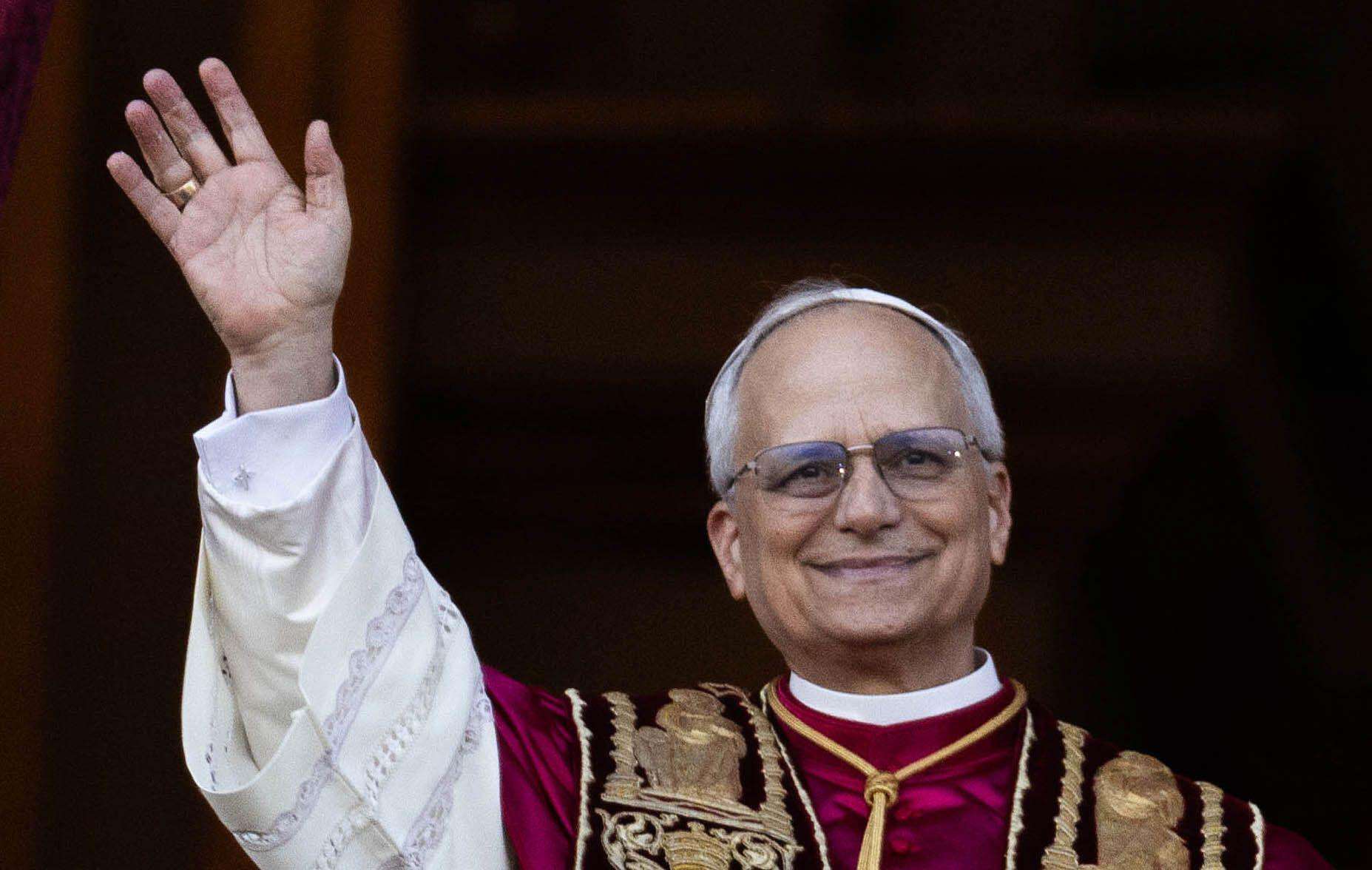
There has rarely been a greater need for someone like Leo XIV to lead the way in fostering the common good.
Oliver Weiken / DPA / Alamy
Those who wanted the conclave to elect a pope who would subvert Francis’ trajectory of progress and reform instead got the man he hand-picked to hold them at bay.
The final vote in the conclave on 8 May was a win for Cardinal Robert Prevost, a win for the Catholic Church, a win for the world’s poor – and a win for the late Pope Francis. As the pieces of the conclave jigsaw come together, it becomes clearer how Francis had managed to influence the outcome in advance, and in particular how he had planned to ward off the conservative and traditionalist forces in the Church who wanted a very different papacy to follow his own.
They wanted a minimalist interpretation of the Second Vatican Council, with a renewed emphasis on obedience to authority and less talk of participation and consultation with clergy and laity. They did not want more engagement with social justice issues such as immigration and climate change. What they got was the man hand-picked by Francis to hold them at bay and continue his own trajectory of progress and reform, first as the man responsible for appointing bishops all over the world, and then as his successor. It was a decisive, indeed historic, defeat for the forces of reaction.
This is not the synopsis of another novel by Robert Harris, following his bestseller and the subsequent Oscar-winning film Conclave. It is a plausible explanation of how Pope Leo XIV, hitherto known as Chicago-born Cardinal Robert Prevost, was elected Bishop of Rome on 8 May. Pope Francis knew what he was doing. It is safe to say that, had the Holy Spirit objected, his plan could have been thwarted. The vast majority of the faithful are grateful that it was not.
Delivering the Francis legacy and going beyond it, with extra breadth and depth, seems to be the mission Leo has set himself. A former prior general of the Augustinian Order, he has in his spiritual formation the huge depository of wisdom and insight in the writing and preaching of a foremost Doctor of the Church, a theologian and philosopher who raised questions modern philosophers are still asking. What is self-knowledge, what is consciousness, what is reason, and what do these things tell us about ourselves, about reality and about God? It is not surprising that Leo, with Augustine at his right hand, has already raised the issue of Artificial Intelligence. Nor is it surprising that, in the same way, he has mentioned his namesake Pope Leo XIII, whose great gift to the Church was his 1891 encyclical Rerum Novarum.
In Augustine’s view, love of God and love of neighbour are virtually the same thing. And the neighbour could be anywhere – even before he became Pope, as custodian of the Augustinian tradition Prevost had refuted US Vice President J.D. Vance’s disingenuous assertion that St Augustine had taught a version of “charity begins at home” to justify cuts to the US overseas aid budget. Pope Leo is clearly not scared of controversy.
Leo XIII laid the foundations for the long and weighty tradition of Catholic Social Teaching, which steers a way between laissez-faire economics on the one hand and Marxist socialism on the other – not by looking for the halfway point between them, but by asserting a different set of human values altogether, derived from the Gospel. With both free market economics and Marxism now widely regarded as no longer relevant, indeed as destructive of human dignity and human community, there has never been a greater need for fundamental moral principles to guide post-globalisation economics – a new politics of the common good. There has rarely been a greater need, therefore, for someone like Leo XIV to lead the way.
He knows what raw capitalism did to Chicago, and how after the Civil War the huge internal migration of black people, fleeing Jim Crow in the Deep South, transformed the racial demographics of the city. He has seen American racism in action. He knows what poverty has done to the people of Peru, his adopted homeland, plundered as it has been by economic colonialism. He has seen the environmental degradation that can follow unregulated mining activity in a country rich in natural resources. He knows about the burden that international debt has placed on the shoulders of the poor across Latin America. He knows what political instability can do to a country.
This was an extraordinary preparation for the job he has now ascended to, and raises many questions about the relationship between the new papacy and the “MAGA” administration of Donald Trump. The US President is no longer the world’s most influential American. And as the peacemaker he imagines himself to be, he now has to deal with a real one, whose first words from the balcony at St Peter’s were “Peace be with you” – the first words spoken by Christ after his Resurrection.
The polarisation of the US, of which Trump is both cause and symptom, has also divided its 62 million Catholics. It may be significant that Prevost chose not to join the hierarchy of the United States, as no doubt he could have done, and has stood apart from the so-called “culture wars” that threaten to tear it asunder. Can he bring peace to it from outside? This has to be one of his priorities. His election will send a profound signal to the United States hierarchy about the direction it should take.
Leo is not afraid of big ideas. He has deeper philosophical interests, such as what makes people stop believing, how to take their objections to faith seriously, how to win them over, the relationship between faith and reason, and the nature of the human soul. Those were questions Augustine himself wrestled with as he opposed both Donatists and Pelagians, not to mention the Manichees he had once belonged to. The leadership of the contemporary Catholic Church has not quite known how to handle them.
Nowhere more than Europe has shown a more dispirited sense of anomie, as the loss of its ancient faith is replaced by trivial alternatives and distractions. It wrestles to resist immigration, seen as a threat, when it may be precisely what it needs. In the Church and in the world, the Global South is where the energy has moved to. All these issues will tax him to the limit, but with the Church united behind him, miracles are still possible. This papacy promises to be a great adventure into an unknown future, led by a man uniquely open to the challenge.


No comments:
Post a Comment