
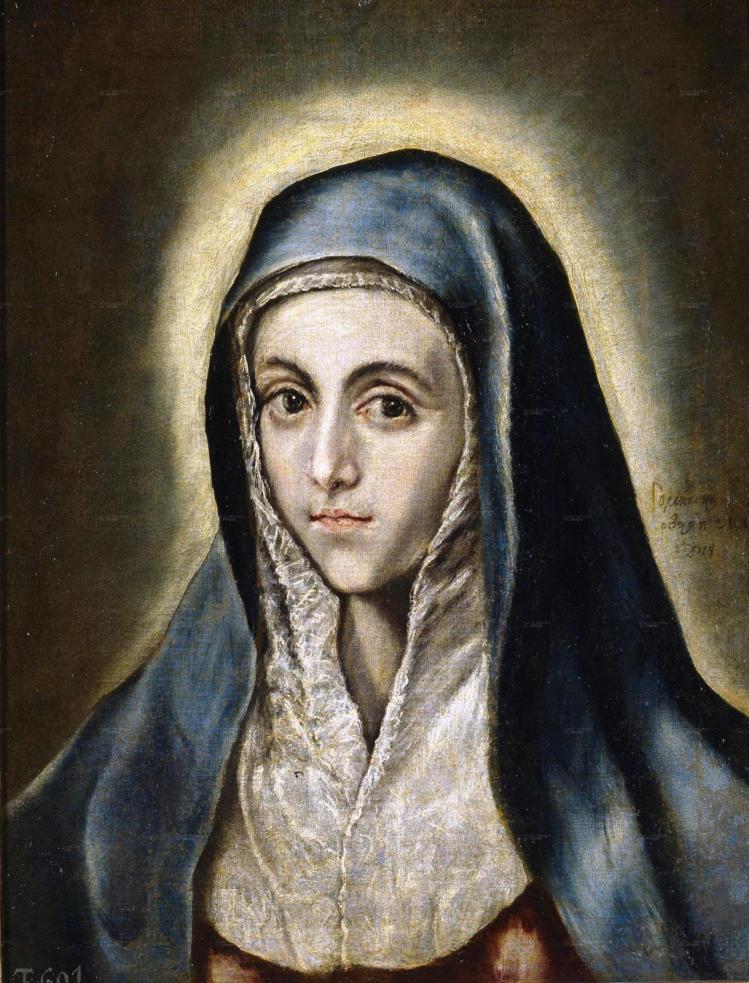
James D. Tabor is a historian and archaeologist who thinks that traditional Marian piety is misdirected and is the result of a conspiracy that deprived her and the biological family of Jesus of the recognition that should be given them as heads of the “dynasty” that continued the Jesus movement after his death. The titular “lost” Mary in Tabor’s most recent book is the historical figure who functioned as the matriarch at the head of the Jesus movement and whose role was obscured and finally erased by the image of her as the virgin mother of God.
Tabor seeks to recover this putative lost Mary through the reductive approach familiar to us from the historical Jesus scholarship with which he explicitly aligns himself. The approach excludes anything supernatural, picks and chooses for historical plausibility among ancient writings, makes much of archaeological findings—even when speculative—relies heavily on the framework provided by the Jewish historian Josephus, finds leverage over New Testament compositions through appeal to apocryphal literature, and is fond of conflict and conspiracy as the motive forces at work in earliest Christianity.
Following the lead of many before him, Tabor views Paul as the villain who transformed the political and cultural agenda of Jesus to reform Judaism into a supernatural religion of universal salvation. He sees Paul’s allies—the other writers of the New Testament, especially Luke—as working to marginalize the Jesus movement represented by his family and present the resurrected Lord Jesus who became life-giving Spirit as the only true form of Christianity.
The analysis of Mary that Tabor offers is heavily dependent on (and rehearses large sections of) his 2006 book, The Jesus Dynasty, which lays out his entire revisioning of Christian origins. There is no resurrection, no outpouring of the Holy Spirit, no good news of a new humanity based on the figure of Jesus. Instead, John the Baptist and Jesus are equals in advancing a prophetic movement of regeneration, and when John is killed, Jesus and his brothers continue the mission. When Jesus in turn is killed, James, “the brother of the Lord,” takes over the family business until his own martyrdom some eight years before the Romans respond to the Jewish rebellion by destroying the temple in the year 70 CE. James is succeeded by another brother, Simon. Already in the 1950s, some German scholars spoke of a Jerusalem “caliphate” to describe the role of Jesus’ biological family in Jerusalem, and this is pretty much what Tabor evokes.
Tabor is scarcely innovative in his recognition of the importance of James, the brother of Jesus, in the Jerusalem church. Paul himself acknowledged James’s leadership, as did the Acts of the Apostles and various patristic writers, although none of them mention Mary in connection with James. Nor is Tabor unique in proposing that the New Testament Letter of James could well have been written by this James, and that it reveals close ties to many of the sayings of Jesus found in the synoptic Gospels.
His innovation lies in his insistence that James and Jesus’ other brothers were the true “successors” to Jesus after his murder, and that Paul—and for that matter all the other writers of the New Testament—were the deviants because of their insistence on the Resurrection and the divine character of Jesus. This, in direct contradiction of Paul’s insistence that on the essentials of the Gospel, he was in agreement with the apostles before him: “Whether it is I or they, so we preach, and so you believe” (1 Corinthians 15:11). The notion, moreover, that New Testament compositions as diverse as Hebrews, 1 Peter, and Revelation were simply parroting Paul in their insistence on the exaltation of Jesus as Lord is jejune.
But although Paul recognized James as one of the three “pillars” in Jerusalem, and although Acts acknowledged James as the leader of the Jerusalem community, the patristic writers got it about right—if anachronistically—when they considered James the first “bishop” of the local church in Jerusalem. The historical evidence suggests that although the Jerusalem community had considerable symbolic importance, it was from the start a persecuted and chronically impoverished congregation whose actual influence was mostly local and temporary.
As the collection for the “saints in Jerusalem” sponsored by Paul attests, the Jerusalem church was in no position to exercise leadership over the explosion of the Christian movement across the Mediterranean world and an increasingly Gentile population. In the Jewish war with Rome, it abandoned Jerusalem altogether and became a tiny exile community. The future lay with the Gentile church rather than with Jewish Christianity. If one wanted to do serious history, then the better conclusion would be that the family of Jesus was marginalized not by conspiracy, but by social and historical forces.
Although fundamentally flawed, Tabor’s earlier work was relatively restrained in comparison with the kinds of ungrounded speculation found in this treatment of Mary. He has a fascinatingly arbitrary way of employing sources. A couple of examples: Tabor considers every scrap of ancient polemic concerning Jesus’ illegitimacy (because of Joseph’s confusion upon the discovery of Mary’s pregnancy, reported by Matthew) rather than consider that—since one side of Matthew’s account has been dismissed, perhaps the other side might be as well—Jesus’ conception was utterly ordinary.
Similarly, he dismisses the second-century Infancy Gospel of James as worthless because of its extreme emphasis on Mary’s virginity. But he latches on to one line in that work that ascribes wealth to Mary’s parents and uses that to hypothesize her childhood in the urban setting of Sepphoris. Likewise, he treats the reader to long disquisitions on the Herodian “Game of Thrones” as described by Josephus without in any convincing way connecting such machinations to Mary. He is, indeed, fond of the historiographical fallacy that supposes historical proximity to be equivalent to historical participation.
Tabor spends much effort showing that the genealogy of Jesus in Luke 3:23–38 traces Jesus’ descent through Mary rather than Joseph, demonstrating a double messianic pedigree of king and priest, supposing that such an esoteric (and surely not unique) claim would have made Mary a distinctive threat to Herodian and Roman rule. In this last instance, as in others, Tabor commits the common historiographical fallacy of supposing that what is known to the present-day researcher must also have been known to the ancient actors, and, moreover, must have motivated them in some fashion. Thus he also imagines that the fifteen-year-old Mary could see from her childhood home in Sepphoris the crucifixions afflicted on Jewish rebels against Rome and “must have been” emotionally affected by the sight. Such lively imaginings without any real evidential basis pop up frequently, often in connection with Tabor’s musings about his own archaeological adventures; he invites us to picture him thinking about what Mary might have thought or felt as he lingers in some spot or another.
More inconsistency appears in the use of sources. He dislikes Luke for his Pauline pandering but takes the single notice in Luke 8:1–3—it has no parallel in other gospels—of women ministering to Jesus out of their means as an accurate portrayal of the economic structure of the messianic movement within which Mary was facilitator, although Luke does not mention her in this instance. And while he avoids discussion of the Pentecost event altogether (way too much about the Resurrection in that connection!), he chooses to lift from Luke’s account the presence in the upper room of the remaining apostles persevering in prayer, “together with the women and Mary the mother of Jesus, and his brothers” (Acts 1:12-14), to show Mary’s continuing importance after the death of Jesus. But it is a long way from her participation in such prayer to her serving as the matriarch of a movement.
He rejects the fourth Gospel because it divinizes Jesus, yet he relies on it for specific geographical and temporal information. Indeed, a key part of his argument is that John’s “beloved disciple” is in truth James the brother of Jesus, and that the dying Jesus bequeathed Mary his mother to his next-oldest brother. He thereby uses the despised Gospel of John to link Mary and James as the leaders of the “Jesus Dynasty” to follow. And he asserts that the “advocate” promised in John 14:16, 26 is in fact James the brother of Jesus.
Tabor suggests a feminist motivation in his elevating Mary to the (imaginary) throne of the “Jesus Dynasty.” Making a single mother of eight the matriarch of the messianic movement serves as some compensation for the countless women whose identity and achievements have been erased over the centuries. Mary presents a “vision of feminine power and influence.” But Tabor goes much further than to recognize her practical role at the heart of the Jerusalem church. He declares Mary to be “the mind and heart of the movement.” Indeed, he says that Mary was “‘the first founder’ of the movement that became Christianity.”
This extravagant claim is based on the accurate perception that Mary’s words concerning God’s reversal of human status (in the Magnificat) resemble those attributed to John the Baptist, those proclaimed by Jesus, and themes enunciated in the Letter of James. But what Tabor fails to acknowledge is that, while Jesus’ favor toward the poor and hostility toward the rich (Luke 6:20–24) is certainly echoed by James (2:1–6), the presence of the same theme in the case of John the Baptist and Mary is due to the literary and theological artistry of Luke. The evangelist slighted by Tabor for his emphasis on Mary’s virginity ironically becomes the single basis for ascribing to Mary anything more than a purely symbolic role.
An even greater historical irony can be noted. It is precisely in the name of the Virgin Mary as the “Queen of Heaven” and of her son Jesus as “Risen Lord” that hundreds of thousands, perhaps even millions, of women over thousands of years have pledged themselves to lives of chastity, poverty, and obedience (in the hope of heaven), and have worked tirelessly and selflessly to bring about the improvement of this world—God’s rule on earth as it is in heaven—through nursing the sick, protecting the helpless and homeless, and educating the ignorant. Strange how these things work.
The Lost Mary
Rediscovering the Mother of Jesus
James D. Tabor
Knopf
$29 | 240 pp.
We welcome your comments about this article. Please send your response to letters@commonwealmagazine.org.


No comments:
Post a Comment