
The Politics of Mercy
“Just as you did it to one of the least of these brothers and sisters of mine, you did it to me” (Matthew 25:40).
In the intense, partisan, polarized climate of our society, many people of faith are persuaded that topics deemed “political” are best avoided. It’s an understandable impulse, yet such avoidance only plays into the hands of those who benefit from our withdrawal from public discourse. In such times, we do well to remember the richer and more accurate understanding of politics: our collective moral and civic responsibility for tending to our common life for the common good.
Weaving through our biblical texts is a clear mandate to care for our common life. And at the heart of the biblical witness—and certainly of the life and teachings of Jesus—is mercy.
For Christians, mercy is not optional. Mercy reveals God’s very nature and God’s relationship with us, which we experience as unmerited grace. Through mercy we come to trust that God is more concerned with human wholeness than with retribution. When the Pharisees questioned why Jesus ate with tax collectors and sinners, he replied, “Those who are well have no need of a physician, but those who are sick. Go and learn what this means, ‘I desire mercy, not sacrifice.’” (Matthew 9:12–13)
Nor is mercy optional in our relationships with one another. We are to love our neighbors as ourselves. We are to be merciful as God is merciful. In such love, mercy is not weakness; it is strength.
There is an unmistakable power dynamic in mercy; those on the receiving end are more vulnerable. That’s true in our relationship with God, and it’s true in our relationships with one another. Human power dynamics, however, can shift. Over time, those who receive mercy may find themselves called upon to extend it, and vice versa. Mercy, then, is less about sentiment than it is about connection and our common humanity: “You shall love the foreigner as yourself, for you were foreigners in the land of Egypt.” (Leviticus 19:34)

Mercy is not the same as justice. There is a place for demanding justice, and some wondered why I didn’t do so when speaking to President Trump from the pulpit last January. I chose to emphasize mercy because of the dramatic shift of power that the 2024 national election represented, for with such power comes moral responsibility. I also wanted to remind all those listening that the need for mercy is universal.
Throughout that sermon and in every public address I give, what I am attempting to convey—both in words and demeanor—is that while treating our political adversaries with contempt and fueling division among the populace may be a successful election strategy, it is a dangerous way to lead a country. And that the pervasive culture of contempt, from which none of us are immune, threatens all that we hold dear.
Tending to our common life, we must all recommit ourselves to certain core convictions and practices:
Respecting the dignity of every human being;
Speaking the truth as best we understand it, even when it costs us;
Acting with humility knowing that we all make mistakes and need one another;
Treating others with the mercy we would hope for ourselves.
Thus, I am not speaking of mercy in isolation, but as one essential practice in a democratic society committed to the rule of law and kindness to our neighbors. Mercy is not only a benevolent gesture; it is an expression of solidarity.
Mercy is also a helpful corrective to our tendency to disparage those with whom we disagree. It challenges us when we slide into indifference—or worse, cruelty. Even as justice requires accountability and repair, the need for mercy remains. As Bryan Stevenson, founder of the Equal Justice Initiative, reminds us, “Each one of us is more than the worst thing we’ve ever done.”
Mercy requires both self-awareness and proximity. The less self-aware we are, the easier it is to imagine that there are “good people” and “bad people” and we are among the good people and others are the bad people.
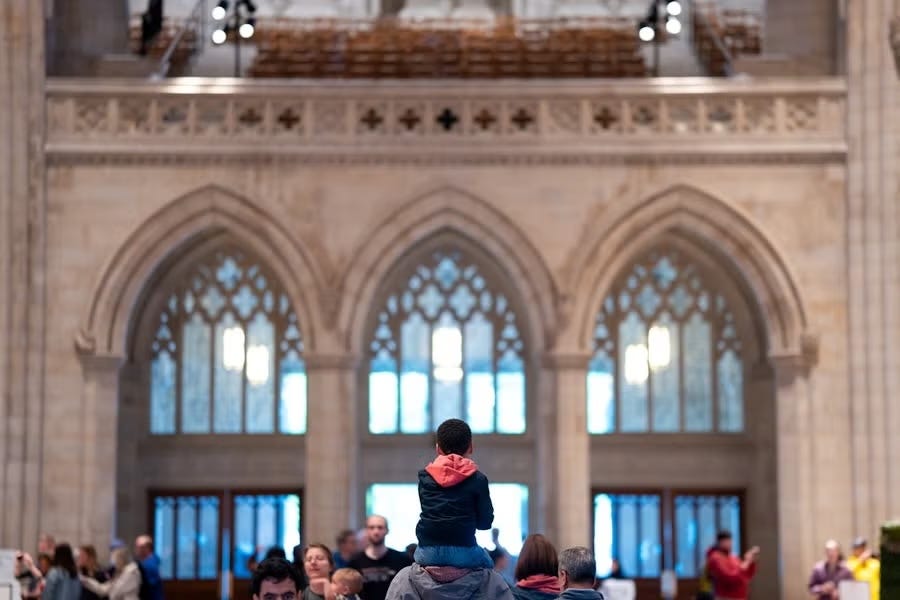
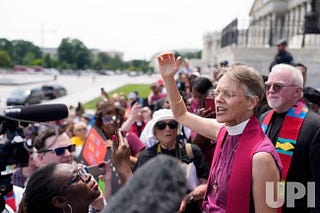
I am not a politician, though like all clergy, there is a public dimension to my role that I do my best to steward. For me, that means choosing carefully when to actively engage in public discourse, informed by the biblical and theological principles that speak to the communal aspects of life. I also need to walk my talk and ensure that the values I espouse in secular politics are reflected in the institution I lead, which is no small task.
The politics of mercy is all about relationships: relationships with the most vulnerable and those on the receiving end of dehumanizing speech; relationships with those whose life experiences we do not share; relationships with those with whom we disagree.
Proximity doesn’t ensure mercy in our politics, but distance and ignorance surely work against it. The politics of mercy is not a substitute for justice, but it does soften it. Mercy doesn’t erase accountability, but it does make room for our humanity.
Mercy is a discipline that requires self-awareness, proximity, and a commitment to stay in relationship when retreating into our safe corners would be easier.
For Christians, the question is not whether mercy belongs in public life, but whether we have the imagination and courage to practice it in whatever realm we find ourselves –not for ourselves alone, but for the common good. As a practitioner of mercy, I have my own ups and downs, like everyone else. I’ve learned that it is through practice that we grow both to give and receive mercy.
May we remember that the mercy others need is also what we ourselves long for, and that we all stand equidistant under the mercy of God.


Rev. Budde, thank you, and wish more members of the US clergy would show SPINE!
Thank you, Mariann, for standing up in these times, and for shining a light for the rest of us to follow!