
Doctrine must proclaim the Gospel, Pope Leo tells DDF
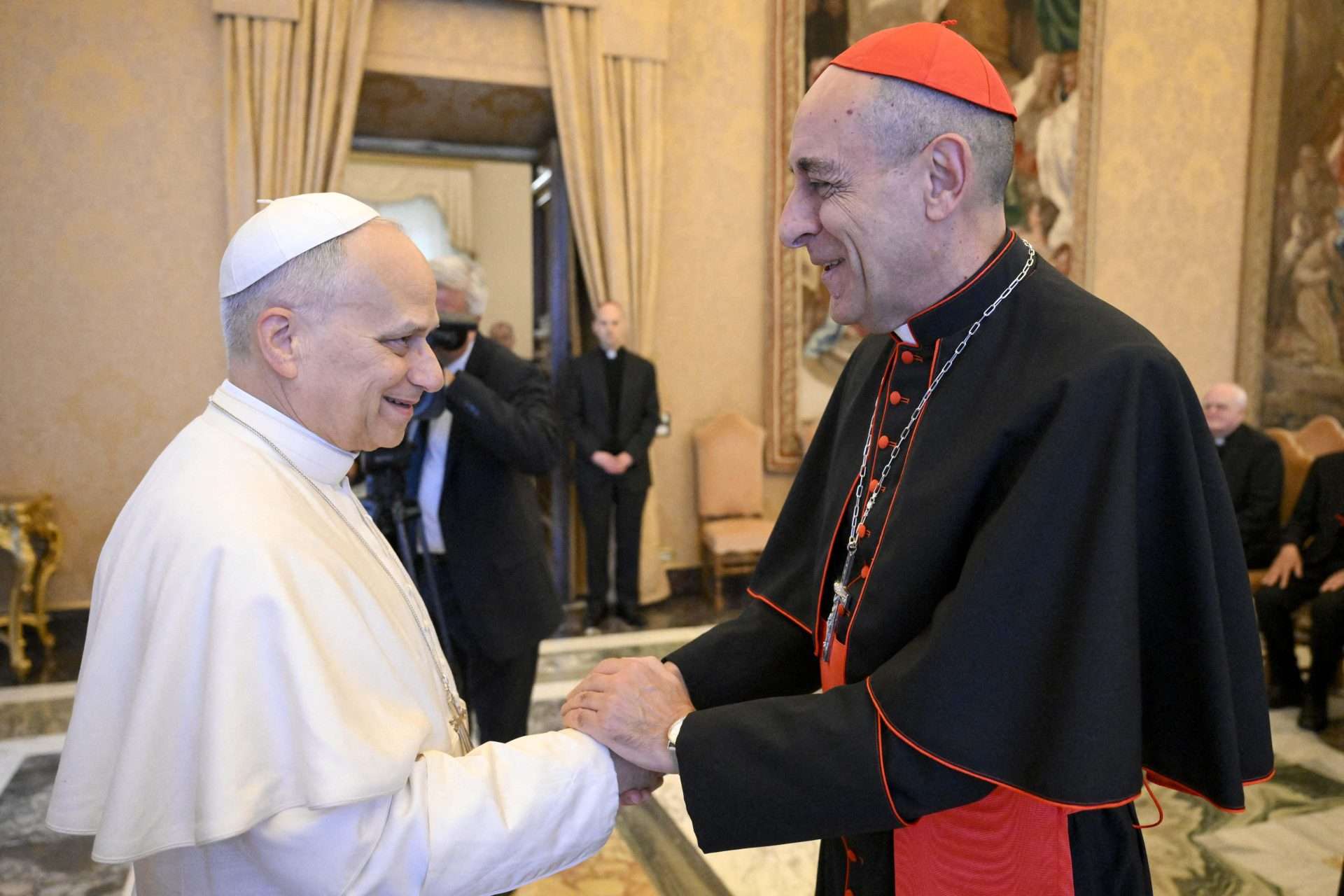
Pope Leo with the DDF prefect Cardinal Víctor Fernández at an audience with the International Theological Commission in November
Vatican Media / Abaca Press / Alamy
At the opening of the dicastery’s plenary session on Tuesday, its prefect Cardinal Víctor Fernández invited its members ‘to intellectual humility’.
The Church must proclaim Christ “without self-promotion or particularism”, Pope Leo told members of the Dicastery for the Doctrine of the Faith (DDF).
Addressing participants in the dicastery’s plenary session on Thursday, the Pope said their work “to offer clarifications regarding the doctrine of the Church, through pastoral and theological guidance on often very sensitive issues”, was “of great benefit to the spiritual growth of the holy and faithful people of God”.
He cited documents published over the past two years, including notes on human dignity, Medjugorje, artificial intelligence, Marian devotion and monogamy.
“In the context of the epochal change we are experiencing, [this work] offers the faithful a prompt and clear word from the Church, especially with regard to the many new phenomena appearing on the scene of history,” he said. “It also gives valuable guidance to bishops on the exercise of their pastoral action, as well as to theologians, in their service of study and evangelisation.”
Pope Leo welcomed the plenary’s “fruitful discussion on the theme of the transmission of faith”, observing that “especially in contexts of longstanding evangelisation, an increasing number of people no longer perceive the Gospel as a fundamental resource for their own existence, especially among the new generations”.
He said a missionary Church must proclaim the Gospel through “attraction”, referring to his opening address to the extraordinary consistory of cardinals earlier this month where he invoked statements by Pope Francis and Benedict XVI on this theme.
Leo also referred to work “with cases of crimes reserved to the dicastery”, which include allegations of clerical abuse.
“This is a very delicate area of ministry, in which it is essential to ensure that the requirements of justice, truth and charity are always honoured and respected,” he said, echoing his address on Monday to the judges of the Roman Rota in which he reflected “on the close connection between the truth of justice and the virtue of charity”.
Pope Leo, himself a canon lawyer who has presided in Church tribunals, told the judges that “excessive identification with the oft troubled vicissitudes of the faithful may lead to a dangerous relativisation of truth”.
However, he also warned against “a cold and detached affirmation of the truth that does not take into account all that love for people requires”. He continued: “A purely bureaucratic approach in such an important role would clearly prejudice the search for truth.”
At the opening of the DDF’s plenary session on Tuesday, its prefect Cardinal Víctor Fernández made “an invitation to intellectual humility”, because human beings “are incapable of interpreting all the meanings and nuances of a reality, a person, a historical moment or a truth”.
He continued: “The more science and technology advance, the more we must keep alive the awareness of our limits and our need for God, so as not to fall into a terrible deception – indeed, the very same one that led to the excesses of the Inquisition, the world wars, the Shoah and the massacres in Gaza: all of which rely on fallacious arguments for their justification.”
Theologians, he said, must be open to God and to the insights of others, because typically each has “knowledge limited to a single theological discipline or an isolated topic, whereas the mysteries of faith are interwoven in a rich hierarchy”. He warned that “the risk of losing the breath of our perspective is greater” because of the dicastery’s authority.
“But the issue is even more serious since today, on any blog, anyone – even without having studied much theology – can express his or her opinion and condemn others as if speaking ex cathedra,” he said.
“That is why we must recover, throughout the whole Church, that healthy realism proposed by the Church’s great sages and mystics.”


No comments:
Post a Comment