
Leo’s Ode to Latin American Theology
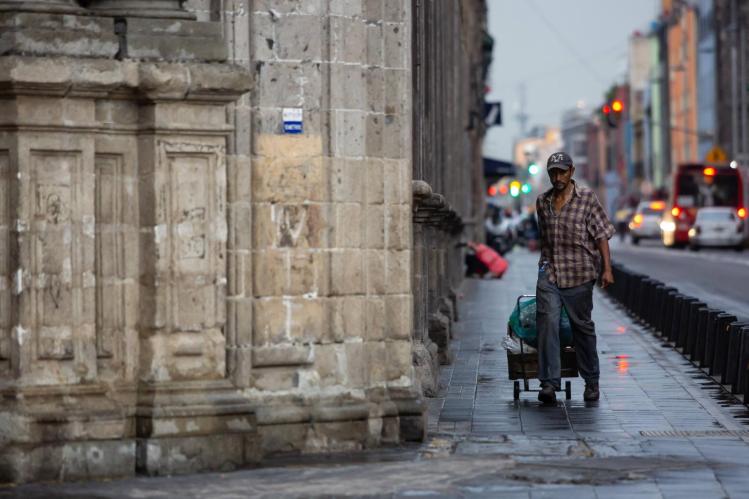
Pope Leo XIV’s first exhortation, on love for the poor, is very much a tribute to Pope Francis and his predecessor’s namesake. Leo signed the document on October 4, the feast day of St. Francis. That saint’s witness to evangelical fraternity with the poor, along with that of St. Clare of Assisi, shines throughout an exhortation given to the more than two billion Christians around the world. To authentically love the poor means to treat them not only as equals but as even greater than oneself. And by having contact with the poor as “living images of the Lord” (§64), we encounter God in history.
As a companion piece to Pope Francis’s last encyclical on the Sacred Heart of Jesus (Dilexit nos), Dilexi te teaches in no uncertain terms that true worship demands love for the poor, which is one with love for the Lord (§5). Leo follows his predecessor’s commitment to linking devotional piety with social action, prayer with almsgiving, and the Gospel with liberation. “Christian charity is liberating when it becomes incarnate,” Leo writes. “Likewise, the mission of the Church, when she is faithful to her Lord, is at all times to proclaim liberation” (§61). The path to holiness through the love of Christ in the poor is therefore not optional for discipleship; it is essential and necessary. The poor in their various manifestations provide a Christological locus for the Church in history.
Dilexi te is, quite simply, an ode to the theology of poverty and liberation emerging from the Latin American Church after the Second Vatican Council. Leo XIV, a longtime missionary in Peru, points out that all across Latin America after the council, “there was a strong sense of the Church’s need to identify with the poor and to participate actively in securing their freedom” (§89). Leo acknowledges his great debt to the postconciliar “ecclesial discernment” coming out of the Latin American Conference of Catholic Bishops (or CELAM) from Medellín in 1968 to Aparecida in 2007, where then-cardinal Bergoglio had a chief role editing the final document.
Leo’s exhortation cites Francis’s Evangelii gaudium (2013) more than any other document, which should not be surprising. When he delivered his first address to the cardinals on May 10, Leo indicated his “complete commitment” to the path set out by Vatican II that Francis “masterfully and concretely” charted in his first exhortation, which combined evangelization and social justice. Evangelii gaudium extended the vision of missionary discipleship from the Latin American Church for the whole world, as papal biographer Austen Ivereigh has often noted.
For example, the tyranny of money that immunizes the market from political intervention and the evangelizing power of the poor who transmit their instinct of faith (sensus fidei) through popular piety were pillars of Evangelii gaudium. They illustrate two key moral and theological themes for the whole Church that Leo’s exhortation attributes to Latin America: structural sins causing poverty, and the poor as subjects in God’s telling of history. The Latin American theology that shaped Francis and now Leo sought to implement Vatican II during a Cold War era of political division and violent conflict. Across the most populous Catholic region of the world in the second half of the twentieth century, the Latin American Church creatively reinterpreted the council amid the irruption of poverty and a swelling debt crisis.
By turning to the Church’s preferential option for the poor, Dilexi te offers a doctrinal blueprint for the renewal of Christian unity, especially in the global South, in an increasingly polarized era of political partisanship and unrestricted wealth accumulation. Notably, Leo points to the witness of St. Óscar Romero, the martyred archbishop of San Salvador who “made his own the plight of the vast majority of his flock and made them the center of his pastoral vision” (§89). Romero preached that the poor campesinos of El Salvador were the flesh of Christ in history. Unlike his Catholic or Marxist critics on either the political right or left, he believed the Church’s love for the poor, as he stated in his fourth pastoral letter on the national crisis, was the path to unity for a society violently spiraling out of control.
Romero’s prophetic commitment to the poor and their right to organize for worker justice did not prevent El Salvador’s civil war. Nevertheless, his life, teachings, and death by a political assassin’s bullet provided a clear doctrinal witness to the unity of post–Vatican II faith achieved in the ecclesial option for the poor. This doctrinal truth, embodied in the concrete life of a preacher, may be the greatest contribution of Leo’s first exhortation to a Catholic Church whose demographic majority has shifted to the global South. Vatican II may hold the key to the hermeneutic of reform, but that invites a rereading of the council that goes beyond the limits of aggiornamento.
Pope Francis engaged in a creative rereading of Vatican II, but his message was often lost to the Anglophone world due in large part to the conventional view of the council under the aggiornamento paradigm. Consider Paul VI’s closing address to the bishops at the Last General Meeting of Second Vatican Council, on December 7, 1965, in which he adulated over the council’s “attitude” toward the modern world, which was “deliberately optimistic.” Rather than presenting a declension narrative about modernity’s fall, and with it “depressing diagnoses” and prophecies of a dreadful future, “a wave of affection and admiration flowed from the council over the modern world of humanity.” Paul VI stated even more emphatically: “The modern world’s values were not only respected but honored, its efforts approved, its aspirations purified and blessed.”
Paul VI’s concluding address appeared to be a baptism of the modern world. More accurately, it signaled the dominant interpretation of Vatican II as aggiornamento, an “updating” or “modernizing” of Catholicism suited for the life of faith in the West. The conflict over modern progress in the Church has marked the divergences and protracted divisions among Catholic conservatives and liberals, traditionalists and progressives, in the global North. Where one stands on Catholic higher education, liturgical worship, sexual morality, and even political-party affiliation are common litmus tests of being for or against aggiornamento, it seems.
Despite its restricted theological meaning of reform at Vatican II, the aggiornamento paradigm came to represent a pastoral principle of changing Church teachings and practices for greater assimilation of the Catholic faith to modern culture. If progressives see the unfinished task of reform toward an emancipatory ideal, today’s younger conservatives bearing the pedigree of William F. Buckley’s brand of American Catholicism are increasingly suspicious of the recent American popes and Vatican II altogether.
Contrary to what critics across the political spectrum claimed, Francis had no interest in choosing sides of this polarization. On October 11, 2022, Francis commemorated the sixtieth anniversary of Pope John XXIII’s opening of the Second Vatican Council amid the increasing factions in the Church further exacerbated by the global pandemic. Following Christ’s lesson to St. Peter (John 21), Francis turned to love of the sheep, especially the poor, as the antidote to the temptation of polarization caused by the Devil’s divisive ploys. He recalled how John XXIII summoned the council in a radio address in September 1962, stating that the Church is meant to be “the Church of all, and particularly the Church of the poor.”
Dilexi te explicitly refers to Pope John’s words about the Church’s proximity to the poor as a true mark of ecclesial identity (§83). After tracing the practical theology of loving the poor in Scripture and the Church’s tradition—including the Church Fathers, monastics, medieval mendicants and modern women religious—Leo devotes the fourth chapter to telling a different story about Vatican II and its historical reception in Latin America. His interpretation, undoubtedly shaped by Francis, is that Vatican II “represented a milestone in the Church’s understanding of the poor in God’s saving plan” (§84). Leo cites a key passage from the council taken up afterward by the Latin American Church that comes from Lumen gentium, that the Church “recognizes in those who are poor and who suffer the likeness of its poor and suffering founder” (§36).
Instead of the aggiornamento from Paul VI’s closing words at Vatican II, Leo recovers another part of that homily to bring renewal: the ancient parable of the Samaritan as the council’s model of spirituality (§7). The Samaritan story was all over Francis’s writings and teachings, though Leo asserts this doctrinal point: “I am convinced that the preferential choice for the poor is a source of extraordinary renewal both for the Church and for society, if we can only set ourselves free of our self-centeredness and open our ears to their cry” (§7).
Leo XIV has given the global Church a new hermeneutic of reform inspired by the Latin American theological rereading (or relectura) of Vatican II from a world of poverty. Yet he proposes that this source of renewal was already present at the council, where nearly one-quarter of the bishops were from Latin America, thus representing the largest population of Church leaders outside of Europe in the middle of the twentieth century. Those bishops heard not only Pope John’s call for a Church of the poor and Paul VI’s Samaritan model of spirituality; they also heeded Bolognian cardinal Giacomo Lercaro’s intervention at the end of the first session in December 1962.
An incredible example of Pope Leo’s rereading of Vatican II comes from his reference to this intervention, which is often overlooked by Anglophone commentators. The centrality of Christ received further elaboration by Cardinal Lercaro, a major participant and close advisor to Paul VI: “The mystery of Christ in the Church has always been and today is, in a particular way, the mystery of Christ in the poor.” Leo then references Lercaro’s even bolder claim that would be taken up by the Latin American Church: “This is not simply one theme among others, but in some sense the only theme of the Council as a whole” (§84). According to Lercaro, the doctrine of the mystery of Christ in the poor would further integrate the Eucharist and the ecclesial hierarchy, as well as bring about greater Christian unity.
It is hard not to find an article written by Gustavo Gutiérrez, the Peruvian pioneer of liberation theology, that doesn’t mention the importance of Lercaro’s intervention. The theme of poverty was taken up during Vatican II most especially by the Church of the Poor group meeting at Belgian College throughout. Among those attending the meetings was the French Dominican Yves Congar, whose ressourcement theology of “returning to the sources” of the Christian faith would directly contribute to the Latin American rereading of the Gospel, which informed both Gutiérrez’s liberation theology and Pope Francis’s view of ecclesial conversion. Dilexi te takes its methodological option for the poor from ressourcement, speaking of “the need to go back and re-read the Gospel” (§15) as well as the whole tradition with special attention to “the Church’s Magisterium in the past 150 years” (§83) beginning with Rerum novarum.
Even with the Church of the Poor group and the symbolic act of Pope Paul VI’s donation of his papal tiara to the poor of the world in November 1964, the standard scholarly judgment is that the theme of poverty remained embryonic if not largely overlooked at the council. That Dilexi te sees the council’s turn to the poor as both a “milestone” and a “new direction” for the Church expresses a significant rereading of Vatican II that the Holy Father believes is desperately needed today.
Perhaps the greatest sign of the concern for poverty at Vatican II was the so-called Schema XIV, or the Pact of the Catacombs, made by over forty bishops who gathered in the Domitilla Catacombs in November 1965. These bishops, more than half from Latin America, agreed that they would accompany their communities by living in a manner that reflected the simplicity, service, social justice, and voluntary poverty characteristic of the apostles. Many of these bishops were key architects of the CELAM meeting at Medellín and the Latin American Church’s alignment with poverty as a source of evangelical renewal: Brazilian Dom Hélder Câmara, Chilean Manuel Larraín, and Archbishop Marcos McGrath, CSC, from Panama. Another lesser-known signatory of the Pact of the Catacombs was the Argentine bishop from La Rioja, Enrique Angelelli, whose martyrdom in 1976 preceded Romero.
Though the Pact of the Catacombs is not mentioned in Dilexi te, it is implied throughout, with sustained attention to exemplary bishops of the poor from Gregory the Great to Romero. Yet the new exhortation also boasts of unparalleled women defenders of the poor: for example, the Blessed Mother’s Canticle praising the God of Israel for casting the mighty from their thrones and sending the rich away empty, while lifting up the lowly and filling the hungry with good things (§3). Or the first saint who was a naturalized citizen of the United States, the lover and patroness of poor migrants, St. Frances Cabrini (§74).
With this exhortation, Leo XIV has made his papacy and social mission about the implementation of Schema XIV for the Church in the twenty-first century. Lovers of Christ in the poor, as represented by St. Francis of Assisi and the mendicant orders, have contributed to an “evangelical revolution, in which a simple and poor lifestyle became a prophetic sign for mission” that “challenged both clerical opulence and the coldness of urban society” (§63). The voluntary poverty and simplicity of the Gospel turns the power and wealth of the world on its head through the divine logic of sharing and solidarity with the poor.
In an age of trillionaires, when wealth and inequality are both increasing exponentially, the division that Leo XIV wants the global Church to address is not a political ideology, but a sociocultural reality. The Church’s love of the poor is not just about accompaniment, it is also about empowerment—which in turn renews and reforms the Church’s mission of seeking liberation for the poor. Leo recognizes the eminent dignity of those who in the eyes of the world have little power, yet through the eyes of true faith have great power from the Word of God. Dilexi te’s Latin American theological rereading of Vatican II shows us, with fear and trembling, that Christ is always with us in the poor.


No comments:
Post a Comment