
The greening of a Pope


Beyond the pandemic
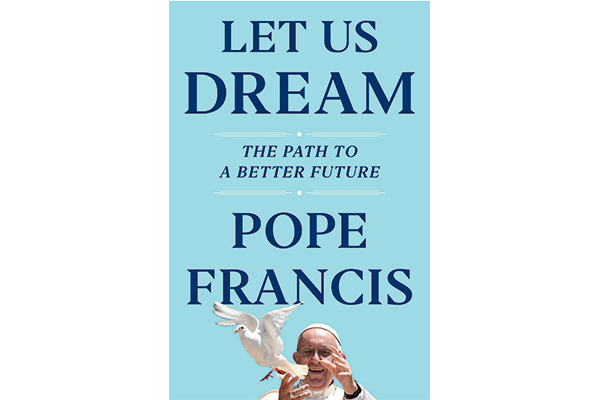
In his new book Let Us Dream, the Pope shares a very personal vision of a fairer world in the aftermath of Covid. In one of the most moving passages, he describes coming to see that the call to live in friendship with God and our neighbour is inseparably bound up with care for our environment
For a long time we carried on thinking we could be healthy in a world that was sick. But the crisis has brought home how important it is to work for a healthy world.
The world is God’s gift to us. The biblical story of Creation has a constant refrain: “And God saw that it was good” (Genesis 1:12). Good means bountiful, life-giving and beautiful. Beauty is the entryway to ecological awareness. When I listen to Haydn’s The Creation, I am transported into the glory of God in the beauty of created things. At the end, in the long duet of Adam and Eve, you meet a man and a woman enraptured by the beauty they have been given. Beauty, like Creation itself, is a pure gift, a sign of the God who overflows with love for us.
If someone who loves you gives you a beautiful and valuable gift, how do you handle it? To treat it with contempt is to treat the giver with contempt. If you value it, you admire it, look after it; you do not disdain it; you respect it and are grateful. The damage to our planet stems from the loss of this awareness of gratitude. We have grown used to owning, but too little to thanking. My own awareness of this truth began to take root during a meeting of the bishops of Latin America at the shrine of Aparecida, Brazil, in May 2007. I was on the committee drafting the concluding document of the meeting, and at first I was a bit annoyed that the Brazilians and bishops from other countries wanted so much in there on Amazonia. It struck me as excessive.
Last year, I called a special synod on Amazonia.
What happened between these two moments? After Aparecida, I started to see news stories: for example, the government of a well-known island in the South Pacific bought lands in Samoa to transfer its population there, because in 20 years’ time the island will be under water. Another time, a missionary in the Pacific told me of when he was travelling by boat and saw a tree sticking up from the water. He asked: was that tree planted in the sea? The man steering the boat told him: no, that was once an island.
And so, through many encounters, dialogues and anecdotes like these my eyes were opened. It was like an awakening. In the night you see nothing, but little by little dawn breaks and you see the day. That was my process: serene and calm, through information I gradually became aware of, until I became convinced of the seriousness of the thing. What was particularly helpful were the writings of Patriarch Bartholomew on this topic. It was a concern that I began to talk about to others, which helped. In sharing concerns, we began to see horizons and limits.
That’s how my ecological awareness came about. I saw that it was of God, because it was a spiritual experience of the sort St Ignatius describes as like drops on a sponge: gentle, silent, but insistent. Slowly, like daybreak, an ecological vision began growing in me. I started to see the harmonious unity of humanity and nature, and how humanity’s fate is inseparably bound up with that of our common home.
It’s an awareness, not an ideology. There are green movements that turn the ecological experience into ideology, but ecological awareness is just that: awareness, not ideology. It’s being conscious of what’s at stake in the fate of humanity.
After my election as Pope, I asked experts on climate and environmental science to assemble the best available data on the state of our planet. Then I asked some theologians to reflect on that data, in dialogue with experts in the field from across the world. Theologians and scientists put their heads together until they reached a synthesis.
While this was being worked on, in 2014 I went to Strasbourg in France to address the Council of Europe. President François Hollande sent his environment minister, who was at that time Ségolène Royal, to receive me. While we chatted at the airport, she said she had learned I was preparing an encyclical letter on care of the environment. I told her about it, and she said: please publish it before the meeting of heads of state that was due to take place in Paris in December 2015. She wanted that meeting to turn out well. And it did, even though some later took fright and withdrew their support for its conclusions. It is important that the Church makes its voice heard in this vital, necessary process: our faith demands it.
Laudato Si’ is not a green encyclical. It’s a social encyclical. The green and the social go hand in hand. The fate of Creation is tied to the fate of all humanity. When I give audiences in St Peter’s Square, I greet the three or four rows of sick people who are there. Particularly in the case of the children, I ask: “What does he or she have?” I would say about 40 per cent of the time it’s “unusual sicknesses” caused by some neglect of the environment: the irresponsible use of waste, the reckless deployment of pesticides that are continually being developed.
All these things, among others, end up making people ill, and mortgaging the future of the generations to come. Often the doctors just don’t know how to treat these illnesses. If it’s an unusual sickness they have a fair idea where it comes from, but because it doesn’t affect a large number of sufferers, it’s not profitable for the laboratories to develop medicines.
You can’t eat an apple these days without peeling it first in case it does you harm. Doctors advise mothers not to give their kids chicken from factory farms until they’re four years old, because they’ve been fattened with hormones and can make the kids unbalanced.
So this is not an ideological thing. It’s a dangerous reality. Humanity is getting ever sicker along with our common home, with our environment, with Creation.
A year ago I met fishermen from the Italian town of San Benedetto del Tronto who told me of the tons of plastic they had fished up from the sea. Theirs is a fleet of small boats, crews of no more than maybe six or seven on board each one. This year they came to see me again and told me they had hauled up 24 tons of garbage of which about half – that’s 12 tons – was plastic. They’ve taken it upon themselves as a kind of mission not to throw it back in the water. So along with the fish, they gather the plastic and separate it on the boats – which costs money, of course.
Laudato Si’ links the scientific consensus on the destruction of the environment with our self-forgetting, our rejection of who we are as creatures of a loving Creator, living inside his Creation but at odds with it. It’s the sadness of a humanity rich in know-how but lacking the inner security of knowing ourselves as creatures of God’s love, a knowledge expressed in our simultaneous respect for God, for each other, and for Creation.
To talk about Creation, you need poetry and beauty. Along with beauty is harmony, the sense of harmony that we abandon when we narrow our focus on to some areas at the expense of others. Existence becomes lopsided when we focus on the technical and the abstract, and lose our roots in the natural world. When we neglect Mother Earth, we lose not just what we need to survive but the wisdom to live together well.
A humanity impatient with the limits that nature teaches is a humanity that has failed to master the power of technology. In other words, technology has ceased to be our instrument and has become our overlord. It has changed our mindset. How? We become more intolerant of limits: if it can be done, and it is profitable, we see no reason why it shouldn’t be done. We begin to believe in power, confusing it with progress, such that whatever boosts our control is seen as beneficial.
Our sin lies in failing to recognise value, in wanting to possess and exploit that which we do not value as a gift. Sin always has this same root of possessiveness, of enrichment at the expense of other people and Creation itself. The sin is in exploiting what must not be exploited, in extracting wealth (power or satisfaction) from where it should not be taken. Sin is a rejection of the limits that love requires.
That’s why I spoke in Laudato Si’ of a distorted mindset known as the “technocratic paradigm”. It is a mindset that despises the limit that another’s value imposes. I made the case there that an ecological conversion is necessary not only to save humanity from destroying nature, but from destroying itself. I called for an “integral ecology”, an ecology that is about much more than caring for nature; it’s about caring for each other as fellow creatures of a loving God, and all that this implies.
In other words, if you think abortion, euthanasia and the death penalty are acceptable, your heart will find it hard to care about the contamination of rivers and the destruction of the rainforest. And the reverse is also true. So even while people will argue strenuously that these issues are different in moral terms, as long as they insist that abortion is justified but not desertification, or that euthanasia is wrong but polluted rivers are the price to pay for economic progress, we will remain stuck in the same lack of integrity that put us where we are now.
I think Covid-19 is making this apparent, for those with eyes to see. This is a time for integrity, for exposing the selective morality of ideology and to embrace the full implications of what it means to be children of God. That is why I think the future we are called to build has to begin with an integral ecology, an ecology that takes seriously the cultural and ethical deterioration that goes hand in hand with our ecological crisis.
An extract from Let Us Dream: The Path to a Better Future by Pope Francis in conversation with Austen Ivereigh, published by Simon & Schuster at £10.99 (Tablet price £9.89).


No comments:
Post a Comment