
20 November 2018 | by Michael Sean Winters
Conservatives in ascendant at divided US bishops’ plenary
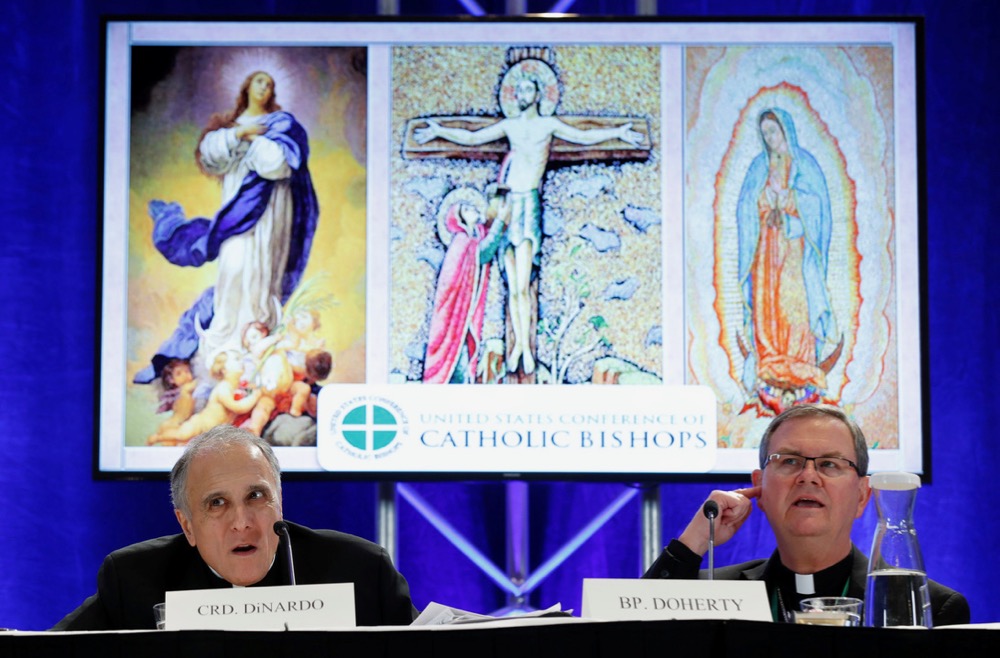
Cardinal Daniel DiNardo and Bishop
Timothy L. Doherty of Lafayette at a press conference at the bishops'
general assembly in Baltimore
Photo: CNS/Kevin Lamarque, Reuters)
Photo: CNS/Kevin Lamarque, Reuters)
Bishops 'who have gotten too accustomed to listening to lawyers over victims' were among those criticised
The US bishops’ conference concluded its
autumn plenary last week divided and disheartened. After a summer of
intense focus on their mishandling of clergy sex abuse issues, they
fumbled any attempt to demonstrate a reason the people in the pews
should trust them to lead the ecclesial community.
The Holy See had issued a last minute
directive, barring them from enacting the proposed remedies formally,
pending the outcome of a Rome meeting in February with the presidents of
the world’s episcopal conferences. The executive committee proposed
“Standards of Episcopal Conduct”, and a National Review Board to
investigate charges against bishops. But, when they discussed those
proposals with a view towards instructing their president-delegate to
that same meeting, it quickly became clear that the bishops found them
inadequate, too expensive, and too cumbersome. They did not even take a
“sense of the body” vote on the proposals as was suggested by Cardinal
Blase Cupich when the Vatican’s decision to bar a vote on enacting the
proposals was announced.
Nor was there any consensus on diagnosing
the problem. Archbishop Salvatore Cordileone of San Francisco commended a
study purported to link increased numbers of gay people in the
priesthood with clergy sex abuse and Bishop Joseph Strickland, of Tyler,
Texas, criticised Fr. James Martin, S.J., without naming him, for his
efforts to encourage outreach to the LGBT community. Sex abuse victims’
groups have repeatedly denounced efforts to blame the abuse crisis on
gays and the most thorough study of the sources of the crisis, published
by the John Jay College in 2011, cited a variety of factors that led to
the crisis but insisted homosexuality is not a predictor of sex abuse.
Archbishop Paul Etienne of Anchorage,
Alaska pointed to the culture of clericalism. He criticised bishops “who
have gotten too accustomed to listening to lawyers over victims” and
those too concerned with power, privilege and pride. “That’s a
corruption of our life as shepherds that has to be called out and say
‘No more. It’s not tolerable.’”
The lack of consensus and mixed motives
were evident in the debate over a proposal by Bishop Earl Boyer of
Lansing, Michigan. Boyer proposed a resolution urging the Vatican to
publish all documents related to the scandal surrounding former Cardinal
Theodore McCarrick. Cardinal Joseph Tobin pointed out the Vatican is
already conducting an investigation and has promised to publish the
results. The proposed resolution was defeated two-to-one.
In the elections for new committee chairs,
the bishops selected mostly conservative candidates including two
bishops who had spoken out in the wake of the “testimony” published by
former nuncio Archbishop Carlo Maria Vigano this summer, attesting to
Vigano’s integrity without affirming any support for the pope, or
attesting to Francis’ integrity. Archbishop Cordileone was elected to
chair the Committee on Laity, Marriage, Family Life and Youth, and
Oklahona City Archbishop Paul Coakley was elected to chair the Committee
on Domestic Justice and Human Development. The election of Archbishop
Etienne to lead the National Collections Office and of Auxiliary Bishop
Mario Dorsonville of Washington, D.C. to head the Committee on Migration
were the only two victories for candidates seen as supportive of Pope
Francis.


No comments:
Post a Comment