
What The Experts Got Wrong
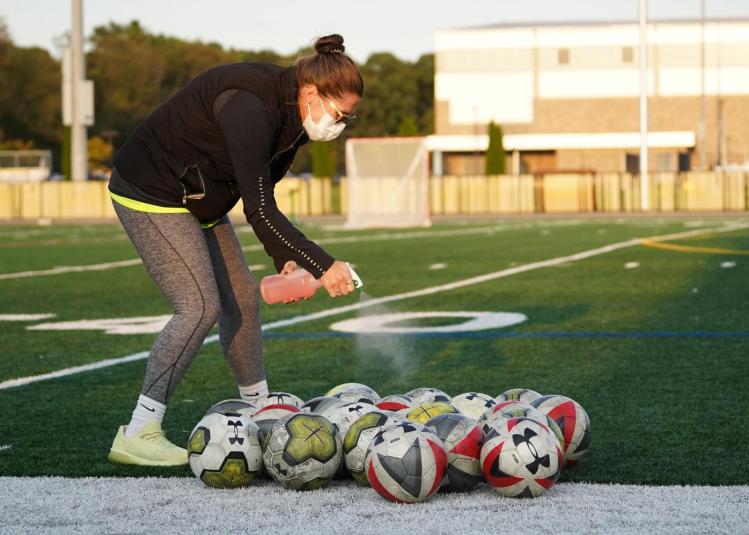
Like many people, I started the pandemic zealously following (and informally enforcing on those around me) the high sanitation standards and directives of public-health officials. In the spring of 2020, I was quarantined at home with my wife and two-year-old son, teaching my university classes on Zoom, “socially distancing” from family and friends, and having groceries delivered. Any object entering the house from outside had to be disinfected. I was jittery about sharing air with strangers and grumpy about people letting their masks slip beneath their noses. My family is Catholic, but we paused Sunday Mass-going, read the liturgy aloud, and sang the Kyrie, Gloria, and Agnus Dei in front of the blue buzzing light of a laptop computer screen.
As the months of social distancing extended into a year, we saw isolation begin to take a terrible toll as many relationships around us began to dissolve. Some of our friends stopped being friends. Others who appeared on solid ground at the beginning of the pandemic went into tailspins leading to divorces, abandoned jobs, lost religious vocations, sudden moves out of town, or permanent retreats into their homes. Pope Francis had said throughout the pandemic that we will “either emerge better or we will emerge worse” from a crisis like Covid, but we will never emerge “the same.” Even this warning from a figure of profound wisdom was not enough to prepare me for the shock of all the relationships that went to pieces.
Our family of three lived as if on a desert island—a Robinson Crusoe in the middle of Los Angeles. News of exploding lives and terrible suffering reached us only in whispers, like a movie scene where people are shouting, faces contorted with anguish, but the volume is turned down too low for the images to have full impact.
That first year, we spent Easter alone and Christmas in a “pandemic pod” with one set of grandparents. We celebrated birthdays via Zoom. My two-year-old son made no friends and started avoiding other children when we encountered them outside (a heartbreaking habit he required several months to unlearn). I entered into a dark period of melancholy and worry. When I finally told my story to a wonderful Jewish narrative psychologist, he explained that I had become habituated to “catastrophic thinking,” that my galloping anxiety was a product of the pandemic, and that above all I was attempting the impossible: to control the entire world in order to keep the virus permanently at bay from me and my family.
When I wrote about that period for Harper’s magazine a couple years ago (“Doctor’s Orders,” August 2023), I argued that too many contestable political decisions during the pandemic had been justified on supposedly scientific grounds. From quarantines to mass closures, much of what was presented as “following the data” was, in fact, policy that should have been subject to democratic deliberation and debate. Alas, after reading Stephen Macedo and Frances Lee’s intellectually brave and ideologically iconoclastic book, In Covid’s Wake, I can only conclude that the abuse of scientific authority during the pandemic was far worse than even I imagined.
One of many things I learned reading their book is that my small and ultimately futile policy of total suppression—which Macedo and Lee refer to as “zero-Covid strategy”—was pioneered by China’s authoritarian government and later imitated, mutatis mutandis, by a significant portion of the population in the United States and much of the developed world. It is a strategy, moreover, that millions of Americans backed into with little to no public debate and without an official declaration of it as policy. Instead, governors like Gavin Newsom of California spoke of keeping the virus “under control.” But since “no specific definition of ‘under control’” was ever offered, as Macedo and Lee observe, “suppression of the virus became a public moral imperative, next to which all other concerns paled.” What Macedo and Lee call an “illusion of consensus” was fabricated, with planned attacks on any scientists and academics who dissented.
During that year, my life became a microcosm of those trends. I lived in a semifunctional germaphobic mania, in which nearly every facet of daily existence was subordinated to the single overriding aim of avoiding Covid-19. All trips outside the house were carefully planned so as to minimize exposure; buffers from all possible “vectors” were zealously guarded. As Macedo and Lee show, I was far from alone in this. Until the vaccines arrived, much of American society was racked by anxiety, and social distancing only exacerbated the underlying atomism and alienation that already afflicted us. The god of health was making everyone sick.
In Covid’s Wake is the best book to date on the politics of the Covid-19 pandemic. Macedo and Lee, both political scientists at Princeton, complement each other’s strengths: Macedo adds theoretical sophistication to Lee’s empirical analysis. Methodologically speaking, the book is chiefly a work of modern social science, with both the strengths and weaknesses of that discipline (a point to which I shall return).
I think it’s fruitful to read In Covid’s Wake as part of a longer tradition of plague narratives in the West. This includes not only histories like Thucydides’s account of the plague of Athens in the History of the Peloponnesian War but also imaginative literature such as Albert Camus’s The Plague and Gabriel García Márquez’s Love in the Time of Cholera. What Macedo and Lee share with such authors is the deep insight that plagues are always both natural and political phenomena, and this is part of what makes them so bedeviling. One of the biggest errors committed during the Covid-19 pandemic was treating the plague as if it were a straightforward problem for scientific rationality. This led to the continual attempt to do the impossible—namely, to depoliticize the pandemic.
Against the tendency to treat Covid as a mere scientific phenomenon, Macedo and Lee tell a very different story: one of opacity and confusion surrounding a massive and mysterious calamity that was met with varying degrees of denial, panic, and paranoia. The overarching message of their book is that we do not fully know a plague (either scientifically or politically) until we have lived through it—and even then, looking back to past events or potential future threats, we must exercise a great deal of intellectual humility.
In the book’s astonishing opening pages, Macedo and Lee transport the reader back to March 2020 when curiosity and fear grew as news reports turned dire. There was the horrific “7-percent” death rate as Covid hit Italy; there were the television images of “body bags being forklifted into a truck outside the Brooklyn Hospital.” Everywhere, Americans began hoarding basic supplies: toilet paper, bottled water, masks. Streets went dead, parks and playgrounds emptied, schools and churches closed. Public spaces effectively vanished.
At the same time, germaphobia unlike anything experienced in living memory swept through society. “Performative hygiene” was everywhere. People began bleaching their groceries and sterilizing their clothes, compulsively washing their hands with ethyl-alcohol sanitizers, and stitching together their own personal protective equipment in the early days of shortages.
Outside of one’s home, one confronted not people but potential vectors of disease. Masks became ubiquitous so that no individual faces could be seen. Personal connection receded on nearly every front. Many wondered how long they should stop breathing after they passed their neighbors on the street. “People routinely cycled and jogged outside with masks on, and some seemed still to wear masks when driving alone in their cars.” Barricades and markings to help people maintain social distance appeared everywhere, transforming city spaces seemingly overnight.
On March 16, 2020, Imperial College London published a hugely influential report based on mathematical modeling. It found that “social distancing of the entire population, case isolation, household quarantine, and school and university closure” were necessary to avert 2.2 million deaths in the United States alone. The global response to these mathematical models was the “greatest mobilization of emergency powers in human history…3.9 billion people—half the world’s population…living under some form of quarantine.”
To read all this is to relive the trauma of that time. But Macedo and Lee establish that mortality rates and talk of mass death during the opening year of the pandemic were the result of a “selection effect” in which those who were most ill were “disproportionately identified as cases and the less sick [were] overlooked,” distorting “estimates of the disease’s lethality.” The authors also make a formidable case for the thesis that many of the most onerous precautions—even when carried out with good intentions—were of little or no long-term value in fighting the disease. For example, they argue at length that stay-at-home orders and school closures made no appreciable impact on overall mortality. Consider, Macedo and Lee observe, that “in the end…Sweden’s excess mortality was the lowest in Europe,” despite the fact that it never adopted lockdowns or stay-at-home orders. Red states that ended their lockdowns early did not see higher Covid mortality rates than blue states that pursued “more stringent non-pharmaceutical interventions in efforts to contain the pandemic.” It’s worth underscoring that, once they arrived, pharmaceutical interventions, especially vaccines, made a huge difference in Covid mortality. And epidemiologists will continue to argue about what effects urban density and the early arrival of the virus had on case levels and mortality numbers in different countries and U.S. states. But the evidence does not support the claim that the most stringent public-health actions always led to superior outcomes. This raises a question that in many circles has for too long remained taboo: Were the biggest sacrifices really worth it?
As for masking, while Macedo and Lee concede that “at the individual level, properly worn high-quality masks may help prevent infection if one is disciplined,” they also conclude that mask mandates were not “proved to be effective at significantly reducing the spread of respiratory viruses in populations” as a whole. This is partly because coronaviruses are between 0.1 to 0.2 microns in size, while N95s only filter out particles roughly double that size at 0.3 microns. This is why “the CDC recommended masks to catch droplets from sneezes and talking, not airborne transmission from normal breathing.”
Masking guidance is one place where scientific authority overextended itself and was also openly inconsistent throughout the pandemic. The public was first advised that only health-care workers needed masks (the experts were worried, not unreasonably, that there would not be enough masks for doctors and nurses if everyone started hoarding them). But later, the consensus turned toward masking mandates in a much broader array of settings. But by then, the experts had already damaged their credibility with their lack of candor. Whatever the effectiveness of masks in preventing the spread of Covid, it was obvious even to many non-experts that masks could not be more effective in protecting health-care workers than they were in protecting anyone else. (The claim made by some public-health officials that only health-care workers could be trusted to wear masks properly was always patently tendentious.)
But perhaps Macedo and Lee’s most unsettling revelation—in a book full of disturbing revelations—is how the consensus among health experts on respiratory pandemics in the years before Covid was dramatically reversed in the first month of the pandemic. Specifically, “prior to the Covid outbreak…the dominant view was that non-pharmaceutical interventions (NPIs),” such as “large-scale quarantines, lockdowns, preemptive school closures, and mass testing and contact tracing” were of “limited use.” This was because respiratory viruses of this kind are impossible to contain in the long-term, and invasive NPIs come at a huge cost. And yet, in the first months of the pandemic, governments across the world, including in Europe and the United States, abandoned years of consensus and instead inched closer to the extreme of “China’s draconian approach” of total suppression. Macedo and Lee recount how public-health officials in the West, such as those at the World Health Organization, came to reject the prior consensus after a trip to observe the lockdown in China. Crucially, technocrats suddenly relied heavily on a handful of mathematical models forecasting huge fatalities if an approach more like the Chinese strategy was not adopted (though it’s also worth noting that no American state ever adopted full Wuhan-style lockdowns, which would have meant cutting off access to whole cities and mandating the testing of all close contacts).
Nonetheless, a key document in the shift away from the prepandemic consensus, for both experts and their stenographers in the media, was the aforementioned “bombshell” report by a team at Imperial College London led by Dr. Neil Ferguson. Of this piece of forecasting, Macedo and Lee observe that perhaps “no study has ever ‘had such a big impact on the world.’” The “huge media coverage of the Imperial College models” rarely mentioned the fact that Dr. Ferguson had a “poor track record” in earlier health scares. Macedo and Lee demonstrate that Ferguson’s alarmist models had been spectacularly wrong during outbreaks of avian flu in 2006 and swine flu in 2009 (he projected “65,000 deaths in Britain…in the end there were only 457”). Meanwhile the media joined in the alarmism with a wave of reports that focused on outlier cases to grossly overestimate “the risk to those under sixty-five and the healthy majority.”
Once the paradigm shift toward lockdowns had been adopted, the bulk of public-health officials and technocrats rallied around the new policy as a matter of settled science. Macedo and Lee show at length how this approach was self-consciously paternalistic and manipulative. “[M]isleading messaging” was intentionally adopted because it was “sincerely thought to be justified by higher purposes” and “the public interest.” Overnight, virologists and epidemiologists took on the role of armchair social psychologists, telling the public what they thought it needed to hear, even when this was not quite the whole truth.
Macedo and Lee damningly conclude that there was simply “no relationship between the stringency of state non-pharmaceutical interventions…and Covid mortality.” On the other side of the ledger, they carefully catalogue the harms caused by these interventions: the “children kept out of schools”; the “working-class people whose livelihoods were destroyed”; the “tens of thousands whose vaccinations for other diseases, medical screenings, tests, and operations were put on hold”; the “ordinary people made anxious and depressed by unrealistic fears”; and “the sick and dying denied the comfort of human contact.”
We are all still carrying with us, in the body politic as well as in our individual bodies, the aftereffects of the pandemic. These aftereffects are psychological, economic, social, and political. We can see them in those who still live in quarantine almost a half-decade later—masking at the slightest hint of contagion, shrinking back from those around them into painful self-isolation. But less obvious effects play out in society at large. In recent history, only the war on terror rivals the pandemic in how it changed public spaces in a way that was supposed to be temporary but soon became the new default. While there may have been a reasonable prudential case for extreme precaution in the opening weeks and months of the pandemic—before we knew exactly what we were dealing with, long before vaccines—some of the measures we adopted then lasted until long after they were no longer medically necessary; a few remain still.
A future historian might go even further than Macedo and Lee in tracing the long shadow of the pandemic on our culture and politics. One can argue that blowback from the lockdowns and school closures had an effect on the 2024 election (since Democrats became the party associated with the most stringent pandemic policies), but even more important may be the longer-term effects of social isolation, which imperil the ability to form solidarity across deep human differences. Political theorists as various as Alexis de Tocqueville, Hannah Arendt, and Václav Havel have warned that social atomization makes it easier for totalitarian and autocratic movements to take hold. A future political study might have more to say about the complex ties between Covid and the West’s slow drift away from liberal democracy.
But this is not the only area of unfinished business in Macedo and Lee’s account. As they acknowledge, there is an explanatory gap in their story. They write that “blue-state policy orthodoxy grew intolerant of dissent,” but “exactly why is not completely clear.” A good ethnography of the pandemic remains to be written—one that would do for the pandemic what Arlie Russell Hochschild did for the New Right in Strangers in Their Own Land.
To their credit, Macedo and Lee provide the first clues to such a work. There is, for example, the fascinating passage describing how the popular journalist Ezra Klein—after describing at great length the “panoptic” and “dystopian” mobilization of mass lockdowns—concluded that there was nevertheless “no good alternative to shutting down life as we know it.” As Macedo and Lee put it, “Klein, like most other commentators,” was prepared to construct and live “in a dystopia if it would extend…life.” This is a version of Giorgio Agamben’s “bare life” thesis. Macedo and Lee are, of course, aware of Agamben and cite him at various points. But a full-blown sociology of pandemic ideology could apply Agamben’s theory more systematically to the history recounted in their book.
Macedo and Lee skillfully deploy the empiricist methods of social science, but precisely because of their fidelity to those methods, they sometimes struggle to move beyond the limits of the technocratic framework. They tend to treat all policy problems as a “failure to attempt meaningful cost-benefit analysis of pandemic policy” by elites in government, media, and academia. What is missing is any indication that cost-benefit analysis is philosophically aligned with the utilitarianism that justifies technocracy in the first place. But there are good reasons to doubt that the cure for botched technocracy is simply better technocracy. What we need is a more democratic and deliberative approach to the politics of public health that places the meanings and stories of ordinary people at the center, an approach that does not limit itself to epidemiological data.
Traces of the very technocracy they oppose are also evident in Macedo and Lee’s tendency to assume that the true actors of policy are an elite set of elected representatives and that it is the job of these—and only these—elites to check other kinds of elites. They argue, for instance, that scientific and public-health experts need “to be checked and balanced” by “members of Congress” who “play a vital role in representing the interests and perspective of ordinary people.” They claim that “elected representatives [and] members of Congress are generalists, not policy experts” and can also serve in “balancing” between “profound class and cultural divisions.” This is true as far as it goes, but it narrows democratic agency to members of one branch of the U.S. government. It elides the role of local deliberative assemblies at the city and town levels. It overlooks the possibility that ordinary people could create policies for their own communities. As Catholic social teaching reminds us, subsidiarity can be a potent antidote to technocracy.
But these are mere quibbles. Macedo and Lee have rendered a valuable intellectual service in their survey of a neuralgic episode of our recent history, and it is a testament to the form of progressive and social liberalism they avow that they are capable of self-scrutiny: “We believe that our own tribe needs to introspect, admit its biases and shortcomings, and strive to do better. That is the spirit in which we have written this book.” It is worth remarking that this spirit is altogether missing from the MAGA nationalism now in control of our federal government, which is all about maintaining its leader’s pretense of infallibility. In short, Macedo and Lee deserve praise from both intellectuals and ordinary readers from all walks of life for having produced a study that testifies to two increasingly rare virtues: honesty and humility. In the case of the Covid pandemic, it’s easy to see how these virtues often go together: honesty involves admitting one’s mistakes and acknowledging the limits of one’s knowledge—and both of these require humility.
As things stand in the United States, one can’t honestly say that we’ve exited the crisis better than we entered it. To the contrary, while some of us continue to overreact to the virus in ways I’ve already described, others have overreacted to the government’s flawed response to Covid. MAGA’s vaccine skepticism and gleeful gutting of government agencies may be opening the door to an even worse government response to the next crisis—whether it’s another pandemic, a war, or a massive hurricane or flood. The lesson of Covid was certainly not that we suffer from an excess of state capacity. Still, neither the experts nor the general public have shown much interest in using the pandemic as an occasion for self-assessment or transformation. Most of us just want to put it behind us and go back to the way things were before. But that is an idle hope. As Pope Francis warned us, things will never be the same.
In Covid’s Wake
How Our Politics Failed Us
Stephen Macedo and Frances Lee
Princeton University Press
$29.95 | 392 pp.
No comments:
Post a Comment