
Catholics in England lead the way on LGBTQ+ inclusion, research finds


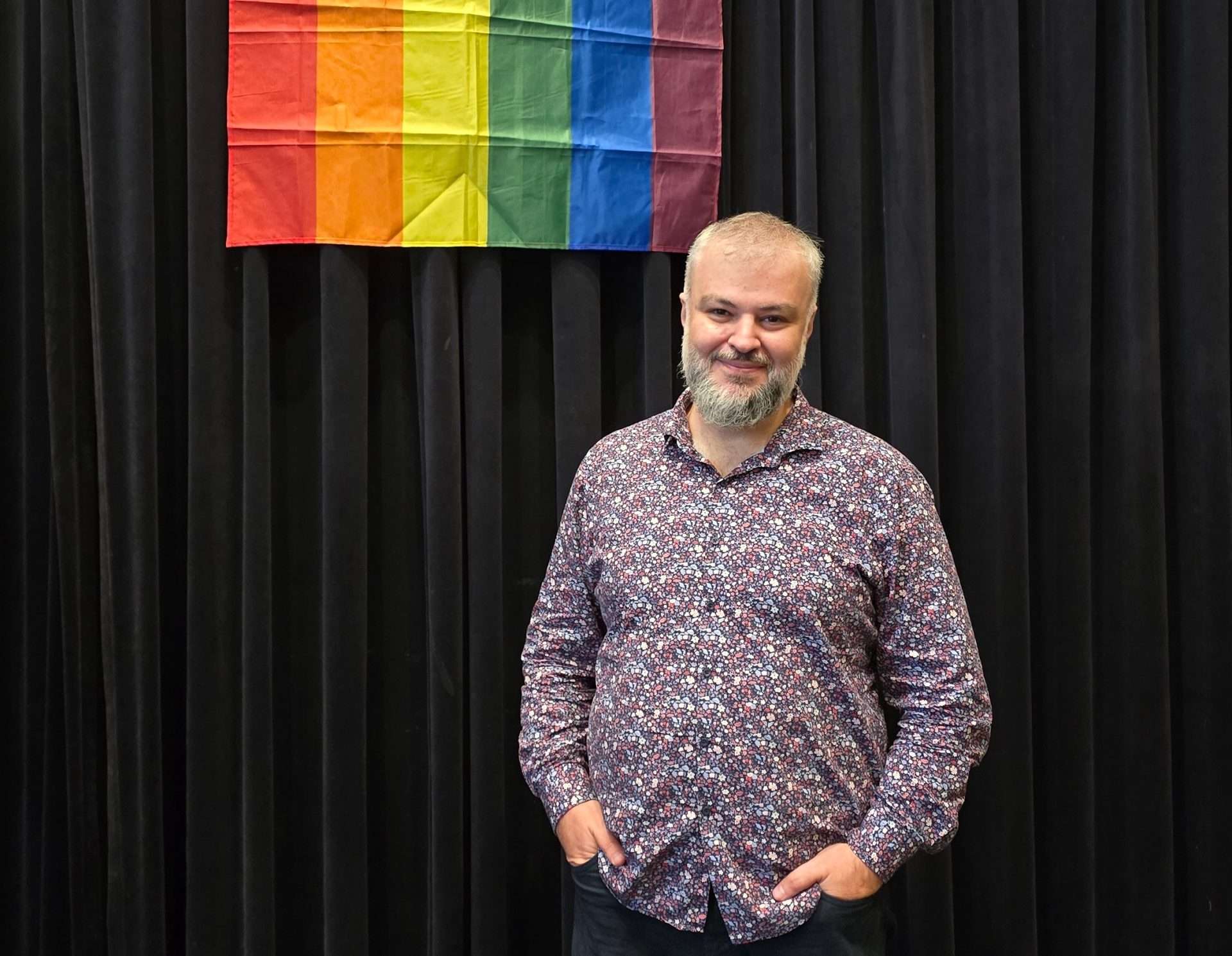
Misza Czerniak, Co-President of the European Forum of LGBTI+ Christian Groups, in Amsterdam
liz Dodd
The Catholic Church in England and Wales is among the most supportive and inclusive of LGBTQ+ people in Europe, according to a report released this week.
Inclusive theology that affirms the dignity of all, as well as robust and organised grassroots pastoral care, helped to boost its ranking within a comprehensive new index of Christian churches, although a lack of institutional support and robust public policy saw it score zero points in some areas.
The Rainbow Index of Churches in Europe (RICE) 2025 is a substantial, academic research project that scores and ranks the measures that churches across Europe take to include and support LGBTQ+ people in their communities. It is the second such index to be published by the European Forum of LGBTI+ Christian Groups. The Catholic Church in England and Wales was ranked joint 22-23 with the Belgian Catholic Church overall. The two countries’ churches came second only to the German Catholic Church (11 overall) within the Catholic index.
Martin Pendergast, co-researcher for the Catholic Church in England and Wales, said: “This shows the impact that the officially recognised, seven diocesan LGBT+ Catholic diocesan ministries have had in England and Wales. The Church now has to implement the various calls made during the recent Synodal consultations. It needs to reframe its 1979 LGBT+ pastoral guidance by adopting more welcoming and inclusive language and press the Dicastery of the Faith to do likewise, not least in opening up the celebration of same-gender blessings and liturgies.”
Some 46 national churches across Catholic, Orthodox and Protestant traditions were studied for the 2025 index, which was launched at De Tomaskerk in Amsterdam during an International Consultation on LGBTI+ Inclusion and Allyship in Churches. The three-day event brought together allies, influencers and LGBTQ+ activists from across Europe to consider topics such as the anti-gender movement, hate speech, and building inclusive narratives.
Misza Czerniak, co-president of the European Forum of LGBTI+ Christian Groups, which convened the consultation, welcomed the indication in RICE 2025 that churches are becoming more inclusive, but told The Tablet that progress was too slow. “The average progress for churches in all traditions since 2020 is five percent, or even less. That percentage represents actual lives. For me, that might mean that it will be forty or fifty years before my church is prepared to bless my relationship. What about people who are in situations where they’re being beaten or killed for who they are? This is a reality in many Christian communities in the world,” he said.
“I would love queer people of faith to be flourishing in their communities, and to be contributing, because they have so many gifts to bring. But when the church doesn’t want to be the vessel for that they have to flee for spiritual self-preservation. They have to seek God outside church. When I think about that, I think that five per cent is too slow.”
The Metropolitan Community Church in Vienna was ranked first overall in RICE 2025, followed by the Reformed Catholic Church in Poland. In the UK the Lutheran Church in Great Britain narrowly surpassed the Catholic Church, coming in twenty-first place. The Church of England came joint 29-30 overall, tied with the Catholic Church in Switzerland. The ranking was determined according to a list of 52 indicators across categories that included theology, church policy, leadership and advocacy and networks.
Indicators included both the availability and support of grassroots organisations, as well as structural and hierarchical indicators. The report’s co-authors, Professors Doctors Regina Elsner of the University of Munster, Germany; Pekka Metso of the University of Eastern Finland; and Valerie Nicolet of Umea University, Sweden, acknowledged the work of local co-researchers within each country, who both scored and submitted supporting material about their respective country’s church.
Scoring 27.5, or 52.9 per cent, out of a possible 52 points, the Catholic Church in England and Wales had improved its overall score by 32.7 per cent since the last index in 2020, when it scored just 9.5 points. In 2025 the Church scored very highly for institutional equality and non-discrimination and church practices, but poorly for public policy. Catholic theology was seen to be supportive of the equal dignity of all, including LGBTQ+ people, and to allow parishes and congregations to have discussion and agency around affirming the rights of LGBTQ+ people.
The inclusivity of sacraments, in particular Communion and Baptism, within the Catholic Church was particularly affirmed – that is, people were not denied baptism because of their sexuality, and the children of same-sex couples were not denied baptism because of the sexuality of their parents. The Church in England and Wales fell short when it came to public support for LGBTQ+ people, scoring poorly overall for its public policy. The institutional church failed to make any public statements regarding the rights of LGBTQ+ people to access some public services, on their gender rights, or on their reproductive rights; however, it scored some points for affirming publicly the right to safety and political organisation and expression of LGBTQ+ people.
Both within the Church in England and Wales and internationally, the impact of Pope Francis’ affirming and inclusive teaching and statements towards the LGBTQ+ community was seen as transformative. This was seen both across practical measures, such as Fiducia Supplicans’ opening a way for priests to bless same-sex couples, and more broadly because his language allowed local leaders more freedom to minister according to their conscience.
Michael Brinkschroder, part of the Roman Catholic Working Group of the European Forum, said that the Catholic Church in England and Wales stood out for the improvements it had made. “It should be a case study. Improvements came about both because of the vast unity of the bishops’ conference and the good pastoral infrastructure. Sometimes the bishops are supportive, sometimes they are the problem, but the Church in England and Wales shows that if there’s no grassroots, nothing happens,” he told journalists and allies at the launch event.


No comments:
Post a Comment