
Why Should Jesus Weep?
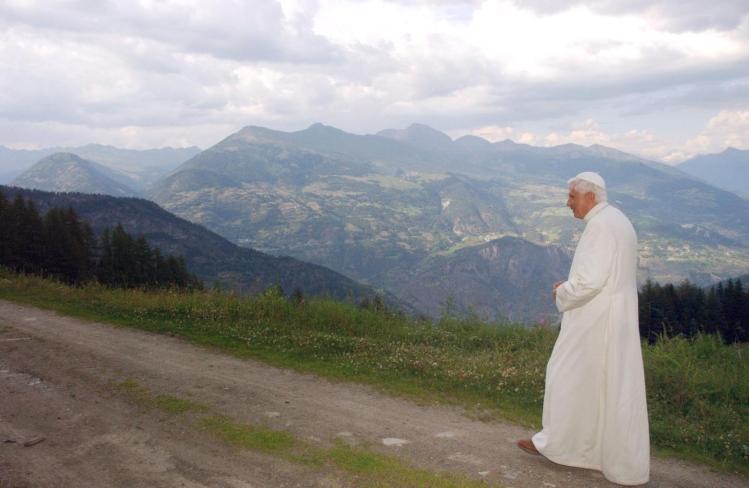
In his recent book-length piece of investigative journalism, Philip Shenon paints a dark picture of the records of the most recent popes. Jesus Wept: Seven Popes and the Battle for the Soul of the Catholic Church spares no one, except John XXIII, and is most brutal in its assessment of Joseph Ratzinger, both before and during his papacy. Pius XII receives the customary criticism for his failure to do much to address the plight of Jews in Nazi hands, but Shenon does not stop there, pointing out Pius’s administrative failures: appointing no cardinals during the last five years of his reign and leaving the Church without a secretary of state. Paul VI brought Vatican II to its conclusion but blunted some of its more progressive initiatives, only to lose control of his papacy and perhaps the Church in the wake of the 1968 encyclical letter, Humanae vitae. John Paul II was obsessed with meddling in European and especially Polish politics, mostly ignoring the momentous events in the Latin American Church, and signally failing to address the burgeoning crisis of clerical sexual abuse. Benedict XVI was equally weak in addressing sex abuse, most notably in the way that Cardinal Theodore McCarrick got away with so much for so long. Even Francis failed on this score and was assailed by conservative critics, clerical and lay.
There is little reason to think that Shenon has many, if any, of his facts wrong, though sometimes the emphasis on failures seems lopsided. What of Pius’s steps to initiate liturgical renewal? What of Paul VI’s Populorum progressio, surely one of the most important of the social encyclicals, or his shepherding the 1971 Rome Synod of Bishops’ radical challenges to global injustice? John Paul II produced three great social encyclicals—why doesn’t Shenon mention any of them? Wasn’t Benedict genuinely interested in dialogue with those of other religions? And didn’t Francis eventually deal successfully with the worst of his clerical critics? If these popes were as unsuccessful as Shenon believes, how is it that three of them have been canonized and at least one more ought to be?
Truly, all seven of these popes had at least a few achievements, and two or three of them contributed a lot. But we would be assessing all of them differently if they had each served only five years. Pius would still be under the shadow of his silences in World War II Rome, but he would have been gone before the end of the war and perhaps his successor could have rescued the Vatican’s poor record. There would have been no Humani generis, the 1950 encyclical that all but condemned several theologians whom his successor would rehabilitate and rely on for much of the success of Vatican II. And there would have been no infallible declaration of the Assumption of Mary into heaven, which at least some think was a mistake. Not the assumption perhaps, but certainly the infallibility. John XXIII did the decent thing and only lived five years, not long enough to make the mistakes that seem to come inevitably with lengthy papacies. Paul VI would have been remembered as the author of Populorum progressio, and there would have been no Humanae vitae. John Paul II would be the pope of Laborem exercens, the great letter on the rights of working people, and not of Ordinatio sacerdotalis, in which he attempted to foreclose any further discussion of women in ordained ministry. Pope Benedict could have retired with two scholarly encyclicals, before his obvious incapacity to handle the papal responsibilities reached the point where even he saw the need to retire. And even Francis would have benefited from stopping with Laudato si’ before his later writings provoked his conservative opponents to accuse him of heresy.
If we think of the recent history outlined by Shenon, is it possible that term limits for popes might be a good idea? A crazy idea? One thing is clear: if all of these popes had died or retired after five years, each would have been remembered more favorably than they have been after their nineteen (Pius), fifteen (Paul), twenty-six (John Paul II), eight (Benedict), or twelve (Francis) years. Moreover, they might have given way to other better choices. Perhaps Cardinal Tardini might have replaced Pius in 1944, while Paul could have been followed by Cardinal Suenens and John Paul II by Carlo Maria Martini. And he in his turn by a much younger Bergoglio.
While this is an intriguing if impossible game of guessing the outcome of hypothetical conclaves, it is not hard to make the case that younger popes, provided they are only pope for five years, cannot hurt—and could easily help—the fortunes of the Catholic Church. Even a poor choice has only five years to do damage.
No comments:
Post a Comment