
That the Bible is the most frequently published, widely translated, deeply revered, and vigorously disputed book ever written is a statement of fact. That within this statement lies a “global history” of a complex development and variegated influence is what Yale professor Bruce Gordon wants to demonstrate in The Bible: A Global History, his well-researched and sturdily documented study that manages to combine genuine learning with accessible prose.
Like all histories, Gordon’s narrative traces a chronological sequence. The first eight chapters move from the process of canonization and early translations/versions through the use of the Bible in medieval European culture, the upheavals represented by the Renaissance and Reformation, and the challenges of the Enlightenment, before lingering on the formation and influence of the King James Version (KJV). The final six chapters trace the Bible’s expanding world in the Americas, in global missions, in China and Africa, and finally—in a chapter worth the price of the book—the role of the Bible in global Pentecostalism.
As this sketch already suggests, the chronological line is constantly intersected by geographical lines. Gordon is concerned with showing how, from its very beginnings, the Bible had a “global” character, emerging from the Near East and Africa before infiltrating Roman, Byzantine, and European worlds, and finally exploding across all known lands and (almost) all known languages and dialects. After reading all this, the reader may still like to learn more about the Bible in Eastern Europe, Latin America, and especially in the entire Orthodox tradition, but that’s only because Gordon’s coverage is otherwise so impressive. His account is notable for combining this broad sweep with a remarkable amount of detail. This history is “global” also in the sense that it seeks to include all the dimensions of the Bible’s story.
There is, for example, the Publishers’ Bible: Gordon traces the multiple forms in which the Bible entered the public realm, beginning with the great Uncial manuscripts like Vaticanus and Sinaiticus—including a nineteenth-century legend about Constantin von Tischendorf’s “rescue” of the Sinaiticus from the supposedly benighted monks at Mt. Sinai. Gordon considers the implications of the Gutenberg revolution and notes all the competing versions of the printed Bible over the past six centuries, not neglecting to mention the millions of Gideon Bibles placed in hotel rooms across the world, and the stunning fact that the leading publisher of Bibles today is China. The single item I missed in this impressive catalogue was the Scofield Bible (1909), which had such a major impact on American dispensationalism.
Then there is the Translators’ Bible: touching on all the ancient translations and adverting to the constantly proliferating efforts of nineteenth-century missionary societies and translation committees to provide Bibles in every known tongue, Gordon appropriately pays particular attention to the production of Jerome’s translation into Latin, Luther’s translation into German, and the English translations that culminated in the King James. He pays due attention to the literary quality and subsequent influence of Luther and the KJV. This reader would have welcomed a bit more appreciation of the distinctive qualities of the Vulgate that made it among the worthiest of all translations.
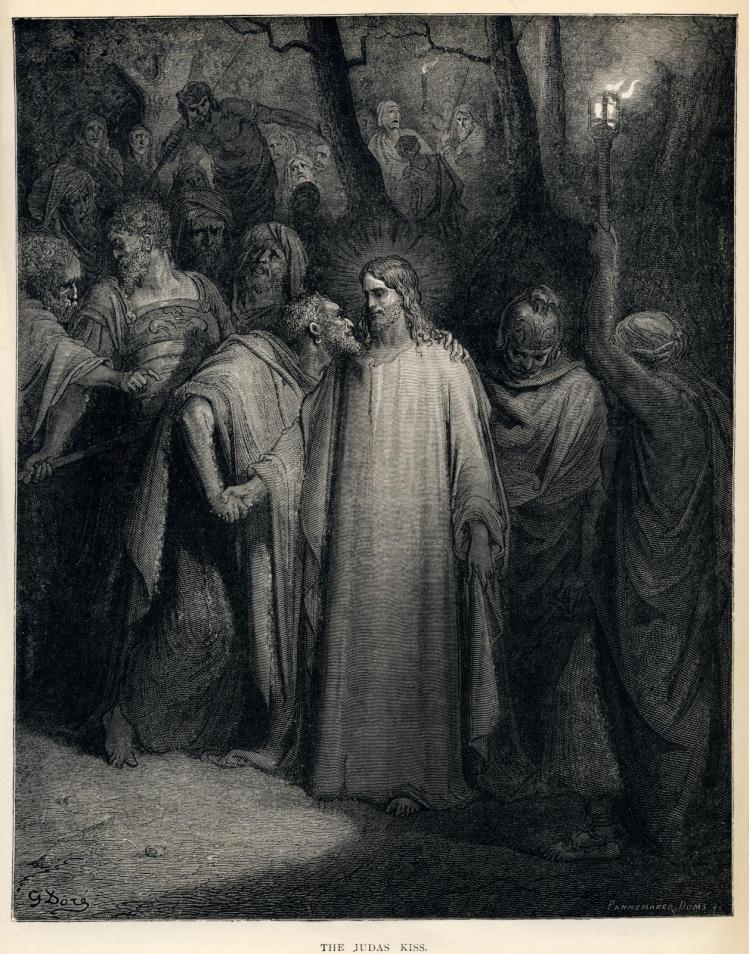
Closely connected to the Publisher’s Bible is the Artists’ Bible. Manuscripts and then printed versions of the Bible have been illustrated at least since the sixth century, and Gordon provides twelve pages of stunning color examples, with styles ranging from the severe beauty of Byzantine and Medieval ornamentation to the lush romanticism of Gustave Doré, to the stark line drawings of Annie Vallotton in the Good News Bible, printed more than 225 million times. Gordon touches also on the Bible’s influence on the architecture of medieval cathedrals, with their depictions of biblical scenes in stained-glass and the grotesqueries of their statuary. Nor does Gordon neglect the way in which the Bible affected the musical arts. He pays appropriate attention to German and British hymnody within Reformation traditions, and naturally to the grand compositions by Handel, Bach, and Mozart based on biblical texts, but he seems to have missed the very significant role played by Gregorian chant as a liturgical form of medieval biblical exegesis.
From very early on, there was also the Scholars’ Bible. The patristic age saw such scholarly efforts as Origen’s Hexapla and Eusebius’s canonical tables. In the sixteenth century, the Renaissance spirit spurred efforts to recover the original Greek text by scholars like Erasmus, as well as the massive compendium of learning found in the Complutensian Polyglot. In his chapter on “Science and Reason,” Gordon carefully threads his way through the complex issues raised by the European Enlightenment, showing first how great scientists such as Francis Bacon, Copernicus, and Galileo remained within the world of biblical piety, and then how seventeenth-century critics who were not scientists, like Spinoza and Hume, launched the savage attacks on the Bible that thenceforth shaped modernity. He notes how Richard Simon, the Roman Catholic contemporary of Spinoza, initiated the science of biblical text criticism. Perhaps because biblical scholarship proliferated so wildly within modernity, Gordon gives less attention to the development of historical-critical approaches in the nineteenth and twentieth centuries, whose most notable achievements lay in the fields of archaeology and text-criticism.
One of the great strengths of Gordon’s treatment is his consistent emphasis on the People’s Bible. Although he deliberately avoids taking on a history of interpretation, he demonstrates how in every age the Bible shaped believers through the liturgy and through the personal practices of prayer. The Lectio Divina of medieval monks and mystics; the scriptural piety of Pietists, Moravians, and Methodists; the Bible-centeredness of Evangelicals and Pentecostals—all testify to the enduring power of these ancient texts to inspire and direct the lives of faithful Christians. Gordon is attuned to this experiential side of the biblical story, and he is particularly attentive to the ways in which ordinary people, both men and women, carried forward missionary efforts in China and Africa.
Two aspects of this book deserve particular praise. The first is Gordon’s insistence on the deeply biblical character of medieval Christianity. One or two of his statements might need qualification (it was the opus Dei more than lectio that, through the chanting of the psalms, shaped the biblical imagination of monasticism), but taken as a whole, his appreciation for the central, indeed dominating, presence of Scripture during this thousand-year period is exemplary, and superior to many more technical surveys. The second praiseworthy aspect is the attention he gives to the Bible in Tridentine Catholicism. He avoids completely the frequent and unfortunate assumption that the Bible was valued only among Protestants. His frequent references to the Douay-Rheims translation alone make his even-handedness clear.
The few nits I have picked are insignificant compared to the
masterful character of Bruce Gordon’s accomplishment. For the neophyte,
he has provided a guide to the Bible’s importance within history that is
both inviting and responsible. For the veteran reader, he has
introduced new and unexpected vistas upon the book whose story is like
none other.
The Bible
A Global History
Bruce Gordon
Basic Books
$35 | 528 pp.
No comments:
Post a Comment